Showing posts with label 4. Show all posts

Saturday, May 9, 2020

The Fits (2015) - Must we choose to be slaves to gravity?


It's the Letterboxd Season Challenge!  Theme eleven, part two - a film distributed by Oscilloscope Laboratories!

(Chosen by Jackie!)

.。*゚+.*.。It's exorcising personal demons time*゚..。*゚+


I've discussed my difficulties participating in middle school and high school sports here a few times before.  Primarily as they pertained to the social aspects, bad interactions with my mental issues and hazing and bullying and the like. The actual running wasn't too easy either, tho, and I don't mean in the sense that pumping your arms and legs hard as possible for miles on end is physically taxing even when you're used to doing so day in and day out.  The part where you feel like you belong to a team, use the energy of those around you to better your performance and feed back into the loop with your own contributions was demanding for someone inclined to hole up inside their own head and define themselves as apart rather than within, especially when forming non-antagonistic relationships was already so difficult.  Even a sport so isolated and self-determined as racing requires an understanding of the self as part of a collective, which proved an understanding I could never fully grasp.  Never hit second gear or second wind or whatever you'd like to call it, never took any interest in what my teammates were doing, always felt stressed and drained by people trying to encourage me instead of boosted like I know they meant.  Really, honestly, truly getting what it means to remain oneself while giving it all to a team is maddeningly difficult, and I'm still not sure I'll ever be capable of putting it into practice.  It's a matter I'm always looking to work on, of course, for one must deal with one's devils in addition to simply acknowledging them, but when you're right on the wire, it almost has to be something you either tap intuitively or can't access at all.

All to say, what jumps at me most about The Fits, the directorial debut of Anna Rose Holmer and acting debut of Royalty Hightower, is how they use main character Toni's struggle to balance her old sport of boxing amongst boys with dancing drills amongst girls as a mysterious psychic illness sends her new friends into spasmic fits to explore that sense of individualism amidst the collective.  An early moment I found particularly telling is Toni's initial audition to join the Lionesses, when older girl and instructor Legs emphasizes the need to think of themselves as a unit, and lays out the complicated series of drill steps they're to demonstrate.  Toni, in a space she's not at all comfortable in just yet, and coming from a background where the camera and sound design have emphasized her tendency to obliterate all save herself for the sake of focus, dances about as badly as everyone else in her new group, yet takes the experience harder.  She's not able to engage in the locker room like her new peer, hiding in a stall to avoid others seeing her change while simultaneously listening in on their calls.  During practice, the camera often spins with Toni as its pivot point, highlighting how everyone around her seems perfectly capable of following the steps, yet she remains slightly out of time, tending to misplace or mistime steps, keeping a barrier between her and the group she wants to join.  She still returns to run stairs and work boxing routines with her brother, and during private moments in these exercises, she practices in isolation and seemingly starts to get it when she feels freer to treat the dance like a fight to be overcome, yet when she returns to group practice it never translates.

There's a fear of losing herself entirely if she clicks with the team, one her interactions throughout the film complicate through interesting wrinkles.  When the titular fits start striking the older girls, we the audience can tell each one manifests differently than the last, and eventually understand they leave no lasting harm, but they're still frightening seizure-like events that disrupt the flow of events and prevent Toni from taking advantage of moments when she's closer to getting it.  The uniform sense of uncertainty they produce, however, also enables Toni to bond with the two girls who take to hanging around her in calmer moments, Maia and Beezy.  Beezy in particular gives rise to many positive interactions, opening doors for Toni with temporary tattoos and ear piercings that mark a more physical transformation, and spending a night running about the fitness center in the dark during a rapturously shot scene, which transitions into a moment of quieter understanding when Toni helps Beezy after she gets scared and pees herself.  For Maia's part, she seems a quieter hanger-on for some time, yet shows herself as a more contemplative older presence, specifically as we move to the third act and Toni is able to have an honest conversation with her after the fits appear more sporadically and make the future of the team more uncertain. Of course, just as everyone starts feeling safe because they think the fits can only impact the older girls, Maia and Beezy have their own fits in short succession, and leave Toni more isolated than ever.

What's interesting here is how this sense of isolation plays into Toni's preexisting feelings of being an intruder in a space not meant for her.  In the downtime between notable events, she's often seen blanching at items signifying her welcomeness to the group - picking at the temporary tattoos, fiddling with the piercings before tearing them out, placing herself a subtle distance away from the main body of girls, pinching and pushing herself.  While her distant, colder relationship with Beezy after the latter has a fit can be read as the fits themselves drawing a line between those who've had them and those who've not, I can't help but wonder if Toni thinks of herself as having caused all this.  She shows up, and all of a sudden what looks to her like a cohesive singular unit starts falling apart and feeling afraid.  Even her own friends start acting distant to her because she's too aggressive and stand-offish before they experience a fit.  Her interactions with the boys' boxing team grow less frequent and more distant throughout the film, until she's looking in on their practice in shots framed to mirror her looking in on the drill team for the first time, except there's no more curiosity, only distant observation.  The things that made her part of this old world seemingly disrupt this new world, yet the new experiences here make it so she can't go back and still feel herself.  All the world seems gray, her ears buzz with anxious pounding rhythms, everyone seems distant, fit or no fit, and Toni just doesn't seem to belong anywhere.

So we come the finale, when Toni has her own fit, and it makes one question just how much these are truly negative experiences.  True, they're outwardly frightening, striking at random and producing different effects in each person, yet we've also inhabited the perspective of someone who doesn't possess the faculties or insight to understand what anyone who experiences a fit truly makes of it.  In Toni's case, when her feet leave the ground, and she dances the routine with an energy and individual strength not seen prior to this, we come to understand the experience as one of gained insight.  She envisions herself approaching the covered bridge where she and her brother practiced, shedding her gray sweatsuit to reveal the spangled, colorful Lioness uniform beneath, and dances in perfect time with her team in a variety of locations visually defined as her's throughout the film.  Understanding of the matter I outlined above comes to her for the first time: that it's not about becoming less to contribute to a whole, but about making a whole from many wholes, using the greater flow to build what's already within you, and expand the energy outward in kind.  Yet despite this revelatory moment, we don't see the aftermath.  Toni's teammates are still shown as intimidated by her dance, and when she falls to the floor smiling in the last shot, all we get afterwards is the Lioness hype chant and a return to the tingling, anxious music over the credits.  She gets it now, and will likely have a chance at building her friendships again, but do her revelations match to what her friends came to understand?  We aren't to know.

The Fits offering no insight into what comes next seems appropriate to me.  Much work as Holmer and production/writing collaborators Lisa Kjerulff and Saela Davis put into crafting a world where we can instinctively understand Toni's internal divide, the mysterious, otherworldly nature of her own fit pairs perfectly with what I talked about above.  The actual click is internal and personal in a way no camera or cut can adequately capture - we can only see the aftermath, and the film's conflict is more about Toni coming to balance her two worlds and be comfortable in her own skin than actually dancing as part of the Lionesses.  If she feels she's mastered it, and can show such mastery to others even in the midst of what they've come to view as a scary experience, then we must take whatever comes next on faith.  Perhaps I only think this way because I never got to this point, and remain uncertain whether I ever can.  From listening to the commentary on Criterion this morning, though, I feel confident saying the filmmakers achieved such intuition, and crafted a powerful film about the same,whilst exploring matters of gender expression and growing up in the same breath.  An intense, multitudinous picture, The Fits is bound to register as a profoundly personal experience for all who watch and remember the struggle of trying to be one for the sake of all.

4/5

Sunday, March 22, 2020

The Duellists (1977) - I have submitted to your notions of honor long enough.


It's the Letterboxd Season Challenge!  Theme nine, part two - a film named a 20th century milestone in cinematography by the American Society of Cinematographers!

(Chosen by Jackie!)

Howzabout we try something a little different today?  Ridley Scott's debut feature, adapted from the Joseph Conrad story The Duel, traces the rivalry between proper, dignified 3rd Hussar Lieutenant Armand d'Hubert (Keith Carradine) and hotheaded, bloodsport-loving 7th Hussar Lieutenant Gabriel Feraud (Harvey Keitel) as they duel numerous times across the course of the Napoleonic Wars and beyond, examining just how much their encounters pervert the true and noble spirit of dueling, and how much they reveal what dueling really is.  To this end, let us strip away all but the duels.  Less review The Duellists and more discuss how Scott oversees the shooting and editing and acting in each of the major encounters to see how he characterizes each, and understand the thrust of his argument.  We'll naturally leave aside many other virtues inherent to the film, but like I say, trying something different today, so we'll just need to accept the loss.

-Prelude duel: Staged between Feraud and an unnamed civilian, we begin the film with the central question already established in the way its framing techniques contrast one another.  Where we begin with a painterly wide shot of the two figures at the ready against the misty plains like gentlemen fighters with a rustic house to balance the image, the fight itself is shot in shaky over-the-shoulder view, and becomes more frantic and unstable as Feraud unleashes his blows against his opponent.  The cause of this duel is unknown, the slight totally unexplained to the audience beyond Feraud's love for dueling, and we're already left to wonder which properly defines the practice: the refinement of the wide shot, or the barbarity of the close-up.

-First duel: In the first encounter between d'Hubert and Feraud, Scott certainly seems to favor the latter interpretation.  A battle of anger and passion more than anything else, it's practically all shaking, over-the-shoulder shots of the two men violently swinging their sabers at one another, with only a few cuts to medium when the pair pause to assess one another.  These vanish as they take the battle into a darkened cover area and the music kicks in with great intensity, the editing going faster and reaching a fever pitch as d'Hubert strikes the decisive blow.  Interestingly, Scott begins a trend of cutting to a quieter, more painterly shot in the wake of the duel, as Feraud's maid tackling d'Hubert to the ground is immediately followed by a shift over to a still life.  Even when the argument is fully in favor of reading barbarity into the practice (as fitting for a duel initiated over one party getting needlessly upset over getting arrested for dueling too much), Scott's still interposing a kind of nobility into proceedings.

-Second duel: By contrast, the actual crossing of swords here is as beautifully sculpted and gentlemanly as can be.  Compared to the drab grays of the front and the warm interior firelights amidst inky blackness that precede it, the soft purples and blues and golds and greens of early morning make the duel seem livelier than any surrounding scene, and the fight itself takes place entirely over two wide shots, which focus more on the landscape than the participants.  d'Hubert and Feraud's conduct lacks the aggression of their previous encounters, and where other fights are far bloodier, this one ends with a single slash.  However, the important thing to note is how this more refined look at dueling is immediately followed by a more conventionally shot view of the aftermath, with d'Hubert slowly becoming a mass of blood from his small wound, and Feraud openly declaring his contempt for so easy a victory, all of which lasts longer than the duel itself.  Note again the cut to refinement with a zooming shot of d'Hubert in a lovely-looking bathtub scene with his lover.

-Third duel: Speaking of said lover, the interregnum between these two encounters sees him leave d'Hubert over his refusal to disengage, and while we're mainly focused on the duels here, I'd be remiss to neglect mentioning the moment when she uses red sealant to write "Goodbye" on his sword, which he wipes away like blood on the blade to bring us into their next fight.  Befitting so major a loss to the protagonist at an act change, the third duel is the most openly vicious of the lot, opening with d'Hubert and Feraud already slashed to pieces and bleeding profusely from every new orifice.  The setting is murkier, the movements wilder, the lighting scantly flattering to anyone, and the editing fast fast fast.  One might think this a fairly definitive statement in favor of the inherently basal nature of dueling, but the way it gradually slows as the men exhaust makes me think otherwise.  There's real hatred behind their actions now, a genuine desire to kill and be done with it, yet they cannot achieve their goal with raw, physically-animating anger alone.  Even the camera loses interest as it wanders away, and subsequently wanders back on a wounded d'Hubert in another shot of painterly browns and grays with a big central contrasting object.  If this be dueling, why can it not sustain itself?

-Fourth duel: Performed on horseback, and interesting for the way its surroundings reflect the discussion between refinement and basality.  As noted with bitter irony by d'Hubert beforehand, it is meant as an honor to the cavalry, the rivalry between the two men having become noted enough to stand in for their ascending ranks in Napoleon's army - two people who're just out to cut each other because one won't leave the other alone, the pride and honor of the world's greatest military force.  From the perspective of the characters as they charge one another, the clearing of trees around them forms a perfect corridor, the ideal stage for such a battle.  Scott, however, shoots the scene primarily from the sides, so we can see how these orderly trees are only orderly from one perspective.  Seen any other way, and it's as scattered, disorderly, chaotic an arrangement as the thoughts flashing through d'Hubert's mind as he launches a decisive final strikes (an interesting technique, but considering the way it interrupts the sound editing as well, not one I find fully effective).  For something meant as a compliment to the cavalry and the bloodsport's nobility, Feraud looks an awfuler sight from one slash than at any other point, and yet d'Hubert still rides off into the sunset in still another painterly shot.

-The aborted fifth duel: d'Hubert has, in effect, been fighting for a deluded fantasy for most of the film.  Its first two acts see him believing a strong enough victory against Feraud will dissuade the man from continuing, assert the true intent of dueling as a gentleman's way of resolving uncommon disagreements and disengaging as friends or acquaintances at the end.  Across seven minutes in Russia, however, these notions are dashed entirely.  Amidst a white plain of wretched cold and endless frozen corpses, huddled around an inadequate fire, faces raw and cracking, d'Hubert spies Feraud across the camp, and watches in horror as the man uses all his strength to draw himself up, walk to the munitions, grab two rifles, and plunk himself back down with a meaningful glare back.  While the actual duel is brought off when they use their rounds to defend against a party of Cossacks after foolishly trudging off to a remote corner, the play between their eyes makes Feraud's intent in this all to clear.  This is never going to stop, at any cost, until one is dead by the other's hand.  Hardly bloodsport anymore, not something so simple that might stop for war; just raw, baseless hatred with only one terminal point.

-Interregnum: Worth breaking our pattern here for a brief note on what d'Hubert does across the next half-hour.  There are no duels to speak of, hardly even a threat from Feraud, yet the downtime as Napoleon falls and the royalists reassert their power is vital to why d'Hubert is able to win on his own terms in the end.  More specifically, on hearing Feraud is due for execution for refusing to denounce his raving Bonapartism, d'Hubert intervenes on his part and successfully convinces Joseph Fouché (Albert Finney) to strike him from the list, on the grounds that the man has defined so much of his life and pursued their combat so doggedly, d'Hubert simply cannot allow his death in this manner.  Despite the vision of hell in Russia, the man still believes in honorable conduct and a fair engagement, and so actively chooses to something which guarantees he'll always be looking over his shoulder for yet another challenge.

-Sixth and final duel: Of all the encounters, this features the thickest and wildest wilderness, the tensest and most paranoid music, a construction designed to emphasize how the two men creep towards each other through enormous ruined structures and untamed woods, narrowly missing one another's eyes until they are right on top of each other, ready to kill or be killed at any second.  And yet, vitally, it also contains the most controlled camerawork of any duel here, our view scarcely shaking or muddying even when the pistol shots fly, for it stands as the moment when d'Hubert fully asserts himself and drags the act of dueling far away from Feraud's mad, perverted idea of mindless killing to assuge the roar of anger in his brain.  For all the elements telling us this is a moment of totally lost control, it is presented in a careful, calculated manner, and this coupled with the delayed resolution of d'Hubert laying down his terms, for Feraud to act as dead to him and never engage in another duel so long as both shall live, strikes at the heart of how Scott presents the act of dueling.  There is great risk of it becoming naught but simple murder, a shade on waking life and a constant presence in nightmares, an unchained love for killing for killing's sake and seeing another bloodied and battered and dying just because you don't like the cut of their gib.  If dueling is to have any sense to it, any of its supposed gentlemanly resolve, it requires active thought and a cool head to walk through the wild and ruinous temptation offered by taking arms against another, and the firmest of resolves to MAKE it refined and civilized - something Feraud lacks, and may very well lack as he looks over the grounds of their encounter like Napoleon looking towards the horizon from St Helena.

What I find interesting about The Duellists besides all we've discussed here is the plainspoken nature of the acting.  Compared to the melodramatic vibe I took from Conrad's original dialogue, Carradine and Keitel speak their dialogue without much flair or affectation, leaving much of the work to Scott and his camera.  I do not find this a weakness, but rather an intriguing, intentional element, bringing us into a more visual examination than a more dynamic dialogue might otherwise.  While I might not fully agree with the conclusions I've drawn from this brief analysis, I'm not inclined to believe Scott does either - the material took him here, and he crafted a rather pretty picture in response.

4/5

Saturday, March 14, 2020

Close Encounters of the Third Kind (1977) - Air East 31, do you wish to report a UFO, over?


It's the Letterboxd Season Challenge!  Theme nine, part one - a film named as a 20th century milestone in cinematography by the American Society of Cinematographers!

(Chosen by me!)

Of all elements in Close Encounters of the Third Kind, the way Spielberg and cinematographer Vilmos Zsigmond work to associate the aliens with light is easily the most outstanding.  Though the grays and their ships have definite corporeal forms, which stand in a range from impressive feats of production design to a little wobbly when watched nowadays, the primary takeaway of any scene with alien contact is always how the world becomes luminescent when touched by their presence.  Be it the first act business with small probe ships zipping along a highway in glowing, multicolored baths, the phenomenal abduction sequence with its unearthly blare piercing through every opening in the house and rendering the sky as on fire when the door is opened, or the mothership coming down in such an enormous, all-encompassing blast of dazzling disco ball colors and a white light big as the world that makes the ludicrously oversized landing strip set and its hundreds of extras look small, the effect and lasting impression remains the same.  It's as if one of those trillions of twinkling, distant spheres across the blanket of heaven detached itself from the cosmic fabric and came down for a look at our world.  Smaller moments strengthen the association, such as the early near miss when trucker Roy is almost abducted and the sudden activation of his flashlight startles him into thinking the aliens are coming back round, or when he spends all night attacking a model of his vision and finding no meaning, only for night to turn to day through an in-camera lighting transition, and the final piece of the puzzle falls into place with new light.  The simple experience of seeings, of having your sight nearly blinded by something brilliant beyond brilliance, and to keep staring until some comprehension worms across your mind - that is the way Spielberg constructs his extraterrestrials here, and it's striking as ever over forty years on.

Also impressive is the growing sense of scale, and how the film dwarfs all things for its final act.  The choice to divide the story between the scientific/military level response and the experiences of two characters touched by the aliens' passing during the first keeps proceedings nice and broad and shallow in a good way, following multiple perspectives on a single, small-scale fantastic event.  Following this, we start to pull out, with Roy and Jillian puzzling over the psychic imprint in their heads, the expansion in scope signified by the abduction scene.  Roy's impression of Devil's Tower grows from compulsive small scale reproductions, to a miniature clay model, to an impressively detailed room dominating reproduction, to the revelation of the actual Devil's Tower, which then dominates the background as a looming presence throughout the more chase-oriented stretch.  The landmark photographs quite impressively in Zsigmond's hands, growing ever larger as we and the characters approach its base and climb its slopes, until that iconic flattopped peak is looming over practically every shot as we enter the third act.  Entering the landing strip base and seeing the heights of human engineering in such detail (as well as confining the action to one huge location after focusing on interiors and less spacious location shoots for so long) does much to prepare us for the arrival of the mothership, which as already mentioned blows all sense of proportion out of this world and completely dominates the entire last twenty minutes.  I don't believe I can stress enough just how all-encompassing its extraterrestrial lights seem, how far they go towards making the tiny aliens seem like agents of a far higher power.  A gradual build with a hell of a wallop at the very end, definitely a Spielbergian technique.

When it comes to the actual story these techniques service, I'm a little more mixed on the total effect.  The scientific side of things is appropriately regimented and distanced from the awe-inspiring nature of what they study, with an appreciable slide towards true comprehension and inspiration thanks to François Truffaut's turn as the head researcher. Its contrast against the human story, however, is rather weaker. Strangely for Spielberg, he seems distanced from the inner lives of his average everyday POV characters, interested in the events that impact their lives without taking much care to depict these as a natural focus for his story.  Make no mistake, the abduction sequence with Melinda Dillon and Cary Guffey, the part where Richard Dreyfuss is peaking and tearing apart his block in search of materials for his model, and the whole sequence of Dillon and Dreyfuss climbing Devil's Tower are well-acted and promise visceral impressions of a mother losing her child to something otherworldly, or a man so driven to understand the beyond he'll willingly alienate his family, or two lost souls finding meaning in a common goal, but the film never coalesces around these ideas, never thinks to prod at the fallout.  Jillian loses her child and Roy scares his family away, and they sorta just continue to function as the plot needs them to function so they can arrive at the landing strip when the aliens arrive.

Now, the focus is on the aliens, and rightfully so.  Spielberg directs, Zsigmond shoots, and Michael Kahn edits strongly enough in combination to make the whole "the most important event in human history is happening right now, all other petty concerns matter no longer" effect come through, but I still object on the grounds that all other petty concerns should have mattered before the mothership's arrival.  There's space aplenty for examining the psychological effects of the extreme choices the main characters make in favor of chasing down UFOs, examination which could make the contrast against the military's rigor and power all the more prominent, and the final reveal of our intergalactic counterparts' sheer enormity perhaps a bit more impactful.  I must confess we watched the theatrical cut of Close Encounters, not the 1980 special edition or Spielberg's own director's cut, so it's entirely possible my concerns here are addressed there.  Also worth noting is just how much work went into hammering this story together without a solid concept of what it would Be for much of early development, the constant reworking during shooting to fit in new shots and sequences Spielberg dreamed of on the fly, and the budgetary restraints and subsequent rushed release impacting post-production - it's entirely likely Close Encounters' humane story would feel flat and incomplete compared to his other works no matter what.  Still, from the man who brought us, "Anyway, we delivered the bomb," "Indiana... let it go," "An aim not devoid of merit," and "I could have got more," it's disappointing I don't vibe with these people and their struggles more.

It's a colder film than I'd prefer, the potential warmth deemphasized in favor of a larger overarching goal with considerable force behind it, though not nearly as much as on release when there was literally nothing of the like.  These issues registered and understood, I maintain the poetry of light on so large a stage, dancing against such little people and John Williams' famous five-tone composition, makes Close Encounters of the Third Kind a worthwhile watch on their own.  If nothing else, Spielberg and company managed a first of its kind technical achievement with powerful filmmaking at its back, and central performances which can rise above the less considerate screenplay.  I'd crack a joke about this being better or lesser than ET, but I haven't seen that one yet, so I'll instead go for the lower blow and claim it's superior to War of the Worlds, though inferior to Jeff Wayne's live prog rock rendition, as are all things.

Also better than Contact, though I'll admit I'm seemingly in the minority on feeling cool about Contact.

4/5

Thursday, December 19, 2019

Mixed Nutcrackers - The Nutcracker (1973) and Tom and Jerry: A Nutcracker Tale (2007)

It's a twofer today!  Tom and Jerry's film didn't even total to an hour, and was guaranteed to not appeal to a one of us, so we went and looped in a short animated film from Russia to pad out the time and ensure I wouldn't spend this review in conniptions over the poor quality of a bargain bin children's animated film!  Tally ho, onwards with the discussion!

***
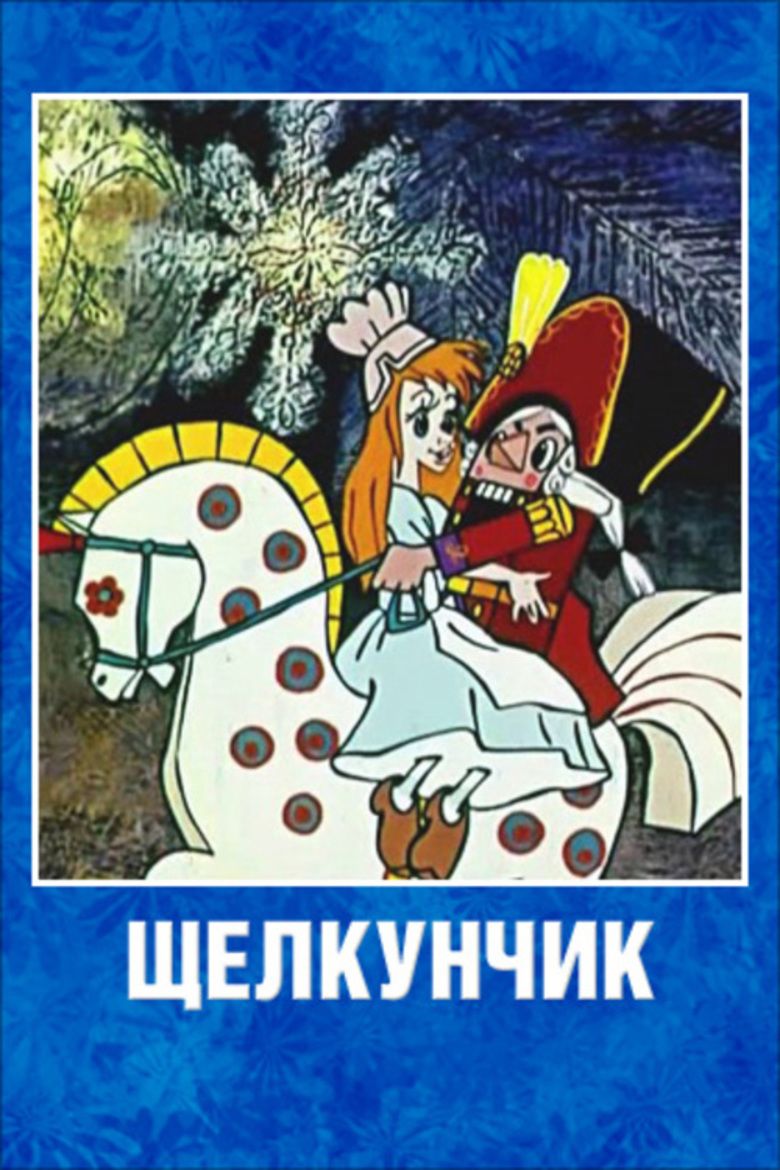
Boris Stepantsev's short The Nutcracker is handily the best adaptation we've seen as part of Mixed Nutcrackers, and seems likely to rise as the best adaptation period when all's said and done.  It's quite an economical piece of storytelling, incorporating practically all important beats and elements from the Hoffmann story in a quick 25 minutes without losing any charm, and showing off some delightful animation in the process.  No need to reconstitute the elements into something wholly of its own kind, nor belabor the point with loud humor, nor wander off in its own direction after the introductory action, just the story of a young girl finding a Nutcracker in the Christmas tree, learning of his story, defending him against the Mouse King, and falling in love.  There's a bit of compression for time and effect, like rendering Marie a nameless servant girl with no godfather or younger brother to interfere in her journey, making the Princess Pirlipat and the Nutcracker Prince one and the same, freezing the Nutcracker's whole kingdom, and stripping the Land of Sweets segment of pretty much everything save an elegant dance (set to Waltz of the Flowers rather than the final number, which is instead used to underscore the Nutcracker's despair at his appearance) in order to give the stuff with the mice more focus, but otherwise the whole thing's here, and dances through the plot elegantly.

It's probably also the prettiest looking of the animated adaptations we've seen, with some of my favorite designs for each of the major characters.  I'm all about Marie's awkward, lanky appearance with big clogs in the place of the usual slippers and those round, curious eyes, the Nutcracker's rectangular shape and flexible mouth that never stops baring some nice square teeth, the Mouse Queen's three heads sharing a single gigantic crown atop a hunched body clad in deep blues and light purples, and her son's rotund design, which bloats into an imposing ball when he inherits her crown and becomes Mouse King.  In fact, similar to the Culkin-starring adaptation, I really like how all the mice share a similar rounded design, and delight in their more prominent screentime so we can look at their silly scurryings longer.  The backgrounds, I'm not entirely certain how to describe them... it's like they used watercolors that crystalized into impressionistic sheets of ice, giving the characters wonderfully detailed backdrops to play against whether they're in the appropriately-sized, pink and yellow king's court in flashback, or the barren dark blues and greens of the parlor at shrunken scale.  Environments varied as a Christmas tree full of ornaments or a blank stretch of wall are equally pleasing and rewarding to look at and follow details through in this manner.  Such detailed backgrounds also helps the characters' cleaner models stand out, and while this occassionally produces an effect whereby they float above the scenery rather than moving through, it also helps Marie and the Prince's final, transformitive dance wherein they shift between themselves and flower-petals as they glide through a reflective night sky of flashing light and color feel all the more magical.

This thing's good, spellbinding and embodying the childlike innocent wonder I found in the novella better than most.  It doesn't have my absolute favorite Nutcracker design, or Mouse King design, or battle between toys and mice (look to The Motion Picture, the Culkin film, and Fantasy for those respectively), but it gets the overall feel right and gratifies the viewer in a spritely timelimit.  Very nice to find something I can wholeheartedly appreciate without a sliver of irony or major critique in this marathon - a good last-minute Christmas present to the lot of us!

4/5

***
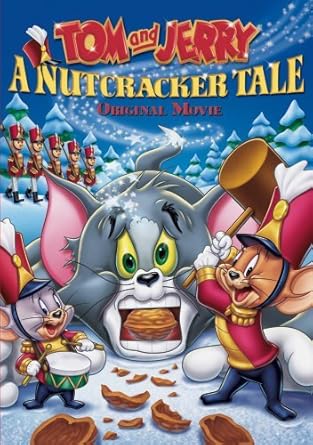
God, but do Tom and Jerry deserve better caretakers.  Y'all saw the Charlie and the Chocolate Factory memes last year, right?  The ones with all the awkward faces you think are smear frames but actually remain in unmoving focus for several seconds, the bizarre attempts to shoehorn Tom and Jerry into a pointless retelling of the 1971 movie, the endless reposting of that one Wonka smirk towards the end?  Bizarre and bad as it's said to be, I'd easily take such an approach to shoving the cat and mouse pair into The Nutcracker than whatever the hell is going down in A Nutcracker Tale.  Hoffmann's story is legit perfect for a seven-minute short in the style of those from the 40s and 50s - Tom and Jerry doing their usual antics, the whole part with the mouse army showing up and doing battle with the toy army happens, Jerry gets caught up in the press, Tom gets exploited as a prop weapon by the toys, we do a little runaround, we chomp the Nutcracker's teeth down on someone's tail, we play a few lines of Tchaikovsky, we go home.  If the ballet had its revival just a few years earlier, when Fred Quimby was still pumping out cartoons under the original Hanna-Barbera team and vying for Best Animated Short Oscars, I could see all the classic gags slotting handily into such a set-up.

Show of hands, who amongst you would ever guess a Tom and Jerry Nutcracker thing would involve Jerry idly wishing he could dance, being granted not only ballet talent by the voice of God who is also the narrator and also Santa and also emblamized by the Star of Bethlehem (called out as such by a character in the film, no less), but an entire magical kingdom of living toys to rule as Mouse King, which is ruined the second Tom and his alleycat friends wander in, and are granted automatic control of the kingdom by the same magic power, necessitating a quest to find the Toymaker across various thematically-incompatible dimensional planes?  And also Tuffy is there.

"Bizarre" is the word for this thing.  Beyond dressing everyone in old-fashioned army uniforms, keeping a Tara Strong-voiced tiny ballerina hostage for occasional asides, and quoting Tchaikovsky's music at the most inappropriate times, there's practically nothing here to theme this as a Nutcracker-based work, yet it has no identity of its own besides.  The creative team seemingly indulged every idea they had in the process of screenwriting and drawing layouts, clumping in random bits of overwrought drama they resolve inside seconds, trips inside a lair of snakedragons and through a Coney Island-style amusement park, an appearance by a Frankenstein-esque mad doctor cat, and many, many more little bits of incohesive weirdness.  It's hardly Nutcracker-themed, calling it Christmas-themed would do it injustice, it rarely does anything with the magical kingdom being confined to a theater, and multiple segments break away from something so simple as generic winter-based setting, so what is this meant to be?  I can't even claim it's to sell a soundtrack or take advantage of some tunes in the Warner Music Archive, because The Nutcracker's music is public domain.

One might claim it's meant to be all over the place and jumbled-up nonsense because anarchy was such an integral part of the theatrical cartoon landscape which birthed Tom and Jerry, but I'd argue it's nothing of the kind.  For one, it lacks any degree of self-awareness necessary to follow in the steps of something like Duck Amuck, and indeed asks the viewer take the various perils Jerry and company face in their journey completely seriously right before jarring fifty feet right into slapstick again.  Speaking of the slapstick for a far more important another, if throwing up our hands and going, "Screw it, we'll just do whatever we like!" is meant to be an OK thing to do because it gives rise to some good gags, it fails at such.  The outsourced cheapo Korean animation on display is slow, lifeless, and lacking in anything one might recognize as the wild, weighty energy of a classic Tom and Jerry short.  Gags dependent on physical humor are either too afraid to indulge in the old ways of a soddering iron to the noggin or a bowling ball down the gullet and so opt for weak variations on "character go flying and get hurt off-screen haha," or else go so terribly outlandish with a baffling lack of both build-up and suddenness that it doesn't work.  They all just sorta... happen, with no speed or purpose, and get easily overwhelmed by bad stand-up routines from talking characters, or the far too thick sentimentality, or an out of nowhere baseball joke.

I could handily rag on the film for ages, having a go at it's odd attempts to set lyrics to Tchaikovsky's music in the early going before dropping the atonal conceit; or make a try at delivering weak praise, saying the ornament character who's constantly coming unraveled might've had an interesting gimmick going if they animated his final disheveled state as anything other than a barely wiggling mass of string.  Considering, however, how the film ends on a limp series of gags as Jerry drives the cats from his about-to-vanish-forever kingdom with such a mediocre lack of creativity or fun, I don't think carrying on past this point necessary.  This is a flat corporate product - one which draws heavy, groaning sighs on the regular and is probably pretty bad to show your kids if you don't want them taking to YouTube comments sections and droning about how such a grey, inert film is an underrated classic ten years hence, but a flat corporate product all the same, and so deserving of an equally limp, lifeless end to this review.

I paid four bucks for this.  When the time comes for the anti-capitalist uprising and we're collectively dismantling all the major entertainment conglomorates, I'm gonna walk into the Warner Bros treasurer's office and ask for those back.

2/5

Thursday, December 5, 2019

A Man For All Seasons (1966) - I trust I make myself obscure?


Letterboxd Season Challenge 2019-2020!  Theme five, part two - stage to screen adaptations!

(Chosen by Jackie!)

Let's open with some shop talk, shall we?  There's some belief amongst critics, both professionals and amateurs like myself, which posits the best example of any artistic medium is one whose most exemplary qualities best exemplify its medium's most unique qualities.  The video game that could not be any other than a video game, the painting one could not imagine as quite the same as sculpture or photograph, the film whose qualities are most vitally and enduringly filmic in nature, sort of thing.  It's a nice little maxim with quite a lot more going on beneath the surface than its simple "This is the best because it is the most" position would indicate.  A dance, for instance, might stand as an exemplary example of dance because it emphasizes the fluidity of motion possible through a highly skilled/trained performer's responses in time with music, or perhaps the strength required to achieve such fearsome or strenuous moves in so quick a time or else over such a long period, or maybe the beauty constructed by two or more in perfect, graceful sync with one another, or just maybe the elemental dance requires many in a clockwork tick-tock creation defined more by the choreographer's skill than any one dancer's choices.  What makes any dance more dance-like than the other?  Same basic problem arises when you try to concretely define what makes film film.  We can get into matters of temporal and emotional effects achieved by editing, the personalized nature of acting compared to traditional theater thanks to the camera's intimacy, the ability to visualize the impossible on a grand scale while still making room for quiet contemplation, more esoteric matters like how the picture's filmed or to what degree it is or isn't reliant on other artistic disciplines like music and whether or not the synthesis achieved by merging sight and sound is superior or inferior to their separation; but how are we to tell we're right?  And furthermore, in a time when many of film's most unique qualities at its birth (real time contrast of images, being able to move images of real things without their physical presence in the first place, animation as a discipline in general) are no longer wholly unique to it thanks to the rise of television, video games, and online video content, how exactly can we say there's any one thing that makes a movie the Most Movie?

In discussing 1966's A Man For All Seasons, I think it best to narrow the discussion's focus, and talk primarily about what makes a play so captivating, and whether or not transferring one to the silver screen without undertaking some special effort to make it more film than stagework makes a successful approach.  See, in reading reviews of the film in a search for perspectives to tackle, I found multiple pieces and posts noting how Fred Zinnemann's direction and Robert Bolt's adaptation of his own script do little to take the story of Thomas More - High Chancellor of England, author of Utopia, and noted martyr who silently refused to condone King Henry VIII's schism from the Catholic Church after so many years of opposing the Protestant Reformation under the same king, and was beheaded for it - a distinctly cinematic experience.  The film is, from this perspective, still very stagey, dependent on its words and actors to generate tension and interest in a manner more derived from the theater than the moviehouse.  It supposedly lacks a certain flair in editing, or shooting, or even acting after a fashion, which one expects from a film.  Film, after all, is not theater, and the same techniques which can thrill a live audience won't work so well on the moviegoer.  I confess to indulging in this line of thinking myself from time to time when critiquing literary or theatrical adaptations - just this last week, I put marks against The Pajama Game for lacking a more expansive manner of staging its musical numbers and confining them to soundstages in the same way its theatrical counterpart was contained by the physical limitations of the stage.  My question to you for this piece is: is it right to take the movie to task for this?

Well, yeah, depending on how you want to look at the thing.  If someone's not engaged by a film, they're not engaged by a film, and their lack of investment doesn't confer a lack of effort or thought on their part unless they give distinct and solid testimony about WHY they weren't engaged to communicate such a lack.  More likely and more fairly something in the film or else their personal taste in film that didn't click.  When the discussion surrounds fitness of adaptation from medium to medium, though, I think the question worth examining.  Certainly in my own watching I can admit A Man For All Seasons isn't quite the liveliest film from a shooting perspective.  I can't fault Ted Moore's cinematography any of his framing decisions, as he often finds interesting ways of blocking the actors to emphasize the fiery disagreements between their characters, nor can I say he totally lacks any flair beyond just filming the people, not when the repeated motif of introducing illusory power through reflections and contemplating nature when considering More before shifting to dark, brutal stonework for the corrupt institutions he stands against are so prominent features.  I CAN, however, say his deployment of these more thematically-based filming techniques are far more infrequent than one might hope, some of his extreme angle choices seem jarring against the more conventional work elsewhere, and on the whole he's not a very showy cinematographer.  He doesn't NEED to be for this story, but one more than understands the complaint about how a drama predicated on men of extreme conviction losing their tempers and communicating through grand declarations doesn't take a more daring, stylish approach to cinematography.  And though I'm going to come to his defense shortly, editor Ralph Kemplen largely strives for invisibility without too many showy cuts or unusually long takes; also fine qualities you understand, yet not what one might want from a film with this potential for explosive impact.

The problem, I think, comes in considering A Man For All Seasons as something born in the theater, and a conception of what the theater capital-I Is.  Laying aside less kind thoughts like "the people making these claims don't have much capacity to appreciate slow dramas without big displays of showmanship," I think it accurate to describe theater as the most essentially alive of the artistic forms.  So many forms of painting, sculpture, literature, etc. strive towards preserving an idea in something eternal, in a way one can find equally captivating across the decades and centuries and perhaps even millennia.  Art is referred to as the one true form of immortality, after all.  While a playwright's words and possibly stage directions will endure across performances, one potential X-factor of theater lies with the fact that it is performed by living flesh-and-blood people right before your eyes, conjuring long bygone times and ideas in the here and now, no separation beyond the unreality of production.  Those folks up there perform their craft in real time, and (one-time performances excepted) they have or will or both performed/perform again in a slightly different variation on another night.  Others have taken the mantle before and likely will again in the future.  The play is a living form of art, matched only by live music or the derived performance piece, and its ability to be something new on each repetition through hearts that beat in time with the audience's makes it Theater.

From this perspective, a play brought to film without some great transformation is a dead thing.  The performances will always take the same shape, the actors' decisions always turn out the same way, the experience never alters beyond what is achieved on final cut.  Maybe through alternate cuts in the future (cough George Lucas cough), but never in the same way a live performance can change from night to night, troupe to troupe, year to year.  Cinematic life, though highly dependent on actors in 99% of all instances, turns on the camera, the edit, the impossible, and if we only consider the essentials of what makes a movie adapted from stage a worthwhile endeavor in this way, I can fully understand why A Man For All Seasons might come across as something boring and not all that special.  Its most vitally cinematic elements stay out of the way and leave its most theatrical elements to stomp about as if they were still out on Broadway, with their warm flesh and blood replaced by cold, flat celluloid.  Doesn't make the most appealing picture.

Hence, when a mode of consideration no longer serves any use in helping us enjoy or understand a work, it is best to modify.  Although I've taken an unconscionably long time to say so, I DO still think of A Man For All Seasons the film an engaging, vibrant work.  Robert Shaw's performance as King Henry VIII might be the same every single time one turns on the film, but this does not diminish the accomplishment or visceral effect of his decision to play bombastically jolly in a way that makes his outbursts of rage at perceived slights read as active efforts to make the more steady More flinch.  Paul Scofield's lead performance as More still embodies a man of staunch religious principle whose manner and profound respect for divine law renders him a more palatable figure of spiritual conviction than many characters who hold similar beliefs (or, if we're fully honest, the historical More in all likelihood).  He still trades immensely witty, multilayered barbs with a host of character actors who can hold their own in theological tongue-spars, yet never rise far enough beyond their self-serving nature to meaningfully overcome his hardline stance on the Church's right to define law and order.  Its being an object of eternity derived from a play meant to encourage new perspectives on every performance does not, in any way, diminish the impact of Bolt's slow crawl towards realizing the hopelessness of the situation, and so redefining victory to mean standing by a single, righteous conviction above all else, nor the last minute whammy of a sudden bit of narration telling us the unhappy fates of those who persecuted More, leaving one to wonder at how evil any of them could've truly been if the vices that led to their villainy in this story ultimately produced the same fates as a man considered pious.  The delight and dread in the dialogue, More's complicated relationship with his family and fate and office, the essential vibrancy of putting this all to screen for a single production that will play the same way for all screenings across all time highlights the virtues in Bolt's work, never detracts.

I believe the film works so well because Zinnemann employs Moore and Kemplen to unobtrusive, underscoring effect.  Their work allows the film to function with minimal fuss, creating a quite lovely picture of early 16th-century England across multiple strata of life, and enables the actors to do what actors do best on film: be close and intimate with the audience.  Those moments of lost tempers, selfish, self-righteous outburst are afforded the same quiet, non-interrupting distance as bits like More sad, stately admonishment towards Richard Rich over selling his soul for Wales, and places one right there in the spittle-flecked, red-faced thick of it.  Joviality, despair, and stiff-lipped, steely-eyed conviction come across at our level, from a reality we can recognize and solid and authentic unto itself, and the ideas of what is best and right in confronting what one perceives as a moral wrong embodied by figures of great power and influence who are close confidants all the same can play out with the same immediacy as on stage.  Just as one might argue a lack of flair leaves the film staid and boring, so too can one say the lack of flair at a cinematic level allows both flair and nuance at a performative level a chance at rising to the surface, and it is this tact I take far more than the devil's advocacy I advance above.  Is it the absolute best example I've ever seen of these particular themes, or this style of performance, or this manner of presentation, or this mode of adaptation?  In honesty and earnestness, no.  But it is itself, and it is effective in captivating and teasing at my mind, and so I applaud the effort.

A thing being unchanging in form does not make it dead in experience.  The dead, for all talk of an afterlife in this film, do not experience.  It is always the living who come to A Man For All Seasons, the living who bring fresh eyes and new experiences through which to intake and interpret this one-time work.  With fresh eyes will come those who find it a less than thrilling experience, be it because they don't jive with its manner of presentation or its mode of adaptation or a simple distaste for historical drama, but there will also come new historic events to compare it against, new ways of thinking through which to view its contents, new minds who've never seen its like, or seasoned minds who've seen the like or even the film itself many times before, and yet still have wholly new experiences to color their viewing.  The great thing about film as film is difficult to define, and subject to ongoing debate - the great thing about art is its capacity to engage and inspire no matter the time or place or creed.  So, though A Man For All Seasons from 1966 is dead as theater from a strictly theatrical standpoint, it is alive and vibrant and immediate as ever as art, and so gains life as film all the same.

4/5

Sunday, December 1, 2019

The Pajama Game (1957) - I know a dark, secluded place...


Letterboxd Season Challenge 2019-2020!  Theme five, part one - stage to screen adaptations!

I'm normally picky when it comes to older musicals.  Broadway showstoppers from the mid-century boom of plays with stories and serious issues on their minds rarely do much for me due to the focus remaining squarely upon melodrama and spectacle, while leaving their slight plots to mill about in the margins as mere excuses for the main action.  I prefer the songs to serve as primary means of storytelling, and the classic standards always treat them as entertaining diversions from the story, not really exploring any emotions or ideas beyond rapturous love, silly antics, or witheringly light tragedy through the music.  It's additionally frustrating when a work with an interesting conflict or unique setting is made to play home for yet another meet cute, fall in love, fall apart, get back together narrative with only trivial intersection with the ostensibly main conflict.  All in all, a Broadway musical from the 50s has some massive hurdles in its path if it wants to leap into my heart, and The Pajama Game hits on all the little things that annoy me about this style at a scan.

After watching George Abbott and Stanley Donen's adaptation of Abbott's hit 1954 play, I SHOULD come away with a tongue primed full've venom.  Why not?  The whole business about the pajama factory workers striking for a seven-and-a-half-cent raise serves as background dressing for the romance between Sid and Babe, which ignores the conflict for long stretches of screentime before driving a gulf between the two with a token upset, and subsequently puts no energy into their getting back together beyond "Well they're the main couple, so y'know."  Multiple musical numbers run on as little more than filler entertainment divorced from character motivations, and when they ARE character motivated, one gets situations like Babe and Sid duetting about how passionately they adore each other for two songs in a row.  As a piece of filmic work, the movie's fairly limited - despite a lively enough camera, many of the musical numbers are limited in scope and activity by the trade-in from live stage to sound stage, with only Once-A-Year-Day roaming a larger location and Hernando's Hideaway getting at all cinematic with the staging and editing.  A jealous boyfriend's murderous rage is played for laughs, the union's victory over the company is treated as overly uproarious for its eye-raising simplicity, and the overall romantic arc comes across as little more than the script asking the audience if they want these hot people to flirt some, so it SHOULD be actively hitting at every "dislike this movie" button across my entire figure.

So, why are we coming away from the experience with me metting out a four star rating?

Familiarity bias might play into it some.  I chose The Pajama Game for this theme because I'd seen a performance back in middle school, when my English teacher took the class on a field trip to watch the Tucson Community Theater's production.  As with much media I viewed at the time, I've forgotten most of the details in the intervening decades (not as big a surprise here, considering it's the only live theater show I've seen in my life, and something watched for a school project at age 12 or 13), but the standouts definitely stand out in my memory.  Snatches of Steam Heat and Hernando's Hideaway occasionally drift across my stream of conscious in free moments, and a lot of this watch was consumed by periods of "Hey!  I remember this song now!  It's great!"  That I spent an entire evening editing the Wikipedia page for the play to include details of the production from the playbill I brought home before I understood what notability constituted probably helped stick the play in my mind as something worth remembering fondly, however dimly, and primed me to think of this film as a grand ol' time regardless of elements I'd otherwise find annoying.

This doesn't quite satisfy, though.  The Pajama Game may sit in my mind as "that play I saw in middle school," but this film, divorced from my memories, still has quite a lot on offer.  Forget notions of doing something uniquely cinematic with the filmed material or using songs as a means of communicating story; the music and performances here are infectiously bouncy and varied enough to blow such preconceptions right out the door.  There's a trend towards allowing the actors' vocals to strain and fray on longer or higher notes in a way which feels highly controlled, granting moments like Doris Day's increasingly atonal response to the calls in Not At All In Love or her interplay with John Raitt on There Once Was A Man an extra degree of skin-tingling satisfaction.  The Broadway music team clearly had tons of fun tweaking at the call-and-response style of structuring, playing with swinging waltzes, rapidly shifting verbal tempos (consider the stretched out notes followed by babababababa rapidity on the verses to I'll Never Be Jealous Again, the breakneck/leisurely contrast in Small Talk, or the radically different paces on both go-arounds of Racing With The Clock), and even players dueting with themselves.  Though I'd entirely forgotten about it from the stage play, Raitt's work on the opening warning half of Hey There followed by his interplay with his recorded voice as a doubting counterpart in the second stretch was an unexpected highlight, and Day's reprise in a new, sorrowful context sold me on her status as a musical superstar better than anything in Calamity Jane.  And, of course, it helps to have big showstopper numbers like Once-A-Year-Day, which just keeps going and going and building and building without losing any of its energy or fun, and the matchlit, darkroom tango of Hernando's Hideaway, which contains the film's most well-crafted visuals.  It's an uncommonly good soundtrack all the way through, whose density only gets one charged and willing to leap from number to number with little resistance.

Beyond the music, I also think the performances help the movie along towards a higher rating quite a bit.  Looking over Wikipedia, the cuts made in adaptation rob most of the supporting cast their numbers and sideplots (Prez seems to suffer the most in this regard), but the original Broadway cast is still here minus Janis Page's Babe and Stanley Prager's Prez, and they're still giving it their all in roles they'd inhabited for three years by this point.  Carl Haney stands out in particular when the spotlight shines her way towards the end, given she's afforded the leads on both Steam Heat Hernando's Hideaway, a riotous drunken routine in the following scene, and a turn towards the climax that allows her to just wild it right the hell up with out of control screams and erratic mannerisms.  Such high-effort, high-reward mania defines the film's comedic routines, which involve large chunks of the cast getting caught in their own conflicting priorities, and blustering and shouting over one another until someone barges in to straighten the situation.  While it does not MEAN much in the way of exploring the labor conflict or romances at play, it is endearing to an extreme I cannot deny, and couples well with the same performers when they launch into song and dance.  I don't particularly need a well-defined romantic arc when Day and Raitt are giving it their all to make the all-too-short courting period seem natural before the dizzying highs of Small Talk and There Once Was A Man.  Call it emotional cheating if you will (it absolutely is), but damn if it doesn't work, and work well.

Effectively, I think the movie clips past any and all grievances I can and do raise to land at an overall positive place by doing what a Broadway entertainer does best: taking the material it has on hand, rehearsing it to perfection, and then performing with such finesse and bombast, you hardly notice or care about whatever cracks show.  Taking The Pajama Game and transplanting it to the screen with little more than some cut content and more realistic locations conducted in transit probably should break the thing in the process, and I'd be made a liar if I claimed a few elements didn't almost push me down to, at least, a 3.5.  The way Gladys and Hine-sie's little subplot resolves with them jokingly wearing prison stripe pajamas with built-in handcuffs makes me choke on my tongue a little for how bitterly 1950s it tastes, honestly.  With such strong musical and performative elements in tow, though (not to mention the production design - it's a minor thing comparatively, but I'm kinda in love with the costuming here), the film can skate right past any and all problems to convince me to go with the flow and enjoy what it has to offer.  As I've said time and again, one should strive to level with films on their level and, where possible, count a final positive experience as more important than whatever grievances come up.  In this particular case, the film's all about making good with a grievance committee, so I've an extra layer of cover for my less than professionally critical perspective than usual.

(Someone kindly tell me how Ralph Dunn wasn't made known to me as a comedic talent until last night, please.)


Lookit 'em go.

4/5

Friday, November 22, 2019

The Phantom Carriage (1921) - Lord, please let my soul come to maturity before it is reaped.


Letterboxd Season Challenge 2019-2020!  Theme four, part three - a silent horror film!

(Chosen by John!)

The last time I reviewed The Phantom Carriage, much of my discussion centered on the film's most notable supernatural element, of the last poor soul to die at the strike of New Years' midnight condemned to drive Death's carriage over nights that last thousands of years until the clock's next year-marking strike. What I identified as "the real meat of the film" occupies a rather brief paragraph before I get back to meditating on personifications of death and the overall effect of dwelling in semi-darkness through the cinematic medium.  In my defense, I was just getting started with long-form reviewing at this point, and trying to spit out my reviews soon as I finished watching to boot.  On this rewatch, I think it good and right to give said meat some proper focus, and pick apart just what makes Victor Sjöström's yarn of a wretch redeemed at great cost tick along so well.

I find it notable how the film allows us to think of David as a real bastard before we truly know him.  The opening sequences focus on the bedbound Sister Edit, dying of tuberculosis and begging those around her to summon one David Holm to her side for one final meeting before her expiration.  Scenes of her attendants debating the wisdom of this decision follow, and lead into said attendants scouring the small Swedish village for some sign of this mysterious man whose presence a woman of the faith desires so greatly - but to no avail.  Dialogue hints towards David Holm deliberately dodging those who seek his presence, cuing us into his insensitivity towards those in pain and need.  We then shift focus to listen in on a drunkard regaling his friends with strange recollections of a deceased friends' beliefs about those who die at the year's final chime, presented visually through a series of stacked flashbacks.  While Georges' story about the Phantom Carriage is depicted with the film's first instance of double exposure visuals in a manner that imparts otherworldly, deathly seriousness, and Tore Svennberg's performance within David's flashback personifies a man hollowed with fear at the prospect of such a fate befalling anyone, Sjöström plays the man's pantomimed speaking on either side of the flashbacks with a silent, dismissive cackle, even as he speaks of Georges' passing in such a way as to condemn him to the fate he so feared.  It is only after we separately understand the concept of David Holm as someone who'd actively avoid a dying woman's request and this nameless man as one who laughs at misery and suffering, a good half-an-hour into the film, that we're informed they are one and the same, effectively doubling our disgust.

When Georges arrives as the driver of the Phantom Carriage to inform David of his fate for the next year and expound on how he came to this state, the way Sjöström chooses to present and cut the tale short further exemplifies how he characterizes David as a worm who deserves his fate.  Pastoral scenes of David as a happily married family man with two beautiful children last only a brief time before Georges enters the scene and tempts David into a life of disorderly drunken abandonment, but they speak to how deep this man's faults run, especially to a modern eye.  Much as these scenes were likely intended as a rail against alcoholism and the damaging effects it wreaks upon society (especially given the original Selma Lagerlöf novel's commissioned purpose as public education about tuberculosis), I see David's quick descent as emblemizing the true immaturity of his soul.  What kind of man would turn to such vicious, nasty behavior as deliberately destroying a kindly Salvation Army woman's hard work on repairing his coat with full knowledge of the infectious risk she took in doing so after but a few rounds at the bottle and a brief stint in jail, if not one who didn't truly appreciate what he has?  True, the loss of his family is a devastating blow, but we begin this stretch of film with a David who acts the regular family man, and end it with one willing to risk others' deaths just because he's feeling particularly mean this morning, separated by only a month or two at most.  ANY minor slip would've brought him to this state, and exposed his unfitness to do more than forlornly usher souls to the beyond.

Most interesting of all to me on this watch, I find it fascinating how Sjöström continues David's damnation through the final stretch, and yet still finds reason to bring about his redemption.  When Georges forces David's spirit to stand beside Sister Edit's bed, and listen to her recollections about his life since she knew him, it paints a picture of a soul only a few shades removed from a true moral blackness.  In these passages, David deliberately coughs on people in the hopes his consumption will finish them off, professes a profound hatred for all joy in life, hunts his wife all across Sweden to the point of driving her to illness and exhaustion, reunites with her under false pretenses, deliberately risks infecting his children, and pulls what would become known in sixty years' time as A Jack Torrance with an axe - the only thing saving him from total irredeemablity is his unwillingness to take a swing at his wife once free.  Worst of all, the infection David earlier passed to Edit claims her life towards the picture's end, robbing the world of a truly selfless soul, one who looked on a wretch like David and saw someone deserving kindness and love and sacrifice, and pursued these beliefs to no avail beyond their respective deaths and the increased suffering of all who knew him.  There is practically no reason to want this man to do anything except suffer for the millennia that will pass before he must hand the carriage's reins over to another unfortunate bastard.

And yet he is redeemed.  When David Holm catches sight of his wife, in utter poverty, preparing poison to kill her children and take her own life to end their suffering, he is overcome with such agony at Georges' powerlessness over the living that he is granted a reprieve.  He wakes in the graveyard where he expired, rushes home, saves his wife, and convinces her of his true desire to reform, uttering the above-quoted prayer as the film's final word.  To my eye, David has Sister Edit's selfless kindness to thank for his salvation.  In life, her actions were met only with vindictive destruction and hateful rhetoric, which poisoned her and sank David further into his vagabond life of depravity.  In death, however, as David watches his life over again at Georges' side, seeing his cruelty with eyes free from its blinding effects, what stands out most is how far Edit went in the name of trying to help, even on so little a matter as patching the holes in his coat.  It is the sight of someone truly pure giving her all to the very end and no avail that makes David cower on the floor in an attempt to hide from the horror of his own life throughout the film's latter half, and it is the knowledge of how his living sins will continue to consume and rend apart all he held dear well past his death that gives rise to divine intervention, enabling David to truly repent, and earn a second chance at spiritual maturation before his final time of dying.

He does not deserve this.  He cost the world far, far too much in life, and stands as such a heartless, spineless bastard, I can't blame myself from nearly two years back for thinking Sjöström should've leaned into the abyss and denied David any salvation.  But at the same time, seeing a hopeless sinner realize the full implications and effects behind his careless actions and come to a second chance through purest anguish is the whole point of The Phantom Carriage.  The scenario's horror lies with its connotations beyond all else, its staying power with the impossibility of its conclusion.  Sister Edit's suffering and untimely death only possess a silver lining if we allow for the man she thought savable to the bitter end to be saved and grow beyond what he once was.  If, and only if the worst amongst us are treated as if they can one day become better is Death's terrible sting lessened, and only then does the empty void beneath the hood possess and deserve a human face.  S'a very Christian message, and one I'm happy to go along with for the sake of emotional wholeness.

4/5

Friday, November 8, 2019

Day Two of the Loft Film Festival - Aga (2018), Always In Season (2019), and Hjärtat (2018)


No mincing words here: Aga is easily my pick for film to win the CICAE Award.  After today, there's still three other films in competition I've yet to see, but it's hard to imagine any of them ousting this one as most worthy of the honor.  It is a remarkably complete work, covering all aspects of its subjects' lives across the physical and personal, big picture and inner lives, and all the more remarkable for being such a slow-paced, quiet film that we don't even learn anyone's name until close to halfway through.  Aga is a joy to look at, to listen to, to consider on all levels, and if the three judges I've sat beside through these five screenings thus far somehow don't agree, then that's perfectly fine, they know quite a bit more about film and art than I do - but I shall be quite cross with them nonetheless!

Aga is the story of Nanook and Sedna, an elderly couple who live together in a modest yurt within the Arctic Circle.  Their lives are full of work and hardship, requiring strong hands and stern will to obtain food, maintain shelter, carve anything and everything they need from raw materials, and stay ahead of the harsh environment.  Things have gotten quite hard of late, for Nanook is slowing physically and losing his memory, to say nothing of how he spots ominous signs of warming climate and dwindling animal population that often leave his efforts fruitless.  Sedna is presently nursing a grave case of frostbite on her side, though it seems she does not let Nanook know this.  For all these obstacles, they still continue on, practicing survival as taught to them so many decades ago, even without anyone to pass it to themselves.  They are happy to continue with their lot in life, but are definitely marked by the sense of this all coming to an end when they do.

The modern world rarely encroaches on their domicile, and when it does, it is loud, loud as hell.  The passage of a plane overhead, the tread of a snowplow in the distance, or the sound of their son's radio when he comes to visit round the middle cause the soundtrack to explode with droning sounds well beyond the norm.  Aga's soundtrack is by no means a quiet composition, dominated as it is by bursts of noise from Nanook and Sedna's day-to-day tasks, yet the consistency of noise from modern machinery and devices makes all the difference.  There is no pause for breath in the globe below their home, no need to stop for the detail work.  Auditory expulsions run on and on and on, granting the film the air of something immense and powerful turning its gears far away from their home, though not quite so far enough away to keep it from impacting their lives.  Much of the forces leading to Nanook and Sedna's present difficulties are the results of manmade forces far beyond the scope of their humble lives, up to and including the absence of their children.  While Sergei's absence from home lacks a mystery of motive like his sister's (he has a job in the city, so of course he won't stick to the yurt), he still leaves a spattering of oil outside the shelter upon his departure .

We're never privy to why Aga is so estranged from her parents - the knowledge that something broke in the past and cost everyone something precious is enough.  Once we fully understand how deeply her loss pains her parents, though, Milko Lazarov turns his exacting style to exploring how Nanook can do right by his daughter again.  Stretches of the film concern Nanook and Sedna's storytelling traditions, the elderly couple conjuring fantastic visions of ancient stories and semi-prophetic dreams as the camera focuses on the effect they cast over the listener, which is soon followed by a realistic exploration of how these tales unfold on the next day's dawning.  The old folk tale Nanook learnt from  his father and passed to his son about a hunter whose words to a mystical reindeer brought plenty to the land only brings further reminder of how he will not become the wise, mighty hunter destined to return the world to its previous state, while Sedna's dream of following a polar bear who became a man into a cavern of unspeakable light and beauty is soon mirrored in Nanook's efforts to reconnect with Aga at the diamond mine.  This story has the character of an old Inuit folk tale, but is accompanied by Nanook musing about how the music on their son's radio must have been composed by someone with great suffering weighing upon their heart, and is soon followed by his own suffering being scored by grand orchestral music as he attends to his final needs and accepts help from an ice road trucker to reach his destination.  I'm a particular fan of that sequence, for the trucker's slow, methodical attendance the the demands of his job and his fondness for telling stories reflect Nanook's life so well, showing how, despite the fundamental divide between worlds, some of the spirit still survives.

For a time, I considered the enormous, booming score during the third act a weakness, a reason to consider Aga slightly less than five stars.  The film is so very much a near-documentary-like moodpiece otherwise, concerned with the quiet moments of two elderly lovers lying beside one another, an old man exhausted earlier than he's used to by a routine task, an old woman tending to her illness with silent dignity.  Drawing orchestral music from The Revenant to demand we know how to feel at the moment of greatest tragedy seems antithetical to its overall goal, something ill suited to a film so dedicated to losing figures in the bottom corner of the screen before focusing on their faces or tools of their lives in beautiful, close-up tableaux.  On consideration, the choice seems perfect for so complete a film.  Aga embraces the beauty and nobility in the lives Nanook and Sedna lead, lovingly depicting them skinning an animal caught in a trap for sustenance and a potential present for their daughter, but it recognizes how simply persisting in this way of life will lead to their succumbing to old age and the losses imposed by the outside world, and terminate all they have built across untold generations.  Acknowledging how they are linked to modern times, through their progeny, its negative effects on their lives, and the new emotional mindsets it allows, without sacrificing the fundamentals of who they were, is what allows for the beautiful reunion and final aerial shot of a hole as big as the world, with all the light from the stars concentrated in a single weeping woman, the sight of her blotting out sense and memory of all else.

It is an utter, unqualified triumph of observational, humanistic filmmaking.  I support it not only for the CICAE Award, but for success as Bulgaria's submission for Best Foreign Picture at the Oscars.  Sight-unseen on all other submissions, I'm even in its corner for the win, it's that good.  If you're in Tucson, mark out time for the other showing Tuesday at five.  If not, find out when it's playing near you, or available for rental/purchase online whenever it's made ready for such, watch it, and love it.  Please.

(What happened to the dog, though, someone please tell me what happened to the dog, I need to know.)

5/5
***
I did not know about the Moore's Ford lynching reenactments before this film.  I'm ashamed to say I did not know about the Moore's Ford lynching in the first place before this film, but that is rather expected due to my background, location within the country, and participation in a school system that has largely failed to give adequate due to real injustices in American history in favor of an overly distant view of the nation's past.  Learning about past lynchings in specific and seeing photographs of the grim, horrible results is, however disheartening and disturbing, expected in a documentary interrogating the history of 20th-century lynchings to give context to a 21st-century case.  The lynching reenactment, however, is presented without full context first, in the form of a woman watching footage of the event's murder and mutilation portion sans explanation, before a little card comes up identifying her as a lynching reenactor, which threw the whole theater for a loop.  It's something else watching a group of older white men in Klan hoods dragging screaming black couples through the woods while a black crowd watches, screaming slurs and mocking their oncoming deaths, and not knowing what the hell is going on.  Captures the unspeakable horror of knowing so many can so easily deny this unforgivable chapter of American history in a way less emotionally direct methods could probably not.

Always In Season intermingles three investigative lines together, following the reenactment and fresh federal investigations of the Moore's Ford lynchings in Georgia, the lynching of Claude Neal and how it relates to the history of lynchings as a whole, and the case surrounding the death of Lennon Lacy in 2014, ruled a suicide by the police by strongly suspected by his family and community as a modern-day lynching.  Director Jacqueline Olive apparently started the project in 2009 as an investigation into lynchings as a historical concept, and gradually shifted focus to the Lacy case as it occurred and developed mid-filming.  I'm of two minds about the decision, personally.  On the one, so deeply entangling the Lacy case with the other two major strands is absolutely the right decision, as it immediately communicates how these injustices have not vanished into the fog of history or ceased to damage marginalized lives in the modern day, contrary to what many in-power white interview subjects note.  The outrage Lacy's mother, her lawyer, and her reverend express over how the SBI and local law enforcement placed minimal effort into the case echoes the willing complacence from authorities and media figures in days past when lynchings were advertised with mail cards and plainly described on the following morning, and witnessing their testimonies alongside Danny Glover's narrated recounting of disgusting historical documents around the Neal case makes the effect all the more wrenching.

On the other, attempting all of this in a documentary of a mere 90 minutes does not seem enough.  The effect is already difficult to stare directly in the face, but doing so gives the impression of insufficient runtime to fully cover all topics.  Lacy's case in particular feels somewhat shortchanged, like there's multiple other angles to explore, other voices to hear in specific we just can't find time to showcase.  These events and the public's ignorance of their historical import/lasting present effects could easily support another half hour.  It would be a half-hour of emotionally wearying, moral faith-testing collective agony given form through light and sound, yet I believe seeing and imbibing more can only lead to fuller understanding, stronger emotional reactions, potentially even stronger calls to arms.

If the worst I can say about Always In Season is that it needs to show more harrowing photographic evidence, contain more eye-opening interviews, bring past and present even closer together than it already does, then I should think any potential weakness lies with calling final cut on an already difficult film too soon.  It's a difficult picture to consider for the CICAE alongside the others here, being a documentary of very real injustice and loss in a way that doesn't quite fairly compare with narrative fiction.  Gonna take some careful consideration when making the final judgement call, both from myself and the panel officially doing so.  I think it a powerful experience all the same, with plenty moments to equal the big shock of seeing the reenactment for the first time, many of which are far, far worse in their context and implication than watching an actor rip a black baby doll from a woman's fake womb and smash it to the ground.

4/5
***
Hjärtat (The Heart) is one fuck of a horny film.  Quite literally, as main character Mika (played by director Fanni Metelius) opens the picture by discussing how she simply doesn't masturbate, finding as she does greater pleasure in one-on-one sex of any kind, even if it's of the passing casual sort.  When she falls in love with big city art student Tesfay (Ahmed Berhan), she upends her life to be with him, making sweeping promises about spending the rest of their lives together... at least until it becomes clear that Mika needs sex far, far more often than Tesfay does.  There's quite a lot motivating her to stay with him and his deepening funk across the first and second acts that sees her acting out for attention and him going deeper into his viddy gams rather than engaging in intimacy, but whenever it comes to increasingly angry words, the conversation always centers around the sex.  Mika doesn't seem to know how to express her pent-up frustrations with Tesfay's numerous inadequacies or the hole she feels in her life without presenting it as a disappointment over not screwing one another as often as she'd like.  When the couple DO have sex, it's shot in such a way as to emphasize the naked, sticky closeness of it all, yet rarely goes all the way, cutting off on an interruption or a shift in the mood before what its eye and Mika's character really want.

As an idea, I'm all about Hjärtat and its frank exploration of a couple who really do love one another slowly realizing their incompatibility in the long periods between passionate highs.  S'the kind of relationship drama I live for, and it ends in much the same way as Blue is the Warmest Color, which used the same final beats to utterly blow me away.  As an executed film, I find Metelius' work frustrating, approaching average, unfortunately.  The chemistry between Metelius and Berhan seems off to my eye - the necessary emotional deadness between them at their low points works just fine, but the complimentary highs register at the same level due to their subdued approaches, and leaves me unable to really get behind their situation.  Certain key events seem shot more for the sake of enjoying their excess than saying much about the characters' lives, the appearance of title cards at fairly odd intervals to mark the relationship's development are often at odds with the pace of how it plays out on-screen (I swear, three of them crop up in a twenty-minute period after we've gone without one for forty), and the third act simply doesn't land for me.  It follows Mika on a recovery vacation with friends that sees her hit rock bottom and rise back to self-confidence, only to lead to another encounter with Tesfay which ends exactly how one would expect.  There's some daring to how their relationship finally ends on mutually painful yet agreeable terms, but as third act decisions go, dedicating a twenty-minute block to a character partying her brains out amidst the wildest excesses yet for an ultimate payoff of "they couldn't change at all, actually," is a real tweak to the eyes.

Maybe it ain't for me, maybe I'm starting to feel the effects of driving up and back to watch multiple films in a single day and write about them in the evening.  Maybe maybe maybe, but all the maybes in the world can't change how my experience with Hjärtat was less than ideal.  S'not bad by any stretch of the imagination - I'd wager it handles its romance with a greater degree of emotional maturity and tenderness than many other films out there, and I enjoy how the film sees Mika truly self-actualize after all she's been through.  It takes the edge off of some of the more pornographic-feeling sexual scenes by giving us a moment of private sexual expression that works for the character.  "Good with problems that keep me from engaging as much as I'd like" is still disappointing for a film festival entry, though, and I can only really say there's a good possibility others who hook to this stuff stronger or easier will likely enjoy the film more than I.  This is still a positive, recommending review; just one with an asterisk noting a lack of passion from one reviewer.

(Big points for featuring a scene wherein Mika and Tesfay try and fail to bond over one of the Wolfenstein games for XBox, though.  Gotta wonder, given his age - when Tesfay says it's a remake of a game he played as a kid, does he mean Wolfenstein 3D, or the 2009 Wolfenstein remake?)

3.5/5

Thursday, November 7, 2019

Day One of the Loft Film Festival - Temblores (2019) and I Was At Home, But... (2019)

The story of Pablo, a middle-aged Guatemalan man who returns to his wealthy family after being outed as gay, Temblores is a story all-too familiar to millions the world over.  His family as a whole cuts him off and casts him out, his wife takes the kids and uses her money and influence to screw with him legally out of anger, his children have little comprehension of what's happened to their father beyond a general sense he's "bad" now, his lover tries to encourage him to leave it all behind and live with their newfound happiness, despite how much life Pablo left behind.  He is introduced as a man robbed of all agency, hiding beneath a blanket and fleeing the camera's eye for significant stretches of the introductory sequence, and when he finally does take action to ensure his wife and children are OK in the wake of a minor earthquake, his perfectly routine, loving actions are construed as sinister.  There's adherence to all the standard forced gay outing stories here, flavored by the particulars of its Central American setting and Pablo's several decades and greater life experience over most protagonists of his stripe.  Were I to simply describe its events, you might think it unremarkable.

The structure and framing, however, make it so.  Director Jayro Bustamante takes a broad look at Pablo's family and social circle, showing us how every member has their own concerns about some idea of Pablo they've built in their head since learning of his sexuality, and taking us through the intensification of their misguided worldviews as we see Pablo making little to no progress at all.  He is frustrated at every turn by someone deciding his fate for him, people he loves and expects to love him back unconditionally, people who instead get him fired and place restraining orders on his head and speak to him like a monster wearing the skin of their son.  That ineffectuality from the start wanes as he tries to assert himself over the world, yet it never leaves as each new effort is met by higher and higher barriers.  The really damning thing is in how spending so much time with his family in segmented little chunks throughout the film, and contrasting it against Pablo's inability to make is voice heard, is seeing how his consistent inability to meet any of their standards of the demon they see leads to strife into family.  Individuals begin drawing factions consisting of them and them alone, and turning on the other family members for being the REAL reason Pablo turned into this monster.  YOU didn't raise him right.  YOU weren't adequate in bed.  YOU didn't keep a close enough watch.  And all this over a man who loves another man.

It is not a happy piece in the slightest.  I feel compelled to warn anyone checking it for themselves in the future, Pablo succumbs.  Quite contrary to the bright spots throughout where it seems he may finally raise his voice loud enough to make a difference in his own life, the collective battering from those he loves eventually breaks him to the point where he acquiesses to the local church's care, and goes through conversion therapy.  Some of the images early on in this late sequence feel a little detached from Temblores' otherwise somber tone, hitting at "They're trying to make them not gay, but it's actually SUPER gay" visual jokes straight from the But I'm A Cheerleader playbook, but the breakneck descent into destroying their self-identity, physically exhausting, and even sterilizing the men like mere animals really underscores how the behaviors exhibited by Pablo's family are encouraged and reinforced and brought to logical conclusion by a powerful religious entity in the community.  Images of the family as a cohesive unit recur at the end, but we've seen far too much to think it natural.  This is unity by way of harassment, denial, and hatred masquerading as love.  The final look Juan Pablo Olyslager gives the camera, and what he finds behind that last cut, is a real gutpunch of broken eyes locking your own, and simply questioning, "Why?"

Regardless of how familiar Temblores feels at times, it is full of long, withering moments like this, and as a whole they serve as excellent reminder of how even works lesser than this, works that embrace every tired, worn-out cliche of tragic queer narratives, are worth telling as a reminder of this all-too-common story.  The real damage done the world over is too great  to stop regaling just because so many others have done so.

4.5/5
***
Ich war zuhause, aber (2019)
You go by the press copies for Angela Schanelec's new release I Was At Home, But..., you get the impression that the reappearance of Astrid's son Phillip after a week-long absence is an event of grand importance.  The framing of the film's opening flatters such an impression: he is preceded by an opening of a fox hunting a rabbit while an indifferent donkey watches, his arrival establishes the film's tendency towards exceptionally long, lingering shots, and Maren Eggert acts the moment of reunion with expected shock and motherly tears of relief.  The full text of the film, however, does not quite support the notion.  Aside from an early sequence of Astrid trying to dryclean his jacket, her son's vanishing does not play into proceedings again.  Astrid's main stressors come from a new bicycle she isn't fully satisfied with, an unnamed worry over how her children are treated at school/the hospital, the comings and goings of a suitor to replace her absent husband, and how goddamned annoying her kids can be on top of it all.  The thought that this week-long period in which her son was missing was more slightly out of routine but still expected, rather than remarkable starts to worm its way into your head.

After all, Astrid's actions and perspective reflect perfectly onto the film's style: hollow and listless, and unwilling to remain with a single topic long even as she has to spend ages at a time with any one subject.  She's over-eager to ditch her new bike after badly modifying it and potentially introducing an error herself, even if the old man with a synthetic voice box who sold it to her is more than happy to make the necessary repairs for no extra cost.  She wanders through the routine of her daily life, speaking in little circles and accomplishing nothing before retiring for the night to lay in the local graveyard.  When she gets a free ear from a director friend, she spends a solid ten minutes rambling and ranting about her thoughts on the inherent dishonesty of the sick meeting the artist and how his whole film was a colossal failure in her eyes, because someone with so clear a view of reality meeting a liar to the bone is cruel beyond belief.  By the time we understand all this about her and see how she really treats her children when they're alone with her, screaming bloody murder over tiny accidents and leaving them by themselves so she can enjoy some Astrid time, it's not much of a shock.  Something obviously wounded her very, VERY deeply before the film's beginning, and hit has left her alternately aimless and lifeless, and full of cynical disdain for any and all inconveniences, of which her definition comprises everything.

Looking at the film's open, it's more the indifferent donkey staring out a barn window than the rabbit killed off-camera or the lively hunting dog that reflects the core character of I Was At Home, But...  Persons standing amidst a world full of possibility, and looking on it with a rotting mindset, thinking it all so terribly staid.  The film itself loses interest in Astrid towards the ending, shifting its focus near entirely to the group of schoolchildren who've been flatly reading snatches of Hamlet during in-between scenes as they act out Ophelia's death and the final battle without interruption.  Though I'm not sure this gels with the film's overall feel as well as it resonates with the themes on display, it makes, on retrospect, a powerful illustration of what Astrid's worldview does when left unchallenged, leaving words and lives of great passion and import reduced to mere robotic script for the children under her, because how else can they know the world?  The final shot of human characters underscores this, with her children in a vibrant wooded setting for once, with Phillip, crippled by the incident at the start, trudges through a stream with his sister on his back at an agonizingly slow pace.  One never does quite learn what happened or why Astrid is the way she is (though there are hints towards an absent father and denied opportunities due to the challenges of raising a family), but it doesn't quite matter.  Once such a perspective develops and grows to this extent, its origins cease to function as a motivator on its continued development, and you grow resigned and cold and bitter for its own sake.

I Was Home, But... makes a compelling depiction of depression and its resultant ennui onscreen, though I must admit the strong possibility I only think this way because I am inclined to think of any slow-moving, emotionally dead piece of media I like a reflection of depression.  There's likely something I'm missing from the growing focus on Shakespeare, and the animals at the start are vague enough that a dozen perspectives beyond my own could hold water.  I AM fairly confident on reading the bicycle scenes as a stand-in for Astrid trying to express frustration with her children that she cannot so plainly verbalize otherwise through a stand-in, though, and think they alongside the extended walk-and-talk with the film director worth the price of entry.

4/5