Showing posts with label comedy. Show all posts

Saturday, March 7, 2020

Polterheist (2018) - How're you gonna make me talk? I'm already dead.


It's the Letterboxd Season Challenge! Theme eight, part three - a foreign horror film!

(Chosen by John!)

Just reading the synopsis for Polterheist makes me unreasonably angry.  Two stupid criminals need to extort some money from their mate lest their boss have them beaten to death, but they've already killed the bloke, so they kidnap a medium and force her to channel his spirit so they can find what they're after.  Those of you in the know about your supernatural entities will understand straight away how possession by the recently deceased has nothing to do with poltergeists.  A poltergeist is very specifically the invisible paranormal manifestation of pent-up negative emotions, usually from a child or teenager, which makes its presence known by violently moving objects with intent to frighten or harm.  Granted, Poltergeist doesn't fully get this right, hitting the mark as it does with the whole household items getting stacked and thrown about whilst explaining it all as the result of a desiccated Native American burial ground (again, not really a poltergeist!), but Polterheist is off the mark entirely.  You might wonder, "Why get upset about a punny title for a ghost-infused crime movie that tells people, 'Hey, there's a ghost in this thing, just thought you should know,' by virtue of most people only knowing 'poltergeist' means 'ghost thing?'"  It's a valid question, and I'll tell you why: because if I ever write and publish a screenplay about some crooks breaking into a mansion inhabited by some shitty repressed millionaire's teenaged kid and teaming up with the poltergeist within to execute their heist, I cannot use the accurate and awesome title of Polterheist because the people behind Polterheist wasted it on this film.

(Harry Potter gets a pass for making Peeves a physical manifestation because Hogwarts is a deeply magical building filled with hundreds upon hundreds of teenaged witches and wizards for over one thousand years, so of course all that negative psychic energy would coalesce into an awful little man.)

Mark you,  the actual film behind the title contains plenty reason to hold the product itself in disdain.  Polterheist is a technically uneven film, occasionally looking pretty darned alright for its limited budget and inexperienced crew, mostly showing the detrimental effects of four camera operators and two editors working without a strong voice to unite their styles.  The visuals aren't at all consistent from shot to shot, with such highlights as a master shot and its three close-ups somehow all featuring different lighting, and an otherwise fairly tense sequence suddenly cutting to what looks for all the world like test footage for no good reason.  Such notably shaky visual language permeates the film, and extends to its sound department whose work renders loud voices and quiet environmental effects alike loud as all holy hell.  The editing team seemingly struggled with prioritization, as we spend way too much time in a black and white flashback that gives us tons of information we shouldn't get based on the presentational context, linger on jokes way longer than is at all funny, and infrequently cut over to gawk at the main mob's goings on without ever finding anything of great interest or import.

It's a sloppily made film for certain, which I can excuse to an extent due to the crew pulling something from practically nothing given what they had, and also because the main character dynamic is quite a lot've fun.  Jo Mousley runs away with the film in her part as Alice, the medium possessed by murdered criminal Frank, spitting out foul-mouthed lines and getting across a nice sense of tension through her bodylanguage throughout.  They've got nothing but profanity and damnation for anyone around them when provoked,  and time spent in a more amiable mood sees her playing well off her costars.  Sid Akbar Ali and Jamie Cymbal make a good teaming as well-to-do Tariq and Northern fuck-up Boxy, trying their hardest to sell jokes the editing is determined to ruin, and bouncing against Frank's disdain for his murderers in an enjoyable manner.  Mousley and Cymbal get a few quieter scenes together round the middle, and I start to feel there's more going on beneath the surface here than "funny bad men do a funny bad thing."  Give it a few passes in the writing room, and Polterheist could make a reasonable play for being about guilt and reconciliation and whether that's all possible in a criminal enterprise.  Elsewhere in the film, though admittedly completely contrary to the point I just made, Pushpinder Chani is capital A Acting his ass off as deranged mob boss Uday, and gets me really excited to see what happens when this absolute vicious maniac comes into contact with the main trio and learns what they've been up to behind his back.

Alack, Polterheist lets us all down.  The conclusion takes some turns regarding a hidden cache of diamonds and Frank playing Tariq and Boxy against one another, which seem fine on paper, but rely on the film's main enjoyable dynamic falling apart and vanishing for the final ten minutes.  What should play as a satisfactory revenge twist lacks the time and focus necessary to make it land, for Chani also drops straight through the floor, rendering all our cutaway to his goings on a pointless drain on the central trio's story resources.  Instead, Mousley shifts from Frank to Alice for these final movements, and despite Alice only appearing in a restrained, almost demur performance for a brief period towards the start and a briefer reprieve from possession round the middle, she has total command of the last several scenes, and drives them with a personality wholly unlike the one glimpsed before.  You could possibly construe it as possession addling her brain or an additional layer of revenge against the morons who used her as a meat puppet, but her actions are both far too vindictive and far too contrary to what our understanding of her place in the midst of a sea of angry dead would indicate should happen.  Yes, I am going to out and out say the ending is bad because she abandons a dog in the middle of nowhere, and no, I am not going to apologize.

Jackie, John, Connie, and myself all agree - Polterheist is a film with a lot've potential and a solid core dynamic that stood a chance at becoming good if more care were paid to its story.  The technical stuff, I don't think you can do much without the funding to hire a better crew or the time necessary to get this one more experience, but the premise and its main characters interactions are worth enough as they appear here to justify further attention and development.  Even if it doesn't become much more than more consistent, satisfying schlock, I'd still appreciate it more if they got it working by giving us a little more Alice and having the villains properly factor into the finale.  Hell, it's already a black comedy: maybe instead of stopping with someone on top, just have everyone keep screwing each other until they're all ghosts and can't be rid of one another.  That's a solid punchline to build towards.

2/5

Wednesday, February 12, 2020

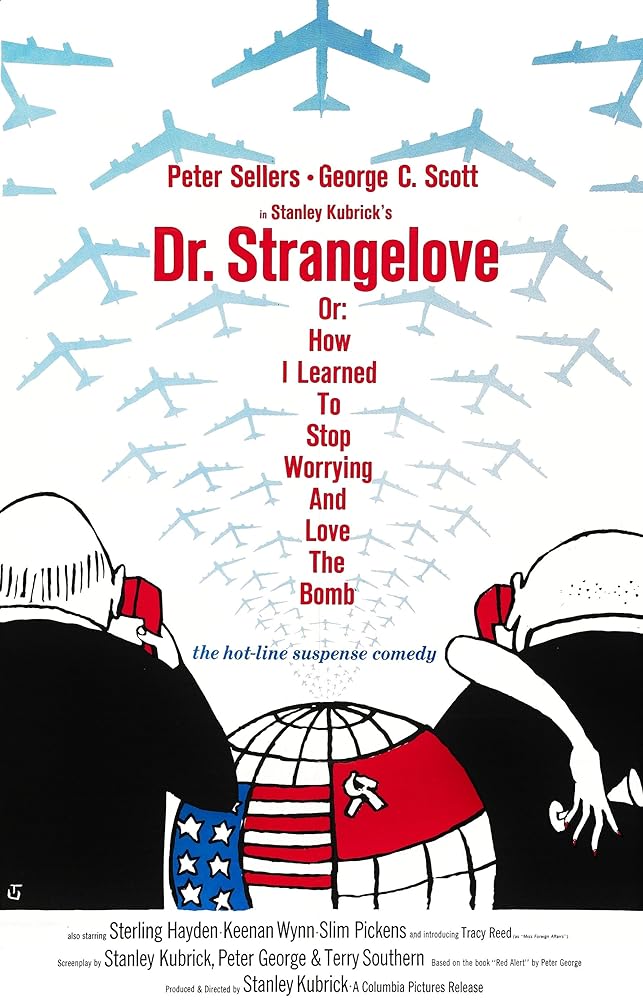
Dr Strangelove or: How I Learned to Stop Worrying and Love the Bomb - Nuclear Warhead. Handle With Care.


It's the fifth Letterboxd Season Challenge! Theme seven, part three- one of Spike Lee's essential films for aspiring directors!

(Chosen by John!)

Nothing written herein will be new or insightful. Without proper academic training into the act of film analysis, I cannot provide you a single word about Dr. Strangelove or: How I Learned to Stop Worrying and Love the Bomb any different than what a multitude of thousands have already said over these last fifty-five years. Not because Stanley Kubrick was some kind of inherent genius whose works are far too intricate for mere mortals to tackle, requiring a deftness of wordsmithery and cinematic insight beyond the ninety-ninth percentile before any decent work can take place - bout a year ago I watched and reviewed his Eyes Wide Shut during a different challenge, and managed a detailed piece I find satisfactory. Difference is, I watched Eyes Wide Shut for the first time then, without any preconceived notions or general knowledge of its general reception or common interpretations, a benefit of the film sitting outside the core Kubrick classics. Dr. Strangelove, by contrast, is a film I've watched in full multiple times since high school, regularly use as idle YouTube clip entertainment, read about from any new critic I discover who's covered it in any substantial detail, and love for all the reasons everyone else on the planet loves Dr. Strangelove. I know, you know, everyone knows the best lines, the ins and outs of what makes the performances tick and what Kubrick did to make George C Scott act Like That, all the little sexual innuendos, the Thing about how Kubrick insisted the table in the War Room be pool felt green despite the film's being shot in black and white. "You can't fight in here, this is the War Room!", "Precious bodily fluids," "He'll see the big board!", "Mutiny of preverts," Major Kong riding the bomb, "MEIN FUHRER, I CAN WALK!", all of it.

Still, I write, and write quite substantially on every film I watch for these challenges, so a lack of fresh insight shan't serve as any deterrent. In the name of maintaining forward momentum, let me simply state the observation I mean to work and expound upon in the bulk of this review: Dr. Strangelove is as cacklingly funny as it is because Stanley Kubrick did not make a comedy.

To clarify, he certainly conceived the scenario and directed his actors in the manner of a comedy. One can hardly look at George C Scott masticating on hunks of snack food between flustered, easily-excited outbursts and think his General Turgidson anything other than an immensely funny figure. Same goes for all three of Peter Sellers' characters, be they Group Captain Mandrake fighting back an emotional breakdown as he tries to calm his commanding officer's psychosis, President Muffkin ineffectually managing his staff and generals with ill-projected strength, or Doctor Strangelove gleefully describing a eugenics program to survive the end of the world while his Nazi hand flies into salutations. Beyond this core group, other characters aren't quite so wacky of immediately humorous, but Sterling Hayden's Jack D. Ripper and Keenan Wynn's Colonel Bat Guano are both such tightly-wound, deathly serious military men that their self-important speeches can't be anything save giggle-worthy, in isolation or in contrast to Mandrake's flustered replies. Clowns in positions of power all, even Slim Pickins, whose Major Kong is perhaps the mildest of the bunch despite his natural and entirely out-of-place Texas drawl, and still gets the film's bleakest, best punchline all to his lonesome.

Through Major Kong and his crew aboard the 843rd Bomb Wing, we can understand what I mean by Kubrick not making a comedy. Their scenes contain jokes same as the rest of the film, primarily quick lines from Slim and absurd background details, which render the plane a locker room hangout much as a militaristic instrument of death, but their composition and placement in the film do everything in their power to dissuade any impression you're watching a comedy. The majority of production design choices reflect Kubrick's typical eye for detail in a set based on then-top secret military hardware, the camera prefers views which emphasize the cramped space and the movements of dials and switches and blinking lights, the cutting shows us every man engaged in his obscure function as the crew flies onward to their final destination. Any time we jump to join the 843rd, the soundtrack strikes up a drum-based rendition of When Johnny Comes Marching Home, and the action plays out like any other military movie wherein a contingent of our good ol' boys are out on a mission to save Democracy and Freedom, and nothin's gonna stop 'em. They'll follow orders to a T, endure heavy enemy fire, face setbacks that mean their inability to return home safely, and still they fly on, fearless and undaunted! That they are flying a mission whose success means an end to all living things, one which sees every other character is tying themselves into hysterical knots in a desperate attempt to halt it, matters not one whit to how things play out.

Cross your eyes and ignore Slim Pickins and the pin-up girls on the safe containing classified orders, and there's really nothing funny about this stretch of Dr. Strangelove. Even once Mandrake and Ripper's side of affairs has concluded, and Muffkin and Turgidson and Strangelove are approaching their peak, the 843rd is still playing out its war game completely stonefaced, still emphasizing the technical work necessary to pull a last-ditch bombing run, still marching to its heroic tune. Right up until the bomb drops with Major Kong astride its girth, and the film corpses hard as it possibly can with him yippin' and hootin' and waving his hat all the way down to smack dab in the middle of Mother Russia with the world's biggest atomic penis between his legs... and then silence.

Such an effect applies across the entirety of Dr. Strangelove. Across every technical aspect, across set design, lighting, camerawork, sound editing, shot-to-shot cuts, Kubrick composes like he did and would any other film across his career, as a director driven to get everything just so and generate an atmosphere of cold, carefully manipulated sterility. The War Room is this monstrously huge, mostly empty space, with dozens of men all cramped around a comparatively little table with hot lights creating massive dark spaces all around and an imposing map of the world flashing ominous updates overhead. Ripper's office is laid out and decorated according to the sensibilities of a respectable military man, and gradually gets completely trashed by gunfire until it's an almost impressionistic space with slatted lights and obscure destruction strewn all around. Spaces we glimpse with comparative briefness still communicate a fussy, uncomfortable environment, such as the too open operating centers and offices Mandrake calls his own until he's stuffed into a cramped telephone booth, or the confusing mess of mirrors in General Turgidson's bedroom, which make it impossible to tell how he'll enter the frame until he does. Our view into these spaces consists of extremely long takes of two characters in close conversation, low close-up angles to emphasize projected strength, and more heavily cut sequences designed to show how stressed and uncertain all parties involved feel at any given moment. It looks and feels for all the world like the kind of military thriller that gets your teeth clenched til they feel like shattering, scootching forward to the edge of your seat desperate to know if they'll make it or not.

Except the subjects in the midst of this clockwork contraption of a tension machine are a group of sexually stunted, immature, undisciplined men who boggle for the camera and say patently ridiculous things in patently ridiculous ways, and make it beyond clear their petulance and desire to feel just a little bigger rules above anything else. I can only think of two instances in which the film is shot to explicitly laugh alongside the audience - when Kong rides the bomb, of course, and when Bat Guano gets a nice close-up of the Coca-Cola company squirting their product in his face. Beyond these two moneyshots, Kubrick does not once deviate from his thriller sensibilities. The script takes the plot seriously and makes damned well sure we know its every mechanism, the camera glares on like we can gleam some greater meaning from seeing these very important men in crisis, the editing holds and holds and holds til we can bear it no more, and then holds off the next cut just a bit longer for good measure... and George C Scott is in center frame, imitating an airplane and getting hopping excited about his boys dropping a nuke on the Ruskies to trigger a doomsday device. Or Sterling Hayden speechifying about how the commies are gonna fluoridate children's ice cream to an extremely uncomfortable Peter Sellers, or Sellers arguing with an unseen Russian premier like an old married couple, or any number of other silly things that completely destroy your faith in the chain of command. Completely unoriginal, argued to death argument here, but the contrast of the most handsomely mounted political thriller you ever done seen, and Peter Sellers talking up breeding caverns and wrestling an evil hand while Scott muses about megadeaths like a little boy in an old lech's body leaves you only the choice to either cry and commit suicide at the state of the world, or laugh at the same.

Even moreso than concerned Terrence Malick and Days of Heaven, I cannot recommend aspiring filmmakers try and emulate Stanley Kubrick's actual techniques. Genius and detail-oriented though he was, his work and writings about it clearly evidence a man who frequently demanded excellence beyond reasonable expectations from all around him, obsessed over things that didn't matter, and actively manipulated his actors instead of working with them if it suited the film. His methods produced some of the greatest films of all time, but I'd not think anyone who wants to work beyond a single project should try and do as he did. Rather, for the purpose of this challenge theme, I say we take Dr. Strangelove as a lesson in the power of contrasts - how complete and total dedication to a contrary tone with your actual, intended vibe peeking through juuuuuuust enough to recolor everything around it can pay massive dividends. The moments when the film breaks down and laughs alongside its audience are exceedingly rare, but its big break represents one of the most iconic images of Kubrick's notably iconographic career, and certainly the funniest of the bunch, so, y'know. Probably worth a study there.

(I meant to put my personal favorite moment from the film as a final tag here. I'm not doing so because I just can't choose one. It's either "HAS HE GOT A CHANCE? HELL YEAH HE....!", "Well, he went and did a silly thing..." or, "Our source was the New York Times.")

5/5

Tuesday, December 31, 2019

Comedy Challenge 2019 Wrap-Up!


At the start of the year, I claimed comedy films aren't really my thing, that I laugh far more readily at humor divorced from narrative structure or typical stage-bound set-up/punchline stuff, being the kind of dweeb who gets a big kick out've Vinesauce compilations.  Perhaps in an example of sticking true to form, or perhaps because I didn't make the best selections for this year's programming, my first round at this comedy challenge turnt out fairly in line with the expectation set by that sentiment.  Of everything I kept active tabs on, the comedy challenge scored lowest on average, and led to the most groans and complaints about films simply not being very funny.  I wouldn't make TOO much of this, for I'm still plowing ahead on next year's challenge with high hopes, but a year largely dominated by "mn, alright" is a year dominated largely by "mn, alright."

Still, this more muted reaction to the selected films means the ones I DO hold and cherish as my favorites are the ones I truly, earnestly love, and count a few instant favorites amongst their ranks.  But since I ran the Cult wrap-up post with the favorites first and the worst second, why don't we flip the script a little here, plow through the negativity right from the breach, savor the positivity for last?  Sounds good to me, should sound good to you, let's sally forth:

I Did Not Find These Films Particularly Funny


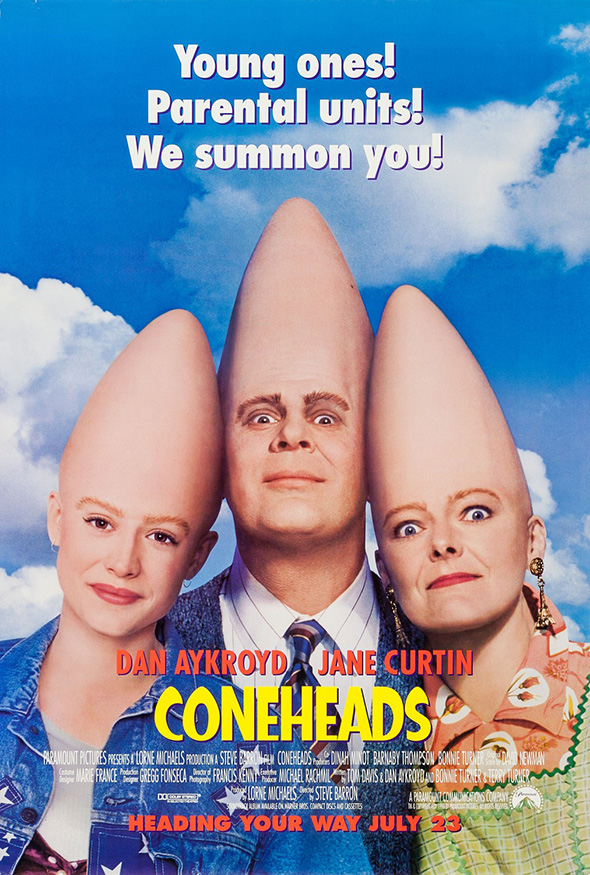
Coneheads
(SNL Alumni Week)
10: One third weird immigrant origin story, one third new twist on the old SNL sketches, one third budget space adventure, tied together by way too many celebrity cameos, attempts at serious drama, and talk about Conehead sex.  Sound atonal and messy?  Well, it is.  Dan Aykroyd probably should've cashed it in after Coneheads (or preferably beforehand), and stopped before he could further embarrass himself over the last 30 years.


Diplomaniacs
(Wheeler and Woolsey Week)
9: You've not heard of Wheeler and Woolsey?  No big surprise, considering Robert Woolsey died in 1938, and Bert Wheeler in 1968, right before the major boom of old comedians reviving their careers on the talk-show circuit.  They were a pretty big box office draw in the 30s compared to many acts we now think of as the classics, although Diplomaniacs isn't quite the best showcase of their talent.  It's full-up on hokey jokes without strong enough personalities to back them, and the racism... well, there's a lot of it. A whole lotta it.  The climax is one big blackface joke lot of it.  Eesh.

(Over the last year, nobody has been able to adequately explain why there's a swastika casually sitting in the RKO copyright byline.)


Yankee Doodle in Berlin
(Silent Comedies, Sans Giants Week)
8: Yankee Doodle in Berlin's a touch uncomfortable nowadays.  A big, unearned all-American victory dance all over the German's stupid faces fully written, shot, and distributed after the Great War was over, its generally low-energy presentation and slapshod sense of humor is exacerbated by how it reminds one of the way pretty much every Western power convinced themselves punitive, humiliating retribution against the Germanic people could have no possible long-term consequences.You get to see Bothwell Browne's female impersonation act, though, the only time he was filmed performing too, so that's neat.


Ka-Boom
(Queer Comedy Week)
7: Confession: I let Ka-Boom's not being Mysterious Skin get to me more than was probably reasonable.  Gregg Araki is not trying for the same effect here as in his earlier devastating masterwork, but while I don't think it fair to damn Ka-Boom on the grounds of not featuring similar themes and performances as a different movie with different goals, I do think it fair to put the film on blast for not featuring much in the way of proper effort at all.  The film stinks of a filmmaker diddling round in circles with more a mind for shock and purposeful quirkiness than any coherent point to make, and ends on a note that marks the whole production as pointless in the eyes of those who created it.  Fine to not be Mysterious Skin, not so fine to fail at being anything worthwhile yourself.


The Iron Petticoat
(Bob Hope Week)
6: I'm sure there's a Bob Hope film out there for me, one with him putting on an agreeable persona and delivering some jokes I can get behind.  When he's in his whole "Boy, fellas, these broads sure are a real pain in the keester, right?  Good thing I can set 'em straight!" mode, though, I'm gagging like there's no tomorrow.  The laziness extends to the plotting, which dawdles around to such an extent that it loops back round and keeps the jokes from evolving beyond a repetition of one already sour note again and again.  Doesn't help in the slightest for the shrew Hope's trying to tame taking the form of one way-too-good-for-this Katharine Hepburn, losing all her usual vocal charm to a really bad Russian accent and the need to act second banana to Hope's buffoon.  Maybe the Jerry Lewis collaborations are more my speed...


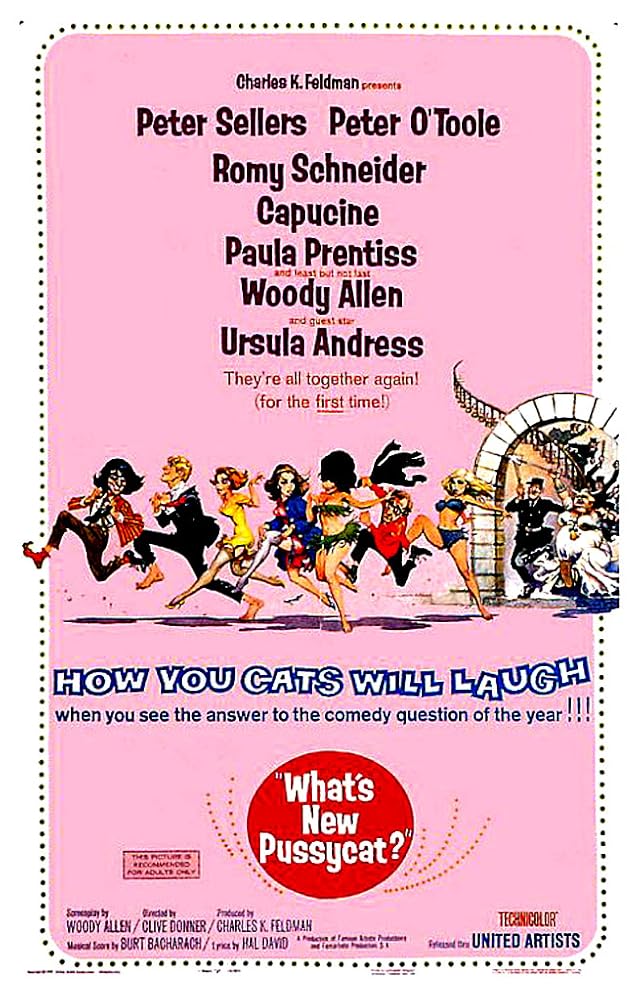
What's New, Pussycat?
(60s Sex Comedy Week)
5: A comedy of errors largely free from errors, what with its contentment to explore characters who're on the same page far more than any whose various hang-ups and quirks clash to produce comedy when forced into close contact.  You can feel the spirit of Warren Beatty forcing Woody Allen out've the lead any time Allen's supporting player has a scene to himself and does something funnier than anyone around him.  By the time What's New, Pussycat? feels like waking up and actually doing something amusing, it has spent so much time on blah material, I just don't feel like going along with it, which is a poisonous attitude for a comedy to install in an audience member during its zaniest moments.


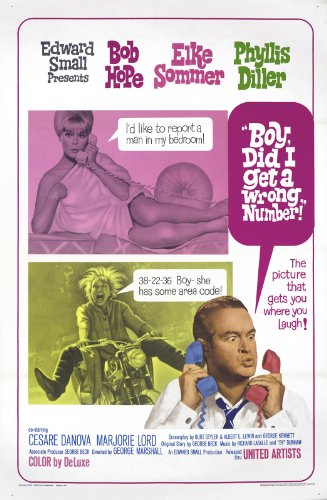
Boy, Did I Get A Wrong Number!
(Female Comedian Week)
4: God, why did I schedule myself for two Bob Hope films in a row?  Why'd I have to make one of them Boy, Did I Get A Wrong Number!, a sex comedy free from any sex that treats its most risque player like an agency-free prop for Hope to toss about like a sack of potatoes?  Why'd it have to be so square and bland, sandwiched right between the wilder excesses of true 60s counterculture and the more fully-fleshed beats of 70s television programs in the same style?  Why, when presented with any notable female comedian as the subject for this theme, did I go with a Phyllis Diller production where she's barely in it, and not able to take advantage of her greatest strengths besides?

More like Boy, Did I Pick the Wrong Film.  You may shoot me now.


Mother Riley Meets the Vampire
(Long-Running Series Week)
3: I listened to some've Arthur Lucan's Old Mother Riley comedy records from the 40s before watching this, the ones he made while his wife and long time comedic partner Kitty McShane played foil to his doddering-whipcrack old woman character.  Although the act WAS stronger in its intended form than with Lucan trying to carry on solo, I doubt McShane's presence would've saved a film produced at the tail-end of 16 years' constant production with a completely dry well for creativity and budget alike.  Lugosi's about the only fun element in Mother Riley Meets the Vampire, and he's simply not around long enough for you to do much more than smirk at his usual over-the-top silliness inherent to his poverty-era performances.


Billy Madison
(Comedian You Hate Week)
2: Oh, like there was any hope for Billy Madison with this theme.  I won't skewer Adam Sandler quite so deeply as I might otherwise, given Uncut Gems is doing the round and inspiring a whole slew've career reappraisals, but I see no reason to claim his early mainstream successes point to anything other than a man who knows and appreciates anything beyond the lowest level of filth.  This is a vile, hateful, miserable little film, not even well-made by the standards of a 90s gross-out slobs vs snobs comedy, and it makes me want to puke thinking about it again.  That phone call scene with Steve Buscemi is one I've seen multiple times in tumblr gifs and videos, and I thought it genuinely hilarious, so learning it has just a tiny little bit extra at the end where it turns into a borderline transphobic gag just makes me all the angrier at Billy Madison for ruining something I actually liked.


The Pick-Up Artist
(80s Teen Comedy Week)
1: Would The Pick-Up Artist be a better movie if Robert Downey Jr weren't playing the worst person in the whole wide world as the film tries to pretend he's secretly a really nice guy who should be seen as everyone's friend?  Yes, but then it wouldn't be The Pick-Up Artist.  Fun fact: director James Toback is apparently this sort've harassing, abusive scumbag in real life, so there's absolutely no reason to look on his work as anything other than a celebration of how degradation, misplaced charm, and engineering hostile or dangerous situations are the ideal ways to catch a mate!  Also I don't think it's very funny, and Molly Ringwald doesn't have anything she brought to The Breakfast Club here.

The Dishonorable Mention

Pineapple Express
(Stoner Comedy Week)
I very purposefully did not grant Pineapple Express a rating, because I acknowledge my inherent, extreme distaste for stoner culture put me in a position to hate it before I ever gave it a chance, and kept me from enjoying what I do believe is a fairly well-structured movie with some good jokes in  its pocket.  However, this lack of rating does not prevent me from putting it on record that I still kinda just hate its stupid guts, nor from posting the "IT'S NOT FUCKING WEED YOU PIECE OF SHIT STONER" image again in lieu of thinking about it further.

Enough negativity, let's talk funny!

I Laughed At These :D

(Dramatic Actors Going Funny Week)
10: I don't remember which actor I singled out as the one making a notable rare comedic turn when I picked this, considering they've all done comedy and drama with fair frequency, but I'm glad I chose Burn After Reading for a watch anyways.  John Malkovich's rage against everyone asshole, George Clooney's Smoothest Man in the World slowly degrading into total paranoia, Brad Pitt's stunning turn as a man with as few brains as he has audience-grabbing charm (I seriously don't understand why my dad hates this guy, he's great in everything I watch), Frances McDormand's cottonmouthed flailing for competency, they're all wonderful pieces of a story that gets bloody and senseless before anyone figures out what the hell is going on anyhow.  Special props to the dildo chair and everything with JK Simmons.

(Ealing Studios Week)
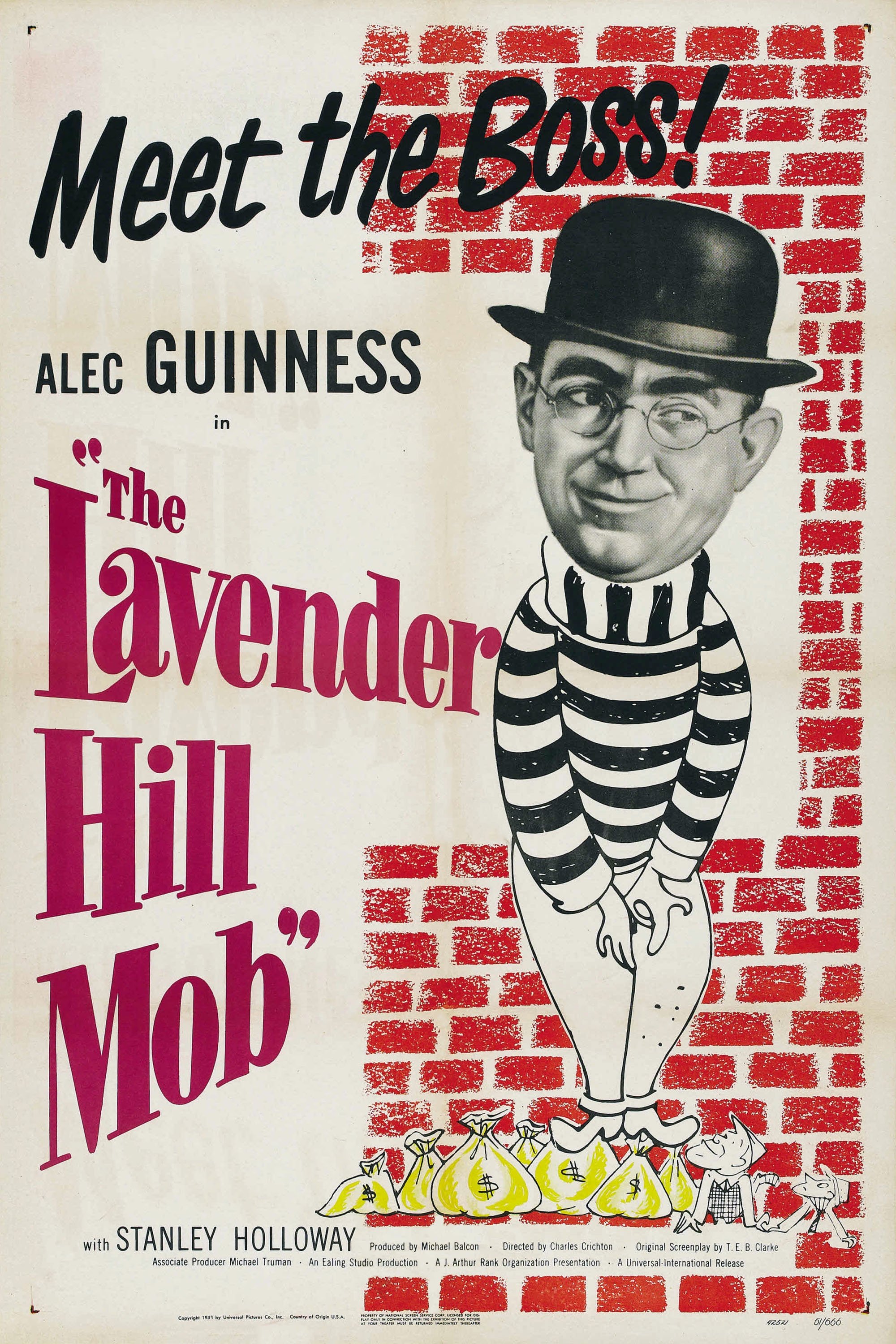
9: As I mention in my review, I didn't think The Lavender Hill Mob an especially special film immediately after its last frame, not compared to the same year's The Man in the White Suit.  Further consideration found me appreciating the way it exploits the camaraderie between its characters and a new ridiculous situation every scene to set off a series of firecrackers that SHOULD cause the whole thing to explode with manic energy, yet remains hilariously tamped down because we mustn't let ourselves get TOO ruffled, you know.  Great acting and clever filmmaking combine for a solid tale of comedic woe.  I'm still of the opinion this is one of the few times American censorship standards of the day forced the ending to be even better to release across the pond.

(Katharine Hepburn Week)
8: Love me some Howard Hawks.  Love the euphoric madness he brought to every picture, the unique, undeniable sense of a man happy to run rabbit rampant across the silver screen in the name of a laugh, in whatever form he liked.  Bringing Up Baby contains the single funniest moment from this entire challenge, for while I'm still a tad iffy about how Katharine Hepburn's character was written, it all becomes worth it when she storms back into the picture with a wild leopard in tow, completely oblivious to the danger she's in, as a final match in an already flaming powder keg.  Plus, y'know, she's tag-teaming with Cary Grant in one hell of an upper performance, and making ol' Bob Hope look hopelessly flacid about 20 years before he had the chance to do the same himself.

(The general consensus is right: "Because I just went GAY all of a sudden!" really is a hilarious line in an already funny scene.)

(Japanese Comedy Week)
7: Things fall apart in The Crazy Family.  Each member of the Kobayashi household has their little quirks, same as any family, which grow ever-more pronounced as the stress and isolation of the suburbs coupled with the absurd standards of Japanese family life push them deeper into their eccentricities.  When Gakuryuu Ishii touches a live wire to their wavering sense of sanity, the whole film erupts into a crazy battle between outrageous personalities, with our central father figure growing nihilistically homicidal.  Nobody's stable, everyone thinks they're the only sane person left despite all appearances, and they're all out for blood as they literally tear their house to shreds.  It's hilarious, and I'm gonna bluntly tell you that you should watch it, considering you've probably not heard of it compared to all the other top 10 selections.

(Any Comedy You Like Week)
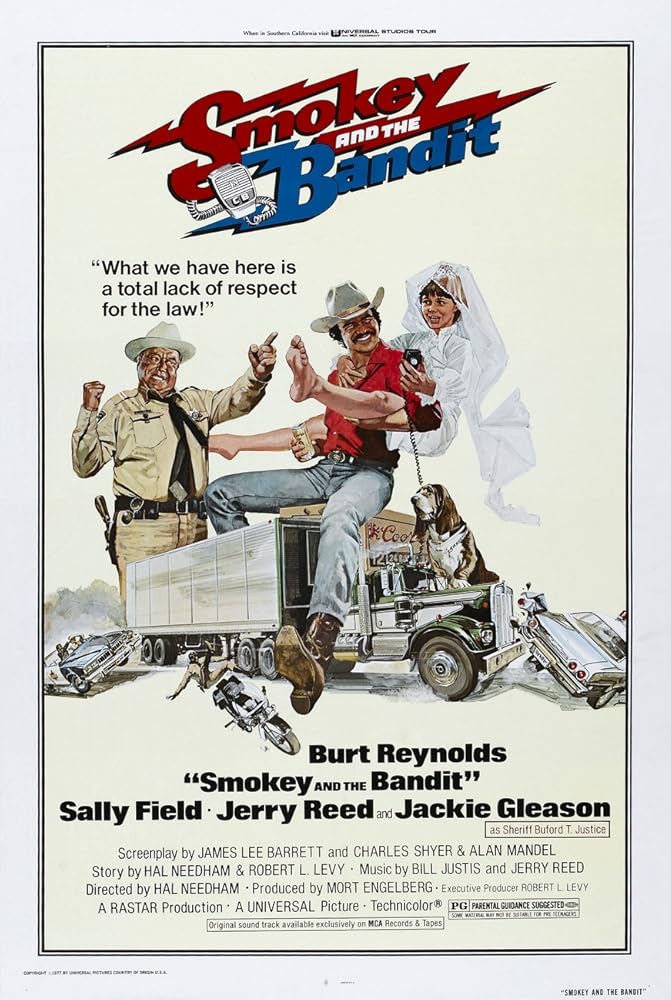
6: A pleasant last-second surprise from the very last comedy film choice of the year!  I've rambled about how Hitchcockian Smokey and the Bandit is in my review, so allow me to simply say its high-speed yet easy-going spirit, with Sally Field settling into Burt Reynolds' rhythm of life just as easily as Jackie Gleason lets it outrage and fluster and ruin his day, a murderer's row of colorful CB-usin' truck drivers on tap, and the musical styling of Jerry Reed permeating the whole film makes a wonderfully engaging time.  You've gotta love any film that treats expensive top-of-the-line vehicles like big kid toys to be thrown tumbling all throughout the American South.

(AFI Top 100 Comedies Week)
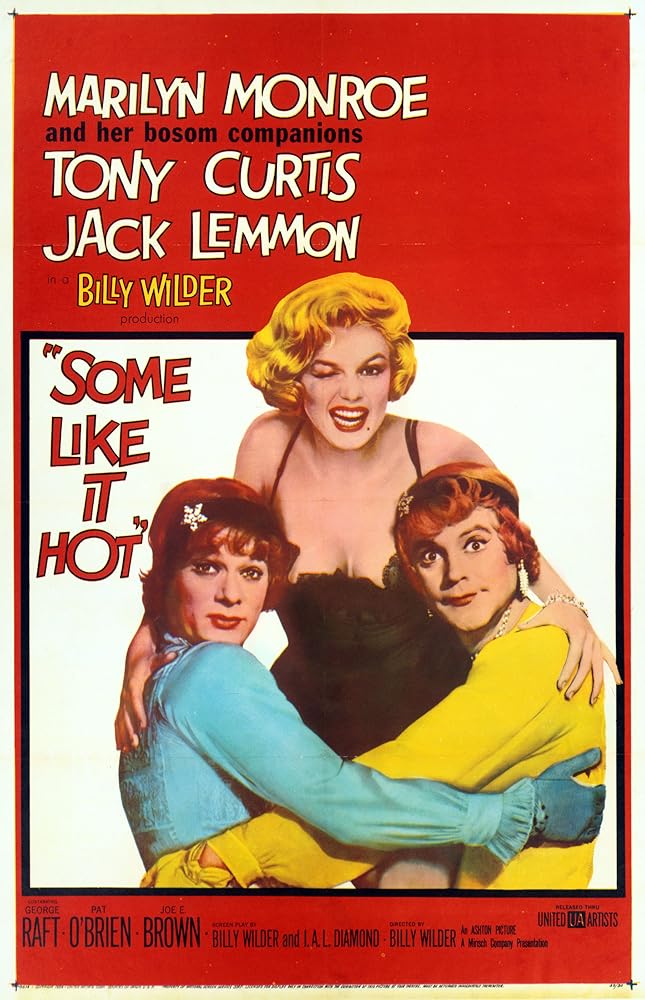
5: To reuse an analogy from the review: Two men playing poker and blatantly cheating on every hand, only to lose to a woman who sat down and played the game straight despite being a little hazy on the rules.  With those men being Tony Curtis and Jack Lemon, the woman being Marilyn Monroe, and the whole thing being orchestrated by Billy Wilder with a focus on executing such a dynamic again and again and again with new ideas and smartly-written dialogue on every reset, it's no wonder Some Like It Hot ranked so highly amongst the American Film Institute's voters, and there's no trouble understanding why it's still widely beloved today.  Way, WAY better at crossdressing gags than pretty much anything I've ever seen.  Also, Joe E. Brown as Osgood is just plain perfect.

(Marx Brothers Week)
4: The first film I found actually, no qualifications hilarious this challenge, and one I continue to have trouble articulating why.  Even accounting for how the Marxes lost their long-time producers after a studio change and dropped Zeppo for A Night at the Opera, the hell raised by Groucho, Chico, and Harpo on their journey across the Atlantic is so howlingly funny yet honestly sweet and wholesome that I can't imagine the kind of person who wouldn't find them funny.  We all remember the contract scene, the stateroom, Harpo's piano playing, etc, but I'm personally more inclined to name the Marxes gradually emptying a bedroom of its beds in a circular chase with a delightfully pompous police officer.  Funny's funny, the Marxes were funny, and this movie's a hoot.
(Steve Martin Week)
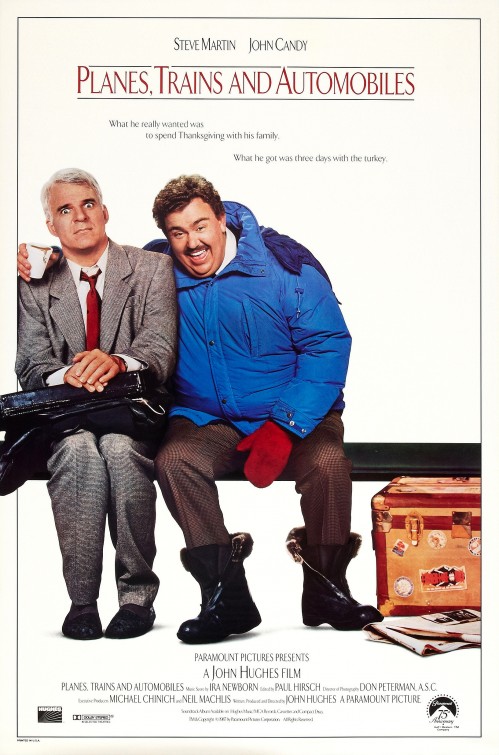
3: Expecting Planes, Trains, and Automobiles to be indiscriminately meanspirited and cold-hearted towards the world entire, and finding it actually a wryly self-aware, even-handed, ultimately positively sentimental work is downright one of the best surprises I experienced this year.  After years of keeping John Candy off my radar for no real reason other than general ignorance, I now regret not giving him a chance sooner, as he's a total delight to watch, and stunningly easy to care for without losing his loudmouthed, annoying traits.  Steve Martin, for all his badgering and rudeness and self-satisfaction, gets it way more often than he's capable of giving, and learns to love and accept this boorish man he thought he could only hate in a sequence that had me begging him to do the right thing through my TV screen.  Probably the perfect holiday travel comedy?  Yeah, I can get down with that descriptor.

(Screwball Week)
2: The film that clarified Howard Hawks for me.  Prior to this, I couldn't put my finger on what made his work so damned special in my eyes, what common element united the man noted for experimenting in every genre available.  The above-described sense of mad euphoria is plain as day in Ball of Fire, a rip-roarer of a comedy if there ever was one, with too many endearing bits and bobs to mention.  The best strategy I can think of is reminding everyone of how Hawks often cited an approach centered around "Three good scenes, no bad ones," and suggesting that if the matchstick rendition of Drum Boogie, the conga lesson scene, and Gary Cooper confessing his love to Barbara Stanwyck in a darkened bungalow are merely good, then the concept of "great" has been rocketed far beyond any mortal's reach.  Not only my second favorite of the year, my absolute favorite of the six Hawks productions I've seen, and likely to remain so for a long time.

(Massive Ensemble Week)
1: Are there words?  A large portion of my review for It's A Mad, Mad, Mad, Mad World consists of me alternately listing out my favorite parts in a massive block paragraph and exploring how it flows structurally for a few more, but are they words enough?  Can anything explain the sheer joy of watching Stanley Kramer exercise every comedy star under the sun in a madcap race to the prize for nearly three hours, short of watching for yourself and seeing with your own eyes?  I'd like to think one can do so, for one should be able to communicate just about anything with the right words and sufficient length... but hell if I know what those words are or could be.  It's A Mad, Mad, Mad, Mad World moves with a fleetness a film its size reasonably shouldn't, contains more funny moments by proportion and volume than anything else I watched this year, and has a killer structure to beat all with Spencer Tracey as the unexpected MVP.  It's a screamer to end all screamers, the kind of project that could only happen once and then never again, and they pulled it off beautifully.  The lone five-star film of the bunch, and it deserves it like no other.

Honorable salutes to the special effects wizardly and theme music of Killer Klowns From Outer Space, Cantinflas' Spanish wordplay that I couldn't understand thanks to shitty subtitling in Romeo y Julieta, the Birmingham Jail sequence from Stir Crazy, and Sean Penn's little smile from Fast Times at Ridgemont High, proudly pictured above.

See y'all in 2020 for even more comedy stylings, hopefully ones better on average than this year's!

Sunday, December 1, 2019

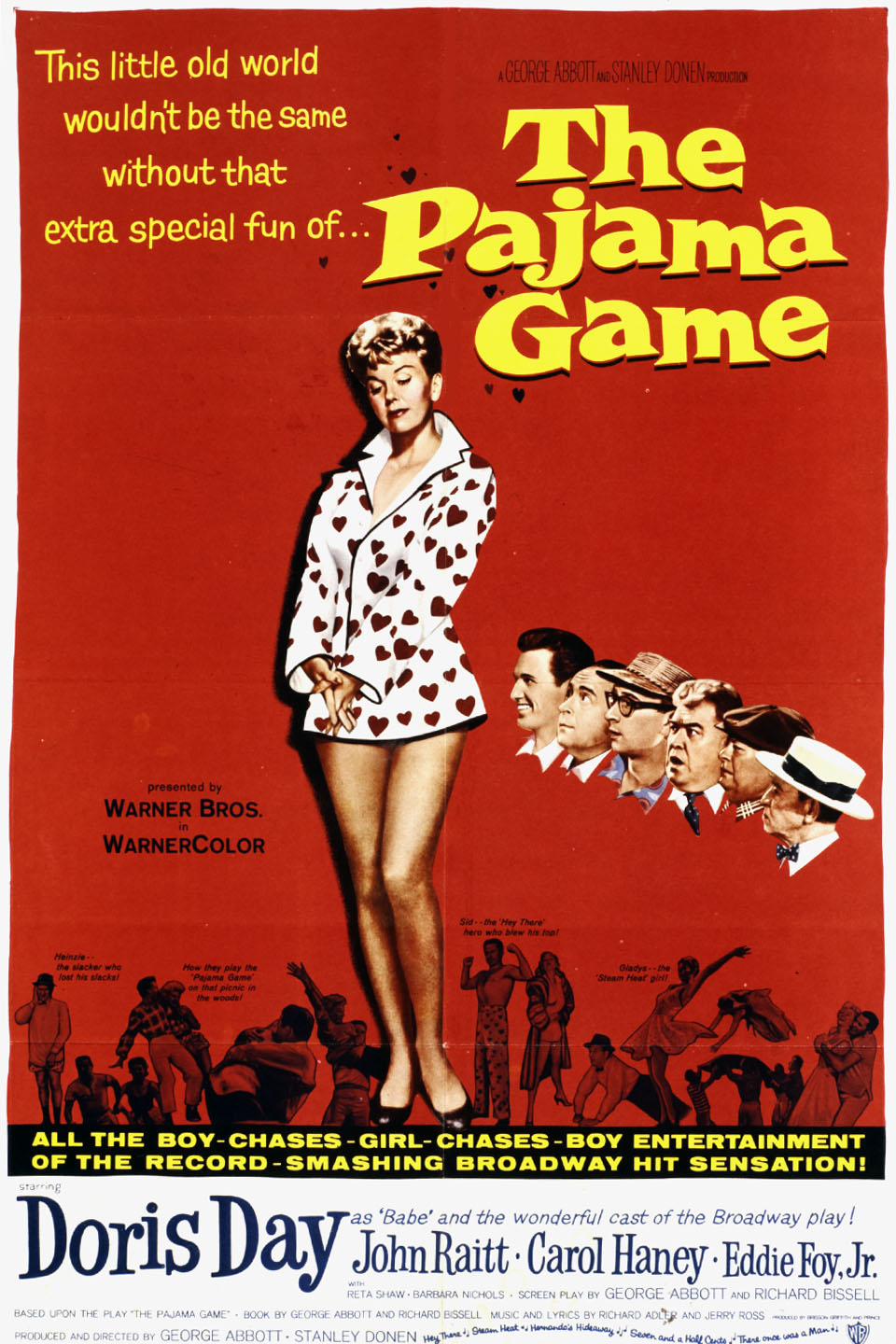
The Pajama Game (1957) - I know a dark, secluded place...


Letterboxd Season Challenge 2019-2020!  Theme five, part one - stage to screen adaptations!

I'm normally picky when it comes to older musicals.  Broadway showstoppers from the mid-century boom of plays with stories and serious issues on their minds rarely do much for me due to the focus remaining squarely upon melodrama and spectacle, while leaving their slight plots to mill about in the margins as mere excuses for the main action.  I prefer the songs to serve as primary means of storytelling, and the classic standards always treat them as entertaining diversions from the story, not really exploring any emotions or ideas beyond rapturous love, silly antics, or witheringly light tragedy through the music.  It's additionally frustrating when a work with an interesting conflict or unique setting is made to play home for yet another meet cute, fall in love, fall apart, get back together narrative with only trivial intersection with the ostensibly main conflict.  All in all, a Broadway musical from the 50s has some massive hurdles in its path if it wants to leap into my heart, and The Pajama Game hits on all the little things that annoy me about this style at a scan.

After watching George Abbott and Stanley Donen's adaptation of Abbott's hit 1954 play, I SHOULD come away with a tongue primed full've venom.  Why not?  The whole business about the pajama factory workers striking for a seven-and-a-half-cent raise serves as background dressing for the romance between Sid and Babe, which ignores the conflict for long stretches of screentime before driving a gulf between the two with a token upset, and subsequently puts no energy into their getting back together beyond "Well they're the main couple, so y'know."  Multiple musical numbers run on as little more than filler entertainment divorced from character motivations, and when they ARE character motivated, one gets situations like Babe and Sid duetting about how passionately they adore each other for two songs in a row.  As a piece of filmic work, the movie's fairly limited - despite a lively enough camera, many of the musical numbers are limited in scope and activity by the trade-in from live stage to sound stage, with only Once-A-Year-Day roaming a larger location and Hernando's Hideaway getting at all cinematic with the staging and editing.  A jealous boyfriend's murderous rage is played for laughs, the union's victory over the company is treated as overly uproarious for its eye-raising simplicity, and the overall romantic arc comes across as little more than the script asking the audience if they want these hot people to flirt some, so it SHOULD be actively hitting at every "dislike this movie" button across my entire figure.

So, why are we coming away from the experience with me metting out a four star rating?

Familiarity bias might play into it some.  I chose The Pajama Game for this theme because I'd seen a performance back in middle school, when my English teacher took the class on a field trip to watch the Tucson Community Theater's production.  As with much media I viewed at the time, I've forgotten most of the details in the intervening decades (not as big a surprise here, considering it's the only live theater show I've seen in my life, and something watched for a school project at age 12 or 13), but the standouts definitely stand out in my memory.  Snatches of Steam Heat and Hernando's Hideaway occasionally drift across my stream of conscious in free moments, and a lot of this watch was consumed by periods of "Hey!  I remember this song now!  It's great!"  That I spent an entire evening editing the Wikipedia page for the play to include details of the production from the playbill I brought home before I understood what notability constituted probably helped stick the play in my mind as something worth remembering fondly, however dimly, and primed me to think of this film as a grand ol' time regardless of elements I'd otherwise find annoying.

This doesn't quite satisfy, though.  The Pajama Game may sit in my mind as "that play I saw in middle school," but this film, divorced from my memories, still has quite a lot on offer.  Forget notions of doing something uniquely cinematic with the filmed material or using songs as a means of communicating story; the music and performances here are infectiously bouncy and varied enough to blow such preconceptions right out the door.  There's a trend towards allowing the actors' vocals to strain and fray on longer or higher notes in a way which feels highly controlled, granting moments like Doris Day's increasingly atonal response to the calls in Not At All In Love or her interplay with John Raitt on There Once Was A Man an extra degree of skin-tingling satisfaction.  The Broadway music team clearly had tons of fun tweaking at the call-and-response style of structuring, playing with swinging waltzes, rapidly shifting verbal tempos (consider the stretched out notes followed by babababababa rapidity on the verses to I'll Never Be Jealous Again, the breakneck/leisurely contrast in Small Talk, or the radically different paces on both go-arounds of Racing With The Clock), and even players dueting with themselves.  Though I'd entirely forgotten about it from the stage play, Raitt's work on the opening warning half of Hey There followed by his interplay with his recorded voice as a doubting counterpart in the second stretch was an unexpected highlight, and Day's reprise in a new, sorrowful context sold me on her status as a musical superstar better than anything in Calamity Jane.  And, of course, it helps to have big showstopper numbers like Once-A-Year-Day, which just keeps going and going and building and building without losing any of its energy or fun, and the matchlit, darkroom tango of Hernando's Hideaway, which contains the film's most well-crafted visuals.  It's an uncommonly good soundtrack all the way through, whose density only gets one charged and willing to leap from number to number with little resistance.

Beyond the music, I also think the performances help the movie along towards a higher rating quite a bit.  Looking over Wikipedia, the cuts made in adaptation rob most of the supporting cast their numbers and sideplots (Prez seems to suffer the most in this regard), but the original Broadway cast is still here minus Janis Page's Babe and Stanley Prager's Prez, and they're still giving it their all in roles they'd inhabited for three years by this point.  Carl Haney stands out in particular when the spotlight shines her way towards the end, given she's afforded the leads on both Steam Heat Hernando's Hideaway, a riotous drunken routine in the following scene, and a turn towards the climax that allows her to just wild it right the hell up with out of control screams and erratic mannerisms.  Such high-effort, high-reward mania defines the film's comedic routines, which involve large chunks of the cast getting caught in their own conflicting priorities, and blustering and shouting over one another until someone barges in to straighten the situation.  While it does not MEAN much in the way of exploring the labor conflict or romances at play, it is endearing to an extreme I cannot deny, and couples well with the same performers when they launch into song and dance.  I don't particularly need a well-defined romantic arc when Day and Raitt are giving it their all to make the all-too-short courting period seem natural before the dizzying highs of Small Talk and There Once Was A Man.  Call it emotional cheating if you will (it absolutely is), but damn if it doesn't work, and work well.

Effectively, I think the movie clips past any and all grievances I can and do raise to land at an overall positive place by doing what a Broadway entertainer does best: taking the material it has on hand, rehearsing it to perfection, and then performing with such finesse and bombast, you hardly notice or care about whatever cracks show.  Taking The Pajama Game and transplanting it to the screen with little more than some cut content and more realistic locations conducted in transit probably should break the thing in the process, and I'd be made a liar if I claimed a few elements didn't almost push me down to, at least, a 3.5.  The way Gladys and Hine-sie's little subplot resolves with them jokingly wearing prison stripe pajamas with built-in handcuffs makes me choke on my tongue a little for how bitterly 1950s it tastes, honestly.  With such strong musical and performative elements in tow, though (not to mention the production design - it's a minor thing comparatively, but I'm kinda in love with the costuming here), the film can skate right past any and all problems to convince me to go with the flow and enjoy what it has to offer.  As I've said time and again, one should strive to level with films on their level and, where possible, count a final positive experience as more important than whatever grievances come up.  In this particular case, the film's all about making good with a grievance committee, so I've an extra layer of cover for my less than professionally critical perspective than usual.

(Someone kindly tell me how Ralph Dunn wasn't made known to me as a comedic talent until last night, please.)


Lookit 'em go.

4/5

Sunday, November 17, 2019

The Bat (1926) - I've stood by you through Socialism, Theosophism and Rheumatism; but I draw the line at Spookism!


Letterboxd Season Challenge 2019-2020!  Theme four, part two - a silent horror film!

(Chosen by Jackie!)

Might as well start off by noting the most notable thing about The Bat as a media franchise: in his 1989 autobiography Batman and Me, Bob Kane named Roland West's 1930 sound remake of this silent comedy-mystery as a major influence on his most famous creation, Batman.  This would count for something more if it weren't for Bob Kane's major contributions to the Batman mythos beginning and ending with the idea for a guy named Batman.  Considering Kane and his estate spent a good collective seventy-seven years bilking Bill Finger of any and all creative credit on published materials, despite Finger coming up with (among other things), Batman's actual costume, the Batcave, the Batmobile, Robin, Commissioner Gordon, the Joker, Catwoman, many of Batman's villains who hail from the 1940s, and the actual stories and dialogue from the vast majority of Batman stories published during the Golden and early Silver Ages, I do not think it matters much that Mary Roberst Rinehart's 1920 Broadway smash hit eventually played before Kane's eyes as a filmic adaptation when considering the overall Batman legacy.  There's a few tiny elements in common here to make the tenuous connection a little more believable, such as the presence of a circular light with a bat silhouette in the middle, or the bat-shaped calling cards the titular villain leaves behind, but in the main, naming The Bat as a major influence on Batman's creation only gives credence and credit to a man who stole more than enough both during and after his time on this earth.  Someone let me know when a Bill Finger biography mentions this play or either film; then we can start talking.

Anyhow, as a film, 1926's The Bat proves a difficult watch.  Looking over the Wikipedia synopsis for the play, there are mentions of where exactly the act breaks go, and I can see how moments within the film are meant to function as such, yet the pace West adopts to keep things lively makes matters muddled and difficult to follow.  On paper, the tale involves the criminal mastermind known only as the Bat holing up in an old manor where an elderly woman, her youthful niece, and their live-in maid have recently taken residence, joined in short order by a mysterious new gardener, a doctor representing a bank which was robbed under suspicious circumstances, two detectives hired to chase down the bank robber and the Bat respectively, and a late-arriving roughed-up man who nobody can identify.  You set them lose on the understanding that any one of them could be the Bat, and you've the ingredients for a nice spooky run-around.  In practice, there are so many characters with so many hidden agendas, introduced at a pace which does not slow down for or discriminate between act structures, and treated as a single massive pack whose individual members don't much matter so often as to leave one completely lost.  Try as I did, I could not keep track of the plot's twists and turns and double-backs, and eventually asked the room if anyone knew what was going on, to which I received a collective, "No."

It's at least nice to know understanding the mystery is only one component involved to enjoy The Bat.  The other, pertaining to the film's miniature comedic routines, makes a nice time.  If I don't know quite what's going on or why the characters are doing what they're doing, I'm at least guaranteed to enjoy whatever's happening on-screen at any given point.  West cuts between footage and title cards at a rate which I assume is meant to duplicate the dialectic rhythms of the stage play, and finds more success than usual in the attempt.  I'm personally a fan of maid Lizzie's comedic hysterics and how overall extra she gets when faced with the slightest amount of stress.  Characters moving through the manor in a big ol' huddle leads to some decent comedic scenarios here and there, particularly when they all go swinging from the rooftops.  One of the detectives, who looks to me for all the world like Roscoe Arbuckle, gets into a little game of turn-around over a gun on a table with the mystery man while the latter's tied up, and that clicks along nicely.  Connect the gags of comedy the gags of horror, and The Bat also has some nice beats along those lines, such as the moment when the villain corners the niece in a hidden room and we finally get to see his realistic chioptera mask in detail, or the way West frequently narrows the camera's focus to just the diagonal slice of a stairwell to heighten tension.  He's a little incoherent on the big picture, but I'm having myself a decent experience.

I cannot call The Bat a particularly good movie.  Not when the reveal of whodunnit comes at the close, we all spend a few minutes discussing what happened amongst ourselves, and then I look up the plot summary on Wikipedia and find the four of us misunderstood what happened entirely.  West's film does not make the play's plot easy to follow, what with the way it hastily introduces multiple characters at a rapid clip and treats the routines the scenario makes possible as more important than the overarching structure or point of the piece.  With said routines, be they comedic or intended as frightening, serving to draw out a small smile or appreciative nod multiple times throughout, the negative impact of his plotting and character work is dampened to an extent.  It's likely not the best way to experience Rineheart's work between her original novel The Circle Staircase, the stage production, West's sound remake, and the 1959 redo with Vincent Price.  Could easily be wrong on that count - I've not experienced any of the others, so maybe The Bat as a property doesn't hold any appeal for me and this IS the best of all possible versions - but I'd imagine at least ONE of these is still funny while also making it substantially easier to follow who's who and what's going on.

(Gotta love how we just absolutely mangle the Bat's leg during the climax while elderly Miss Ogden casually goes about her crocheting.)

2.5/5

Sunday, November 10, 2019

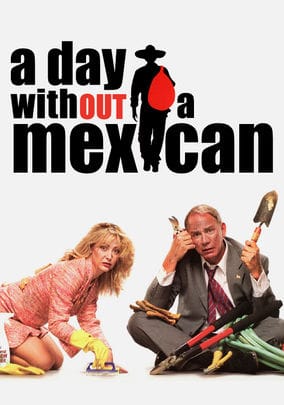
Saturday at the Borderland Film Festival - Shorts, Los Truenos de San Juan (2017), and A Day Without a Mexican (2004)

Necessary disclaimer: I had a uniquely bad experience here.  The website for the Borderland Film Fest said there would be a showing of Bad Hombres from 2019 at 10:30, so I arrived at the theater at that time.  An employee told me the showing was actually at 11, which wasn't too big a surprise - the Film at the Fence is advertised as being at 8 in the evening, while the paper's story on the festival notes 7.  So, I hung out waiting for the picture to begin... and waited... and waited... and waited until a large group of people arrived at 12 to watch the shorts.  After nearly hour of this, I was roundabout ready to go, only for them to announce they'd be skipping the last short in favor of screening Los Truenos de San Juan, which supposedly ran yesterday.  As such, I was in the theater FAR longer than expected, and got quite antsy through the documentary.  i don't much want to let the experience negatively color my views or result in an unfair post, so the following reviews will be as positive as I can make them, to offset a problem I created for myself.
***
Rapid fire short reviews, lessgo!

-The Battle of Ambos, Nogales is an amateur short interpreting the 1918 conflict that led to the first border wall between the United States and Mexico through music, film, and dance.  A lot of the techniques at play are those you'd expect from a first-time production (particularly the way footage occasionally reverses, and the deliberate over-saturation to the point of eradicating all colors save glaring white in many shots), but it's interesting how they dug into the the loss of life and human cost of the event without making much of the actual fighting.  The twirling specter of death and fire dancer who marks the last frame by dancing out of sight are rather nice touches, and it'd be neat to see what the creators do once properly established five or ten years down the line.  I would've liked a cleaner view of the short, considering the file seemed mildly corrupted, but the jerky nature of presentation adds to the feel of something fully home-grown when contrasted against the more polished material presented afterwards.

-Loving South (advertised as Minuteman on the site, and noted by director Oliver Rendon as having undergone multiple title changes at the screening) is a slice of a border patrol agent's evening as he goes about his tasks between picking up groups of illegals crossing the border.  There's racially-charged, xenophobic talk over his radio, but he himself seems the sort of man to just do his job, dropping off a young man he caught before the start without a word, and calmly accepting the next assignment at the end.  In the seven minutes in-between, we watch him putter about his sparse trailer, attending to chores and putting his thoughts in order with minimal commentary.  He's in-between spaces here, with none of the hats his job requires worn at home, and it's quite an interesting perspective to take.  Maybe there's some sadness to his movements, maybe willful obliviousness to the larger system he engages in, maybe he's just taken a job to try and keep his house in order.  Whatever it is, when he's not out in the field and just doing ordinary tasks about his bland domicile, he's still just a guy all the same.

-El pulso de la tierra (The Pulse of the Earth) was a little hard for me to watch, due to the up-close horse castration scene, complete with dog eating the freshly severed testicle at the end.  The frankness with which Fernando Alvarez presents the event, though, coupled with the short as a whole's tendency towards getting in tune with the natural world through appreciating horses, helps it feel more natural.  We're making a point about the ebb and flow of life out on the ranch, to the point of having sex in the middle of the desert shortly after the castration scene, so why not film it with such up-front honesty?  I was more than OK with the skinning scene in Aga yesterday, so I should be down with this castration scene - it's something ranch-hands do as a matter of course all the time, so why should I feel compelled to look away?

-Figures that in a group of shorts with tons of extended periods of silence and minimal dialogue, the one with heaviest on narration to the point of demanding your comprehension to get the most out of it (like, y'know, pretty much anything with narration) is the one with no subtitles.  Curse you, shoddy high school foreign language programs.  Fortunately, Juan Hernandez's Bajo el Agua (Underwater) is also a very well-shot compilation of black-and-white landscape shots and close-ups, with an obvious throughline of a woman discussing memories of her father, so while I couldn't understand a full sentence of narration, the emotional impact hit me all the same.  I really appreciate the shots of a decrepit house in the midst of a lake, the studies of an old man's face that creep in as the short goes on, and the way shots of a woman I presume stands in for the narrator increasingly come into focus before a fully-sharp image right before we watch her once-more-blurry figure walk into the sunset.  S'a good experience, regardless of whether you're behind the language barrier, and I fully understand the mix-up regarding subtitles when they were also showing this down in Sonora, where English-as-a-first-language/non-Spanish-speaking audiences are a minority, if present at all.

-JosĆ© López Aramburo's Camuco was, unfortunately, not shown due to technical difficulties.  Alas.
***
Santiago Maza knows exactly what he has in Los Truenos de San Juan (The Thunderers of San Juan).  A good documentary needs a strong, unique hook to get you drawn in as soon as possible, and as hooks go, San Juan de la Vega's annual festival in tribute to San Juan Bautista is among the more immediately eye-catching.  Few religious ceremonies involve sledgehammers with illegal flashbang powder on the head being swung into the ground thousands of times over the course of several days, producing a deafening, thunder-like bang with each impact.  For all his focus on the cultural context and the reasons why people are so willing to risk limbs to celebrate in this way, Maza knows the allure of metal blasting powder against solid ground and rail irons is deeply, almost primally compelling, and so makes sure to seed his documentary with regular footage of anonymous townsfolk slamming sledges and producing white powder clouds in the aftermath.  What passes for climax in the documentary format even involves a long montage of hammer slammers cut and scored to classical music, peaking with a train running over dozens of powder bags in  a row.

I wouldn't have many words for Los Truenos de San Juan if it were just about the joys of detonation, and Maza brings along a fair amount extra.  He explores the less explosively spectacular aspects of the festival with roaming tours of its reenactments of historical events said to have involved San Juanito.  The people who produce the powder bags are given ample time to discuss their tradition, how they've seen it develop over their lifetimes, and voice their concerns about whether or not the children will take up their mantle in the coming years.  There's a good deal of footage showing certain prominent members of the community negotiating with the police for safer practices, while still working a little under the table to ensure things aren't too restricted.  Interrogation of larger issues pertaining to the town's unwillingness to cooperate with the law or willingness to put up with the harm that does befall those who get unlucky or judge their strike wrong is fairly minimal, but I still go with the documentary for exploring a unique subject I did not know about prior to watching with a decently comprehensive eye.

It's one of those docs where you definitely walk in on promise of b-roll footage, and stay for the stories and personalities.  What interrogation Maza does engage in reveals a community with a strong love of their tradition and a belief in the need to carry it on regardless of danger, tempered... or, since tempering implies strengthening, perhaps broadened... by the youthful wrecklessnesss necessary to swing a heavy weighted tool into shatterable rocks or bouncing steel beams with some pretty strong explosive substances in-between.  One might not learn much about the big picture around any of the issues it touches on, but one learns more than plenty about a slice of culture that often doesn't get this level of focus, and learns in an up-close and personal way too.  S'nice spending eighty minutes in this town, learning about its traditions and seeing the people exercise their practices.  And it all goes boom in the end with enjoyable frequency, so you're not liable to nod off while watching either!

***

(Warning: Bad writing ahead.)

Frankly, I think A Day Without a Mexican has too much going on for its own good.  The film, about a mysterious pink fog descending around California and causing all persons of Hispanic descent to vanish without a trace, already has the baseline thesis of showing how vital those from south of the border are to the local economy in a humorous way.  It already chooses to express this through an ensemble narrative looking at, among other things, a woman whose Mexican husband and half-Mexican son vanished while her half-Mexican daughter remained behind, and her sister who tries to take advantage of the moment to push her apocalyptic religious beliefs on others; a Hispanic reporter who seems to be the last Latina in California and the massive media circus around her survival; an old rancher with a xenophobic son who finds his family ties tested by the economic crisis; a Senator tires to use the situation to ascend to the governorship while his family struggles with having to work like normal people; and a set of border patrol agents whose lives are upended by the lack of illegal immigrants to chase after.  All of these storylines are required to be straight-up humorous, ironically sincere, and genuinely emotional at various points in the film, all cross over with one another at some point, and I'm pretty sure I've missed one or two plot threads in here.  This is the "what the film already has going on" paragraph.

In addition to all of this, director Sergio Arau slathers the film with a grab-bag of asides, genre digressions, and editing oddities that confuse the tone something awful.  Many characters have a background in news media, so we are afforded frequent glimpses into what television has become without contact to the outside world.  The result is a mishmash of desperate reaches for content, wild conspiracy theories played for laughs, a man who looks like John Goodman in The Big Lewbowski ranting about statistics inside a cheap TV frame, and occasional dips into mockumentary footage.  Despite this framing device, the film also makes time for quick little montages of California descending into chaos separate from the media's watchful eye, with a few skits repeating throughout.  When these asides become mainline intersections with the plot, they produce bizarre subplots like the government planning increasingly bizarre experiments on the surviving reporter under the supervision of a crackpot TV scientist.  Through this all, the film makes frequent pauses to throw up informative title cards after a particularly misinformed or stupid-sounding line, to make sure we know the score on whatever was just said.  These many, MANY chunks of content produce frequent laughs, but I have a hard time saying they're particularly graceful in their style.

Normally, I'd hit the wrap-up point ans say A Day Without a Mexican is an overstuffed, unfocused package that holds together mostly because it has so much going and trades in such cheap hooks, it'd be hard for something to NOT land every now and then.  It gets into some convoluted territory towards the end for reaching the "now is when we are serious and make our big points" moments, but rallies around a perfectly ludicrous moment for a finale, and earns some respect for digging up so much to throw at the wall.  Review done, publish button pressed.

Thing is, after watching at the border last night, several people called it a great movie, asked me if I thought so too, and I responded, "Yes."  My intent here is to give the film a 2.5 or a 3, which I would normally not qualify as a great movie.  Why respond in such a manner, beyond the obvious answer of, "There's no reason to pull down people who enjoyed a film more than you did, and keeping the conversation light is more important than spitting out your full critical opinion right then and there"?  Honestly, two things.  One, while I don't think Arau and Yareli Arizmendi's script is particularly smart or graceful, and do in fact find it broad to the point of trying to embody every single joke you could make about the border situation in 2004 at the expense of a consistent tone, it IS written in response to a complicated international relations problem that is frequently boiled down to "Those people bad, keep they out" by proponents of quick, "easy" solutions both then and now.  In its way, a film which looks at this situation, determines to find the comedy beneath the surface, and goes about the task with every tool it can manage at a downright manic pace is making the reasonable choice.  Flinging out actually informative statistics alongside snarky asides like "Contrary to popular belief, Israel is NOT part of Mexico," asking serious-minded characters to stand next to broad prop comedy, being anything and everything under the sun related to migrants across the US/Mexico border accurately reflects the reality of the situation, and makes double mockery of those who think simply throwing up a higher wall is the answer when there are so, so many factors at play.

And that's really the other reason I felt compelled to agree A Day Without a Mexican is great where I wouldn't otherwise: the wall.  As with El Norte last year, where the story of two siblings trying to survive after an illegal border crossing was enhanced by facing away from the wall and hearing the soundtrack duplicated from across the line, watching this picture with the barrier that stands as symbol for every ignorant and hateful attitude it rails against right behind the screen makes its otherwise cheesily-delivered message more impactful.  You tear your eye from the picture for a moment, look through the slats, and see, as it argues somewhat inarticulaely, yes, there ARE people on the other side just like any other, watching this kinda dumb movie and having a great time when surrounded by others.  With the stretch of wall in Nogales featuring yet more barbed-wire than it did at this time last year, and with international relations ever-deteriorating under the Trump administration, it's worth taking the time to be there and think about how, for all the anger and complex factors making any simple solutions impossible and dangerous to entertain, so much of what has fueled the fires over the last century has been little more than needless hatred towards people whose place of birth means they call themselves Mexicans where we call ourselves Americans.

It's a weird way to defend a film, I know, and I've descended into inarticulate, wide-swiping techniques myself in trying to do so.  Saying the film makes a good experience and a proper capper to a day of films in Nogales because it reminds you of how simple and complex the situation is seems paradoxical.  The alchemical processes by which a film I wouldn't otherwise like too much becomes a great time are weird and convoluted and not for a mind that has been operating on very little sleep of late to properly understand.  I can just ramble it all out onto the page, hope it makes sense, and say we really should be trying to smooth out the process of border crossing with more ports of entry and attempts at foreign diplomacy focused on addressing the reasons people come here rather than just throwing up more defenses and encouraging a culture of xenophobia.  That's all.  G'night!

(Best joke in this movie is the sleazy salesman's commercial hawking all the leftover merchandise.  Seen those guys on local TV one too many times.)

2.5/5 for the film, 5/5 for the experience.

Saturday, October 19, 2019

The Story of a Cheat (1936) - At ten, I was saved by stealing money. Later, I was punished for failing at stealing. Finally, after stealing a great deal of money, I turned honest, and went completely broke.


(Chosen by Jackie!)

Sacha Guitry did not initially care for film.  After directing a short patriotic piece celebrating France's great celebrities and intellectuals of the day, the famous French wit swore off the medium as too restrictive, and focused instead on writing, directing, and starring in the over one-hundred plays he'd produce between 1902 and 1936.  To his mind, Guitry's greatest assets were his wordsmithery and his voice, neither of which could translate well to the silent medium.  This changed in the mid-30s, when his third wife of five, Jacqueline Delubac, convinced her new husband to give film another try, now that it possessed the technology to distribute his words loud and clear.  Guitry threw himself into his new medium with characteristic aplomb, wearing multiple hats in numerous films per year to the decade's end, and continuing his cinematic career regularly throughout the late 1950s, even through his disillusionment with French patriotism after his countrymen accused him of collaborating with the Nazis during German occupation on false pretense.  Quite a good thing he listened to her advise given today's film, although the whole "five wives" thing does give one a moment's pause when reflecting on his character.

It's interesting coming to Guitry after Murnau in this challenge's previous entry.  Murnau fared ill amidst the rise of talkies, and produced his (unfortunately) final film in defiant silence to great effect; Guitry evaded the movie houses for years due to their silence, and when he finally got in on the game, he was all talk talk talk.  I'd call The Story of a Cheat one hell of a chatty movie, except a chat usually involves two or more participants - the titular Cheat regales the story of his life to the audience in total isolation, narrating  an extended monologue over practically every second of the film.  The line between the Cheat and Guitry is blurred from the opening moments, where the picture foregoes the usual textual credits in favor of Guitry's voice introducing us to each player and major member of  the crew in a humorous behind the scene's tour, which sets the stage for how the rest of our time here shall play.  His voice dictates everything we see onscreen, and not just in the usual narrative sense of a voice-over's words providing additional context to the action.  Every camera movement, every choice in framing, many musical cues, acting decisions, practically every last cut happens because the Cheat has thrown in a little non-verbal reaction, or paused for effect, or gone on a tangent that requires a complimentary montage.  Rarely have I seen a film so dependent on a near-omnipresent monologue since Blue, and Jarman's solid-color experiment had other speakers every so often.

The effect could land as hopelessly, odiously egotistical lot of nonsense, a bastard so wrapped up in himself he forgets to keep the audience engaged.  Make no mistake, this is, at the surface level, IMMENSELY egotistical, what with how all other characters speak in the Cheat's voice, and how the moving image is in absolute subservience to a singular, directorial voice.  Knowing Guitry adapted this from his lone novel, Les MĆ©moires d'un tricheur, the film strikes me as more direct reading from a literary source with a film playing in reaction to the reader's inflection than a film version of said story.  To this end, it is still an exercise in ego, but it is a delightful, involving exercise in ego.  The filmic medium is already commanded by a single, commanding voice despite its collaborative nature, just rarely in ways we can perceive so directly.  Adopting the form of a literary work and making the film move in time with a speaker explicitly rather than implicitly creates the effect of being in on the joke at every turn, especially with how self-aware Guitry's words and the reactions from on-screen characters get at times.  A wink for each verbal nudge, a self-conscious cough for every awkward moment, a reward for paying attention to the particulars of rhythm. As an audience member, you are treated as an old friend who gets all the in-jokes and appreciates the Cheat's peculiarities to the fullest, in a way one rarely gets from more conventional filmmaking.

This remarkably successful fusion of literary and cinematic conventions is helped along further by several of the Cheat's endearing character traits.  He is simultaneously the luckiest man in the world and the one to catch the hardest breaks, with any curveball life throws him containing both opportunity for fabulous wealth and the set-up for inevitable failure.  Attempts at honesty lead him down paths towards crime, caves into underhanded dealing see him taking the straight and narrow route to great personal loss, and all with the Cheat's visible person and detatched narration indicating he's merely a helpless toy of chance and fate with wry amusement.  The ways in which his dominance over the narrative breaks also contribute to a positive impression, for the Cheat not only loses his cool around pretty ladies and falls for fate's traps in the course of the narrative, he simply cannot maintain his control over the camera and narrative when an old flame arrives to interrupt his flow.  He's a simple buffoon at heart despite all the well-mannered class and posh speaking style.  The kind've guy you admire for persevering through a sea of nonsense, despise for his self-satisfaction, and yet admire again for how well he takes the breaks and how knowingly he tweaks his nose at misfortune disguised as fortune disguised as misfortune.

Cleverness coupled with technical proficiency will get you quite far, and it is thanks to The Story of a Cheat's cinematic style that I think it a practically  perfect film.  In the past, I've praised The Maltese Falcon for possessing such on-cue sound design as to function equally well as a radio program as a moving picture.  With this film, I not only think you could snip out Guitry's monologue and have a satisfying experience with very little lost, I also believe you could play the film in total silence and still understand the entire thing.  The need to compliment and play along with narration I suspect was written and recorded well before filming started gives the film a highly meticulous yet freeflowing feel, the sort you get when needing to respond to spontaneity with mechanical grace.  Its performers approach pantomime whilst maintaining an easy, casual affect; its camera introduces characters and tells stories all on its own due to the need for a complimentary image to each word; its stagy vibes are frequently broken by montage or odd yet fitting cuts in a way that get a laugh with or without the narration.  Either half of the film, the singular narration or the collective effort to follow along visually, would make a highly satisfying experience; you mash the two together as they are here, allow them to talk and inform one another's choices in real time, and you've something you just can't get outside the realm of pictures flickering at twenty-four frames per second.  S'just... such deeply involving FUN to follow through.

What a film to have prompted my caving and buying a Criterion subscription!  The Story of a Cheat is unique in its literary qualities without sacrificing or downplaying the necessary collaborative effort behind its creation.  It is self-involved and egotistical in ways that invite the audience to laugh along as an old friend.  Self-aware and witty as to offset any and all potentially damaging effects of sinking so far into the mire of this man's life.  And it's got some good suggestions about how to improve a capitalist socioeconomic system if we're stuck with it for the foreseeable future to boot!  I love love love this film as a successful example of merging mediums, as a comedic thrill ride which achieved the rare feat of keeping me from looking at the clock once throughout the runtime, and as demonstration of how the singular and collaborative and cooperate without sacrificing their respective energies to create that is, I must say again with emphasis, downright delightful.  It is more than worth the fifty dollars for Criterion's four-film Sacha Guitry box set, or the 100 dollars necessary to access it on Criterion Channel.  Hell, for those looking to go a little cheaper, a single month's subscription (or even just a free trial) is worth it for this film alone.

5/5

Sunday, October 13, 2019

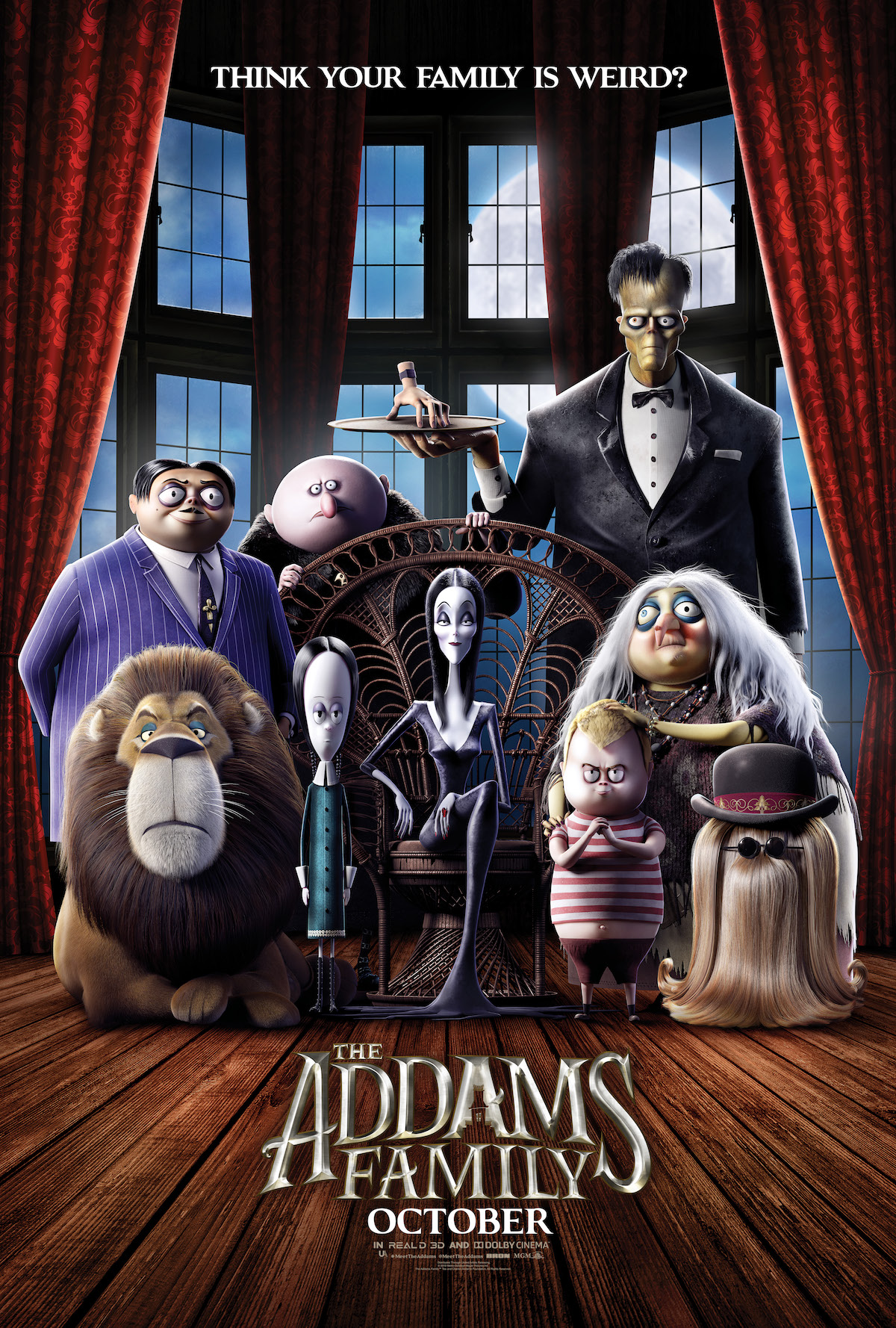
The Addams Family (2019) - You rang?


Conceptually, the new Addams Family is a touch confused.  Per the lengthy pre-credits introduction sequence, this latest take on Charles Addams' classic characters are a bunch who very much mind the fact that polite "normal" society views and persecutes them as freaks, and are ecstatic to discover a creepy old manor in perfect line with their sensibilities.  Quite a lot of one major subplot involves Morticia and Gomez agonizing over keeping Wednesday safe from the outside world, and the climax turns on first a need for one family member to shield the rest from an angry mob, then on the whole clan learning the meaning of tolerance.  I'd feel somewhat hesitant to decry this as a betrayal of the franchise's core appeal - this being how for as creepy, kooky, mysterious, and spooky the Addams' are otherwise, they're far better at maintaining the wholesome, healthy ideal of a nuclear family than the more conventionally regular people around them - except for the way the film frequently demonstrates an understanding of this same appeal.  Depending on the scene, the Addams Family are wracked with the same inability to functionally communicate with and love one another as the rest of the world and fear discovery/destruction, or act exactly like their traditional selves, blithely unaware of how or why others would ever view them as different, exactly in tune with one another.  It's definitely odd to go from Morticia failing to deal with Wednesday's emergent rebellious attitudes or Gomez pushing Pugsley to work a tradition the same way he did, to the family unit ticking like clockwork to unintentionally freak out a nosy neighbor.

Matters aren't helped by how the film's vision of normalcy is itself decidedly skewed.  The villain, Margaux Needler, a designer home flipper, seems a pretty decent foil to the family in the mold of the villains they faced in the 90s films, with a few added doses of more obvious "conformity is bad" commentary slathered on so the younger kids can get it without trying.  Issue is, the same impulses that make her so obvious a foil on the surface also drive the writers to make her a far more conventional, active villain, which leads to... weird choices.  Choices like the same film that's trying to make general social intolerance to difference scary deciding to have its villain artificially engineer any and all hate towards the Addams' via social media.  Choices like bringing the intolerant villain round to the heroes' side without any idea how to do this, so she just goes from full-scale meltdown over her failure to blissful acceptance after some off-screen romancing from Uncle Fester.  Normal as a concept basically has to adopt two contrary versions of itself, the default state of the world by natural order and something forced on others by control-freaks, in much the same way the family's dynamic flip-flops from its classic form to more conventional dysfunction and back again.  It all reeks of a production with multiple differing visions, and no real compromise on how to make it a cohesive whole.

On the somewhat positive side, the individual characters as realized by their voice actors slot into their roles quite nicely.  Pugsley in particular feels like a big improvement over other incarnations of the character, having an actual personality and arc to play through compared to his usual state of Wednesday's chew toy.  He's still a little heavily reliant on the "little tyrant boy obsessed with explosives" archetype common to pretty much all forms of kooky family media, Finn Wolfward's performance occasionally trends towards generic in ways the other cast members don't, and I'm still not entirely convinced the idea of Gomez feeling ashamed over his son's interest in explosives over swords isn't against the franchise's general spirit... but it leads to some sweet moments in the finale, allows Pugsley a chance to shine, and gives the family's most cipher-like character some good definition, so I take the good I see here over the bad.  Oscar Isaac and Charlize Theron don't bring much to their characters Raul Julia and Anjelica Huston didn't already put there, though they feel right for the parts, and ChloĆ« Grace Moretz has the right sort of deadpan to make her more rebellious take on Wednesday play well.  Nick Kroll as Uncle Fester... look, he's in basically the right vocal neighborhood registry of a Jackie Coogan imitation, but there's something about how gargly he sounds at times and the implications of the character as a class-A pervert that turns me off the performance.

As per always, Lurch and Thing remain my personal favorites.  Perhaps my love for characters with minimal dialogue and no major part to play in the plot says something about the film's quality.  I'm still out here loving Lurch living his best life, even as he's mostly here to provide musical gags.  I adore him all the same.

I wasn't expecting much out of this film, and sure enough I didn't get too much.  Between its inconsistent characterization for the family, weird insistence that the Addams' of all families need to learn tolerance and acceptance of difference, and somewhat slow pace (it feels like we spend an hour setting up all the conflicts going down throughout the film, then toss out half and rush through what remains - there's a few teased-out lines regarding Morticia getting in over her head that never go anywhere, for example), it's definitely a prime candidate for a studio product existing for the sake of its own existence above any driven need to tell a story.  Knowing as I do, however, how the Addams Family can be far duller and far more inappropriately disturbing (yes, even for them) as per the wretched 1977 Halloween special, I can't really say this is TOO bad.  Confused, low-energy, and not so classically Addams as to properly earn the admittedly fun replication of the 60s series' intro before the credits, yes, but not awful.  Not intolerable, or ruinous, or a blight on the cinematic landscape, or whatever some more hyperbolic reviewers are claiming.  Definitely a good time for the kids, though probably destined to become less a beloved nostalgic classic than "the HELL was I thinking liking this so much?" when they grow up.  It exists, won't make much money, and will pass from memory before you know it - why should I do much more to it than point out what I think is wrong, note what it gets right, and go, "Eh, y'know, if it's your thing, why not?"

(They slot a Young Frankenstein reference AND an Invasion of the Body Snatchers reference right next to each other.  It's weird.)

2.5/5

Thursday, October 10, 2019

The Halloween That Almost Wasn't (1979) - It's one of those days I wish I was dead! And stayed dead!


Y'wanna hear some neat trivium?  This here 1979 Halloween special from ABC was in competition for a few Emmy Awards!  Even went and won one!  Course, there's a little bit of weirdness going on - between 1968 and 1972, and again from 1977 to 1982, the Emmys split the category for Outstanding Achievement in Children's Programming into two categories, one for the outstanding achievement in general handed to the producers, and one for outstanding individual achievements, awarded to higlighted cast and crew.  The latter category is rather interesting to look through, as it allowed craftspeople and actors who wouldn't normally get a shake (due to children's programming only hosting the one category for producers in the years before and after) a chance to have their work honored.  From what Wikipedia shows in their tables for the category, it didn't work out every time, as the award was juried and required one nominee to receive 50% of the ballots to justify a win, which often meant nobody earned any honors.  There were even a few years where the category judges only nominated two people, and the jury still couldn't come to a 50% consensus.  Imagine having only two options and somehow not achieving a majority consensus in either direction.

Anyhow, The Halloween That Almost Wasn't was pretty well set to win the individual achievement category in 1980, as it had three contributors nominated, compared to Sesame Street in Puerto Rico's two.  Arthur Ginsberg was nominated for his editing, Mariette Hartley for her performance as the Witch, and Bob O'Bradovich for his makeup, which won the award.  I wish I could speak more to Ozzie Alfonso's direction and Nat Mongioi's art direction on the Sesame Street primetime special, but unfortunately nobody has it anywhere, save an upload of the first episode containing segments that aired over the following week.  S'in pretty poor quality anyhow, so I'm not sure I could much judge it none too well.  Something tells me I might feel just a touch biased towards wanting to say one of the two deserved the award sight unseen, since O'Bradovich's winning make-up is... what it is, and it feels more right to say a piece of programming from Sesame Street in its prime is more deserving of accolades than something comparatively lighter and fluffier.

Also wish I could give Sesame Street the same consideration for the overall Outstanding Achievement in Children's Programming category; however, balked as I am there, I CAN give such consideration to the winner, Benji at Work.  Of the two programs I can judge, I think it fair to say Benji's little documentary was more deserving of the win.  It has some weaknesses in how it keeps up some dishonesty around the realities of Benji's life, as it feels a little weird how they constantly insist on calling the female Benjean a he to maintain the illusion, even as Mr Rogers was more than comfortable showing children the faces and processes behind other beloved fictional institutions.  On balance, though, it's a nice enough look into how Frank Inn worked with his animals and collaborated with filmmakers to get the hero dog acting so well.  Regardless of how the film they're documenting turned out (quite the stinker, as I understand), the special makes a fair mix of entertainment and education for children, and has an endless parade of shots showing Benjean acting like a cute pupper.  The thing's got my approval, even as I could personally do without Adam Rich as host.

S'more trivium for you!  The actor playing...

...oh right, we're supposed to be reviewing The Halloween That Almost Wasn't.  Truth be told, I've been dodging around doing so.  Applying my usual standards for critique here just doesn't seem fair or proper.  It's a light piece of children's entertainment from 40 years ago, and while I can certainly identify flaws aplenty with its concept and execution, ragging on it like something produced with any higher ambitions than keeping kids entertained with silly puns and goofy costumes for half an hour seems in bad sport.  Still, this is a review site, and I did put it on the list with the intention of providing some semblance of a discussion, so... why not?  Just a little critique, in bullet points.

-Without Judd Hirsch, I'd probably tear into this program quite a bit more.  He's quite plainly having a very good time playing Dracula, leaning into the character's pompous attitude and flustered reactions to his fellow monsters having gone soft and/or unionizing.  The jokes and pratfalls he's running through may be juvenile for even his audience, but they're functional enough and earn laughs - though I must admit, my laughing at a Young Frankenstein reference comes entirely from the thirty-second "did he really just..." process that followed rather than any real cleverness.  Honestly, if I had to choose an actor to nominate for their performance from this, he'd be they.

-This said, Mariette Hartley doesn't deliver a half-bad performance as the Witch.  The writing on her is a bit shaky, oscillating between "I want to break Halloween because you don't respect me enough or share your controlling interest with an equal business partner" and "I want to break Halloween because people think I'm ugly and mean, and I don't want to be that anymore," with neither taking over long enough to get a clear picture of the intent beyond "Witch bad, gotta stop her."  As such, her sharp-tongued, smarmy Brooklyner approach to the character gives it an appreciable, endearing quality where the writing lets her down.  She has a sweet scene with a little girl who loves witches towards the end, so y'know... it works out to something good enough to praise.

-The other monsters are drastically underserved by the structure.  The Wolfman and Frankenstein's Monster at least get highlighted entrances and a few one-liners when Dracula chews them out for giving into corporate marketing deals.  Zoltar the Zombie King and the Mummy are barely afforded time for Igor to speak their names on arrival before they shuffle out of frame, and for the rest of the picture they're only allowed to stand around looking kinda bored without delivering any dialogue.  And for as much as the first two monsters get to do during their introduction, they too fall into the background as part of the indistinct crowd behind Dracula as he and the Witch spar it out.  I think the writing team only had one good joke for the Creature, the one about how his feet aren't his, and didn't know how to make the other undead monsters work without repeating the concept of detachable body parts.  The Mummy gets to pratfall at one points, but it's slow and awkward and does nothing for me, so that's a bust.

-I can appreciate the suburban family watching TV as the news comes in that Halloween may be cancelled forever if Dracula can't get his act together, insofar as they're a semi-absurd element of blissfully modern stuff intruding on what's supposed to be an evocation of Gothic Eastern European stylings.  They don't come back into it past the introductory scenes until the ending, and I think it would've helped the special feel a little more cohesive if there'd been a beat of Dracula or Igor or someone realizing they need a different tact to get the Witch back on their side.  At very least, the dad should've come back in with his children, just so we could get some more good ol' gum-flappin', square-lookin' all-American 70s sitcom dad goodness.

-The ending of this movie is probably why disco is dead.  John noted that it works on some level, since undead monsters probably only listen to dead music.  I don't know if I agree, but it seemed an interesting enough observation to share.

-Rating films gets tricky sometimes, as the definite number attached to a review is so easy to take for the total opinion when it's more a general barometer for where I am on work, with the lengthier passage serving to fill in details.  I'm going with a 2.5 for The Halloween That Almost Wasn't, which is normally one of my bad scores, typically dolled out to films I find sink juuuuuust below the barrier of quality to be called good.  Again, though, I think it highly unfair to treat this slight lil' thing as a full effort with all that implies - yet I also can't exactly say its problems don't bother me or prevent me from having as good a time as I'd like, children's show or not.  To this end, I'm keeping the 2.5 rating, but additionally noting how it's a 2.5 that could very easily transform into a 3 if I'm feeling the tiniest bit more generous at some point.

So, like I was saying, one more fun little bit of trivia here.  The actor playing Frankenstein's Monster here, John Schuck, went on to play Herman Munster in the late 80s Munsters revival series, The Munsters Today.  If that ain't enough neat connections to other noted light horror-adjacent TV, consider how Igor's actor, Henry Gibson, voiced a character for the 1973 Munsters animated telefilm, The Mini-Munsters.  Or, my personal favorite of the connections, Wolfman actor Jack Riley played Gomez on the Addams Family Fun House variety hour, which I STILL want to see for the purposes of tormenting friends.

Writing about old, idle-watching TV ain't my strength, and the next entry in this year's Halloween marathon is gonna test my ability to pull together a coherent piece even more.  Fun!

2.5/5