Showing posts with label for the kids. Show all posts

Saturday, February 1, 2020

A collection of FUCK YOU, IT'S JANUARY reviews

A smattering of terrible dump month release reviews written over this last month on letterboxd!

***
Stephen Sommers should've probably taken a few more passes at the screenplay for Deep Rising before he started shooting. There's a solid hook to the premise, with Treat Williams' smuggler captain carrying a group of trigger-happy mercenaries to God knows where in the middle of the ocean, only to discover they've filled his ship with armed torpedoes and chartered a course to an abandoned cruise ship. That things aren't at all what the mercs expected, what with the proliferation of smashed up rooms and digested skeletal remains throughout the liner, gives us a pretty good line into the movie. Could serve as a workable mystery to keep tensions high until we're ready for the monsters, except his movie is structured so we're constantly cutting between the smuggler boat and the cruise ship before the disaster. I understand the impulse to play with both during the first act, considering the larger boat's owner is somewhat important to the mercs' place in the movie and we need to introduce Recognizable Actress Who'll Sell Tickets Famke Janssen early on, but doing so makes it harder for the movie to grab an audience. We know where we're going and how we're gonna collide, so a large portion of the film becomes a waiting game for the plot to hurry up and let the characters figure what we already know.

It also harms the character dynamics, which weren't particularly strong to start. I suspect the production intended to coast on Harrison Ford's charisma before he turned 'em down, and so Treat Williams is largely affecting his best Ford impression to middling effect. He'd still serve if he had a good, long stretch to exercise a dynamic with his fellow crewmembers and butt heads with the mercs in interesting ways, though. Unfortunately, because we've simply gotta spend so much time on the cruise ship before it sinks, the time we have aboard the smuggler ship is halved, and Williams only has the briefest amount of time to establish a back-and-forth with Wes Studi's merc captain before they're on the liner, and people start dying. Aside from him, there's only Kevin J O'Conner around, who's too deep in snively comic relief mode to impress a relationship with his captain or the men antagonizing him, and Una Damon as first mate, who gets killed to make way for Janssen as our lead. Considering Janssen's character is entirely superfluous if you cut the mystery-ruining early scenes, has little chemistry with Williams (much less time to IMPLY a romance before they're face-smearing one another), and just not giving it her best, it feels we left a potentially more interesting character to die in favor of a conventional dangling love interest.

Our writing woes just spill out from there. Once we start killing characters it happens at an alarming clip that removes a lot of potential for interaction. Losing out on the potential mystery/thriller aspect undercuts what impact the second act revelations could've had. Even with the improvements I've suggested, the nature of the conflict basically leaves us with nothing to DO character-wise in the third act save escape the boat, which takes the form of very simple tasks being complicated by sudden bursts of busywork. All throughout, conflict and tension are generated more by characters suddenly acting needlessly aggressive rather than drawing on a dynamic built naturally through exchanges and events. The movie's even so committed to insisting Anthony Heald's boat owner is the more interesting presence, it kills Studi early in favor of having Heald act the selfish psychopath for the finale. There are bad screenwriting decisions spilled all over this movie, the cast aren't really charming enough to distract from said issues, and it's all incredibly frustrating, because I can see how some tweaks to this one early structural element might've capped these poor impulses and resulted in a stronger final product.

I go with a 2.5 rating rather than the 2 stars my discussion here implies on the merit of the film functioning fairly as an action-horror in the watching. The Ottoia-derived monster's just a massive blob of CG nothing when we see it in full, but the tentacles look fairly menacing on their own or in a pack, and have some damned good effects work for the time and budget. If you take the deaths as less scary moments and more a game of Who's Gonna Get It Next, there's a few solid whacks throughout. Treat Williams, though working an entirely thankless job with so many Star Wars references I'm not at all surprised Ford refused his participation, manages some charismatic presence through a part that doesn't really realize he's protagonist till halfway through. And like... it's a monumentally stupid part of this movie, but I do think the whole setpiece with Williams and Janssen zipping around the flooded corridors of the sinking ship on a jetski, trying to build up enough speed to ramp out while blasting tentacles and obstacles with a shotgun is a good bit've fun. I'd play that part of the Deep Rising video game, it's got a neat two-player mechanic - one of you drives and hits fire, the other has to pump and reload and aim the shotgun over the other player's shoulder.

You can see the rot settling in Stephen Sommers' brain watching Deep Rising. The same inability to write or direct meaningful character interplay, structure a screenplay without a lot've ancillary bullshit stapled on, or deploy special effects without obviously using them as spackle to hide cracks in his scenario. All things that would fester and dig their roots deeper until he went all-out with Van Helsing and just broke the movie. Here, they're a hindrance, but he gets a little something out've the enterprise all the same. Like I say, if he'd taken another week to edit the script and narrow in on the potential for a mysterious situation where the main character learns what's going on alongside the audience and has a stronger rivalry with the dangerous men he's smuggling, he might've had something wholly passable. The near-misses are always more disappointing than the total misfires, even when they're still enjoyable at their own level.

2.5/5

Monday, December 23, 2019

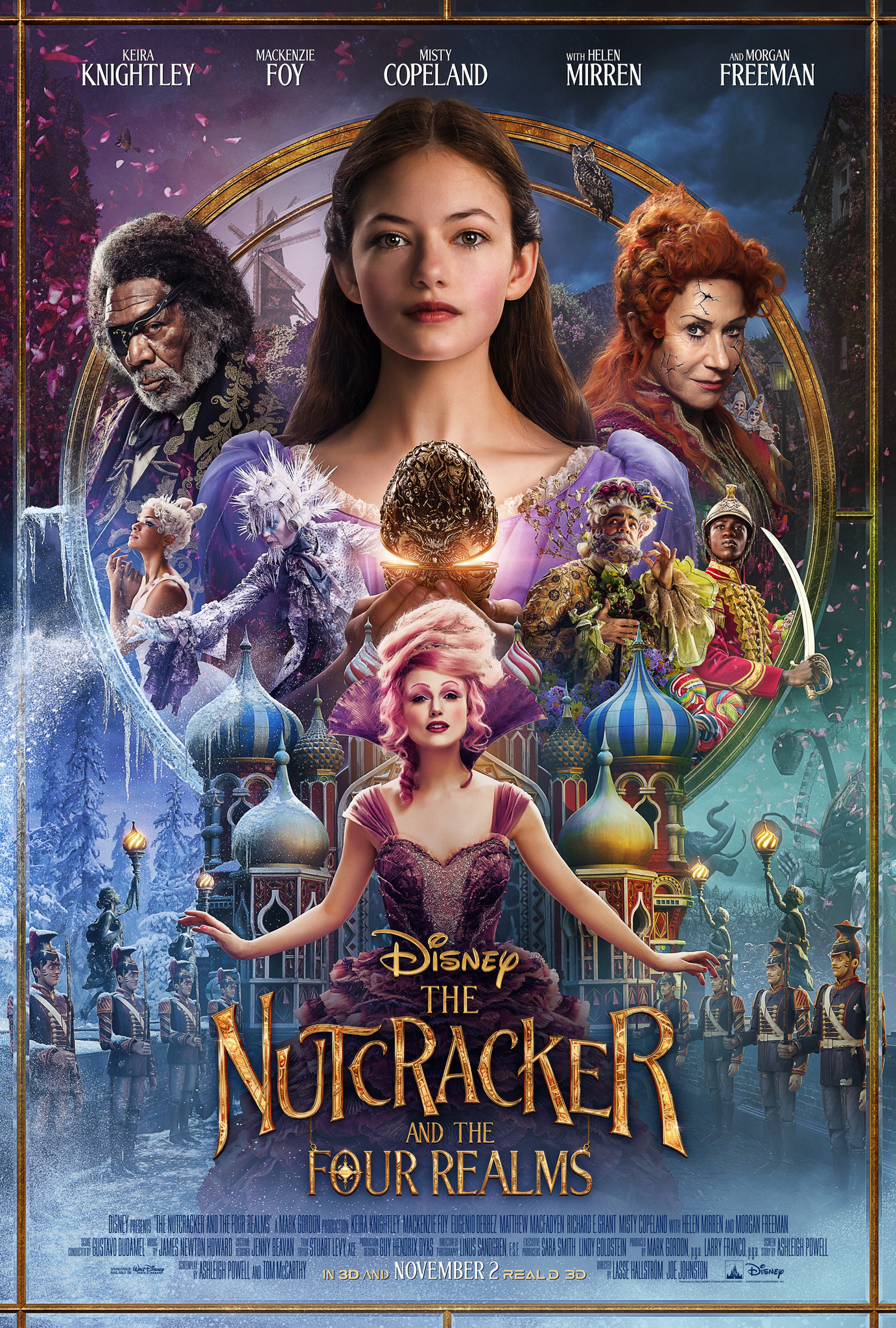
Mixed Nutcrackers: The Nutcracker and the Four Realms (2018)


Over the last month, I've spent quite considerable hunks of time puzzling over why The Nutcracker and the Four Realms exists.  The reasons are quiet obvious and take little time to figure, of course - Disney intersected with Tchaikovsky's work very briefly when they adapted his Nutcracker Suite for a segment in Fantasia, Disney's been on a streak of remaking various classics of theirs both major and minor alike, and 2018's Star Wars offering targeted the traditional May release window rather than their new Christmas block, so turning out a big-budget Nutcracker film like they've been proprietors and overseers of the beloved property all this time works for a holiday market thing.  They don't even have to buy a whole studio to get the rights like they'll have to if they ever want to make coin off The Wizard of Oz, they've just gotta pretend that their all-encompassing dominance over childhood nostalgic properties has a transference effect across anything and everything in the public domain with the tiniest connection to Disney, and voila!  It even makes sense why it is the way it is, for Tim Burton's vile take on Alice in Wonderland made over one billion dollars worldwide, Kenneth Branagh's better Cinderella did respectable business for its budget, and overconfidence in the Disney offices keeps bad ideas afloat even after, say, Alice Through the Looking Glass turned out a financial disappointment.  You've a license to print money with recognizable properties done up in action-fantasy regalia, so away we go, 130 million dollar budget, gonna be a grand ol' time, woo!

My questions were more philosophical in nature.  Why are we here, at this point on the board?  Must it continue on like this?  Is there any conceivable creative spark behind the greenlighting and production of this film, or is it truly just an idea whose final form doesn't matter so long as someone can check off a little box on a list of Good Ideas What Will Make A Billion Dollars?  The answer to all of these questions is yes, without fail, but I wonder all the same.  The trailer and related marketing materials, though over-designed to such a degree as to embody a wonkily admirable aesthetic all their own, simply looked so boilerplate and uninspired in what they implied, it seemed the only reason any of the Nutcracker stuff showed its face was for the purpose of having a little more reason to use the Sugar Plum Fairy dance and Waltz of the Flowers on the soundtrack than normal in a Christmas movie.  And is that really what anyone wants to make a movie about?

Not asking whether the audience wants to SEE it or not, no, I'm curious about the folks who've gotta write and act in and design and direct this stupid thing.  Is this how you wish to spend your twilight years, Morgan Freeman?  Is this how you foresaw your first big mainstream exposure coalescing, Jayden Fowora-Knight?  How exactly did you get here, Lasse Hallström?  Were the ABBA music videos and What's Eating Gilbert Grape and all those dog movies not enough?  Must you architect something with no soul?

Whatever the reasons (for I'll never know), The Nutcracker and the Four Realms exists, and it's about exactly what its trailers make it out as.  New take on Clara Stahlbaum going through a magical adventure in her Godfather Drosselmeyer's house, except instead of a small skirmish between toys and mice with a semi-sweet kinda romance as the main pull, it's this big to do about a locked mechanical egg without a key gifted by her dead mother and a fantasy kingdom the elder Stahlbaum created from crude inert matter with multiple realms based on a few dances from the Tchaikovsky ballet, and wouldn't you just know it the whole thing's gone to hell in a handbasket with a mysterious arch villainand frightening circus imagery and need for a strong warrior queen to march forth and save us all as prophecy foretold and aaaaaaaaaaagh.  Pretty lookin' but vapid to the extreme, and lacking in any real identity of its own - in addition to all the bog-standard "Classic fairytale kingdom from your childhood is a little more Game of Thrones now" trappings, they've pinched bits and bobs from Alice, Oz, Narnia, and Disney's newer animated canon entries with shameless liberty.  The whole concept's a glass-molded, sugar-coated diorama piece, endlessly reflective of its counterparts an tasting of nothing in particular, a bad bedrock for any story to rest upon.

Somehow, with such an easy formula as, "Exposit, adventure, twist, conclude" to follow as inherited from all the other fantasy imitators its imitating, The Nutcracker and the Four Realms manages to back itself into a corner with some impressively bad character writing.  Clara, as played by Mackenzie Foy (who shall remain largely blameless, for not doing anything with the following is probably nobler than making a futile effort), has an alright if simple set of traits at the movie's start: she's clever and into tinkering with machines, she's upset about her mom's death, doesn't want to socialize in the way expected of her societal station, and clashes with her father over how to deal with the grief, retreating into her mechanics as he does his stuffiness.  With the whole thing regarding her mysterious locked egg that no amount of tinkering can open without the key, there's the basis for a bit of self-discovery and growth via the medium of an adventure in bootleg Middle-Earth cum Narnia.  Too bad for us, though, soon as she follows a string into the Four Realms, she becomes little more than an audience surrogate.  All sense of individual personality gets wiped away so she's free to marvel at the pretty sights and wonder at the new characters and feel sad when we're supposed to feel sad and get invested when we're supposed to get invested.  Lacking much identity of her own for a goddamned half-hour effectively distances one from her, and primes you less to fall under this world's magical spell, and more notices how it's so concerned with crunching exposition that it only spares about ten seconds total to show you three of the four realms from the title.

(Seriously, they're probably the best designed locations in the film, and we get a single shot of each.  Rest of the movie's in a comparatively empty - and probably easier to render - golden palace and various sparse dead woods.)

So, follow me on this one, please, I'm about to do a Thing.  Clara has learnt all about the ins and outs of the Four Realms, the supposed dangers posed by Mother Ginger in the disgraced Fourth Realm, and how her mother used a giant machine called The Engine to bring the whole fantasy kingdom to life, effectively making her heir to God's throne in this land.  The three good regents need The Engine to build an army to stand against Mother Ginger or else face extermination, but woe of woes! it's broken!  Now Clara, showing signs of life and personality for the first time in ages, perks up and suggests she might be able to tinker with the machine and solve the problem, because she's really good with machines and finally has someplace where her talents will be appreciated!  But no, we don't actually need her skills or anything unique about her - we need her mother's key, the same key that opens her mechanical egg.  Off a-marching we a-go, having a grand old time running about the Fourth Realm, getting attacked by mice, creeped out by clowns, just sorta doing whatever action-y thing comes to mind to tick off time because this little key hunt is all we have for a second act... long story short, Clara gets the key, opens the egg, and nothing.  She's devastated, because her mother left a note saying everything she needed was right inside the egg, and there's nothing, so clearly there's nothing important or special about her.

Gee gosh willikers, wouldn't you know it, we get back to the palace, turn on the Engine, and the Sugar Plum Fairy's really the villain for reasons that don't matter and I don't really care about.  Point being, she throws Clara in the tower dungeon and plans to destroy the whole Four Realms or something, and Clara?  Clara starts getting ideas in her head.  Clara starts thinking she has to reach deep down inside, find an inner strength she never knew she had, trust in her knowledge of the laws of mechanics, use them to escape and figure out a way to save the day.  She enacts a great escape with lots of verve and daring-do!  She spirits her way back into the throne room, where her mother's Engine is spurting out unstoppable tin soldiers!  And in a grand act of self-actualization, she sneaks up to the machine, and... uses her tinkering skills to shut it down and stop the Sugar Plum Fairy.  Turns out what she needed to do was exactly what she thought she needed to do at the start of the second act, just with an arbitrary march to kill her self-confidence and a little alone time to figure out something about herself she already knew.

That's not a character arc.  That's a character ten-yard penalty.  "Achieved self-actualization too soon, ten yards back, first down."

I don't know.  What else'd'y'want from me here?  The Nutcracker's a complete non-entity with no personality and even less reason for being singled out as important in the movie's shaky lore, the backstory and whole dramatic situation relies on implications from Morgan Freeman and flashbacks to Clara's mother which communicate a wholly different backstory than the one Sugar Plum's heel-turn is predicated on through monologue, and its ten steps backwards ten steps forwards story has nothing to say at the end of the day beyond "Keep visiting your childhood imaginary kingdom, or it'll all burn to ash because you weren't good enough to not grow up!"  I liked the Mouse King's reimagining as a mouse golem comprised of thousands of mice, though far more as a concept than for how he looks or anything he does, some portions of the expository ballet are rather pretty in both physical movement and the practical effects around the dancers, and the soulless tin soldiers are fairly, appropriately creepy.  I'm rather upset at how they only play a few snatches of the final dance piece on a tinny little music box before swapping over to the more "dramatic" sounding Waltz of the Flowers for the real final dance and - does it matter?

Do my further critiques and weak, minor praises have any purpose?  It's not fundamentally broken like the Tom and Jerry outing, and it doesn't fall as far into eye-popping, misguided arrogance as 3D, but unlike those works, I cannot think of how to improve this.  If I intuited some better means of handling Clara's arc (read: making it an arc in the first place), devised a better use of our first act time than uselessly oggling empty spectacles whilst hiding away the ACTUAL production design achievements behind weird editing choices, strained and labored and sweated to scrub out the uncomfortable "child God fantasies must last forever!" implications, it wouldn't be for anything.  The base idea of "The Nutcracker but we're Lord of the Rings and Narnia now" is bad and nonfunctional of itself, and my absolute best suggestion, being "Use a different concept," requires eradicating the movie entire down to its bones to keep suggesting anything better.  Uniquely-shaped failure to write a coherent story for its heroine marks the most remarkable thing about The Nutcracker and the Four Realms, and I'm half-inclined to say we shouldn't imagine a better movie in its place, because a muck-up like this is too rare and special to deny.  Why continue spilling digital ink on a work I've declared poorly conceived from start to finish, and cannot accept the obvious answers over the whys of its existence for how much they shake my faith in an inherently good universe?

Movie's bad.  Don't go watching it.  Check out Nutcracker Fantasy and the 1973 Nutcracker short instead.  They're far more charming, creative, better designed, and free on YouTube as of this writing to boot.  Hell, watch the Barbie movie, it at least does more with its golem character and out-and-back narrative structure.

2/5

Saturday, December 21, 2019

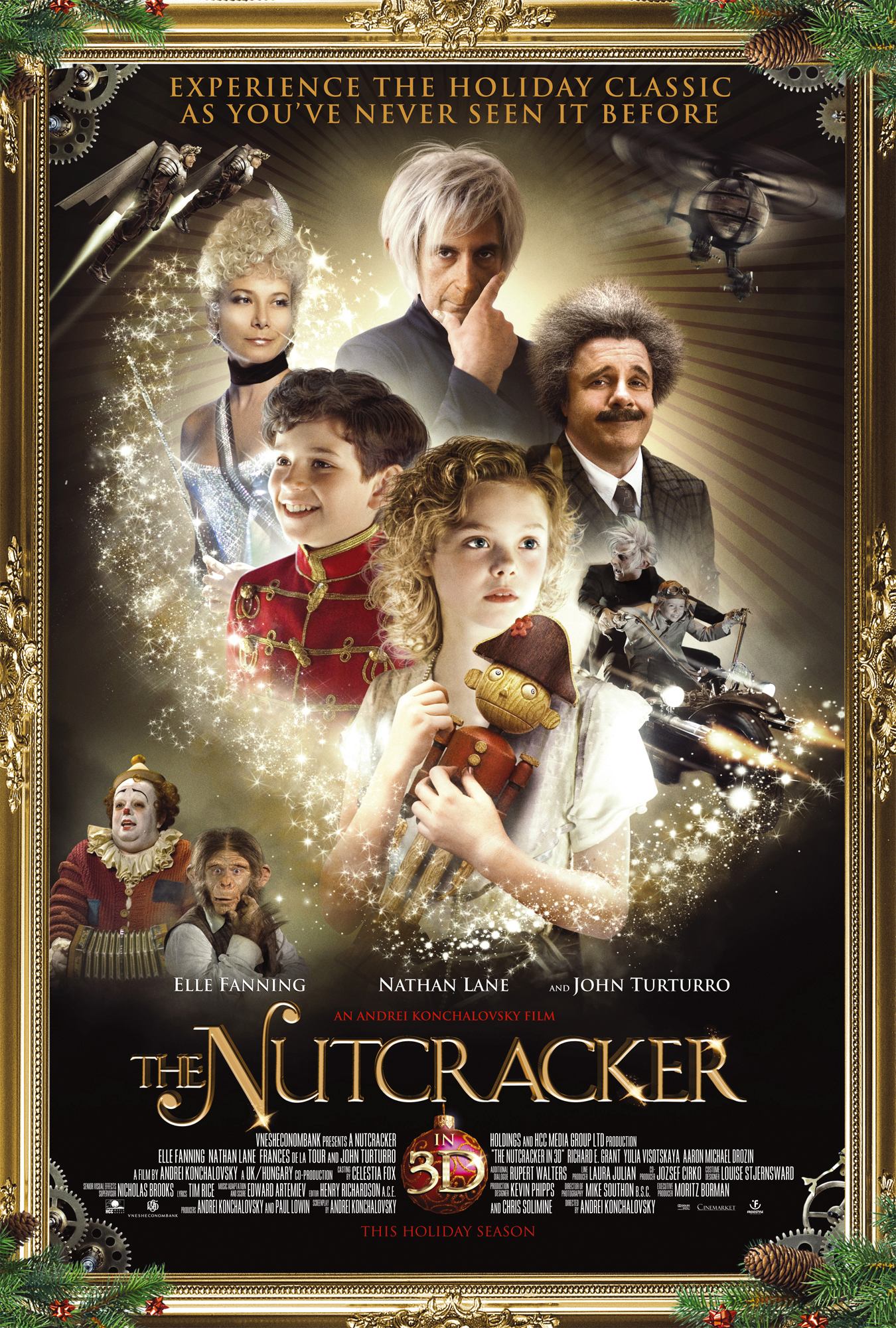
Mixed Nutcrackers - The Nutcracker in 3D (2010)


Goodness, but ambition sure can go wrong, can't it?  Andrei Konchalovsky reportedly sat on and tinkered with the idea for what ultimately became The Nutcracker in 3D (alternately The Nutcracker: The Untold Story) for a solid twenty years, long after he became a frequent film fest circuit contender, and in which time he continued to direct, write, and produce a wide variety of films across multiple genres.  This here was his passion project, a grand fantasy epic built upon little by little whenever he had time, finally realized after two decades' gestation with a budget of $90 million, well in excess of anything he'd directed since Tango and Cash.  Grand ideas given grand stage and a (relatively) lavish pocketbook, enough to justify playing with musical elements, massive soundstages, scores of extras, a wholly CG character or two, and the best 3D effects money could buy.  One might, perhaps, observe how "the best 3D effects money could buy" in the year prior to its ultimate 2010 release came from a film costing this project's budget three times over, and that the base material was shelved since 2007, and start to understand what went wrong.

Hubris is our watchword for today.  Hubris in thinking a production so plainly bloated by B-name theater actors' salaries and enormous soundstages could afford a little skimpiness on the effects budget, and so crafting a final product where flying effects and CG characters render as vaguely floating a few feet above the film rather than anywhere inside it.  Hubris in Tim Rice deciding his lyrical compositions for the musical numbers would not use Tchaikovsky's ballet pieces as a base and follow their lead with a complimentary rhythm, but rather be designed for singing along to every not, regardless of whether or not the resultant cadence sounds anywhere close to a natural register.  Hubris in believing many side characters so plainly charming on the face of it that we needn't see them between their too-brief introduction and an end-of-second-act crisis wherein they display none of their personality quirks again in favor of generic fantasy action platitudes.  Hubris in thinking spending the entire second act wholly detatched from the fantasy world and spinning our wheels on some domestic drama the film clearly doesn't care for is at all an acceptable way to stay within our budget when it really kills the pacing dead and causes many following beats to feel redundant.

Hubris with regards to the rats, oh my GOD, the rats.  I can only assume Konchalovsky and his contributors thought as far as, "Well other films use a little Third Reich imagery as shorthand for the bad guys, we can as well," and then trotted out said justification every time they wanted to add a little more.  The rats march around in full-blown SS uniforms, round up innocent people from the street, throw them into concentration camps, operate massive ovens designed to burn those they scapegoat as ruining the world, and talk up the eventual birth of a glorious rat masterrace and a Rat Empire which will last for one thousand years.  All right there, on the surface, no necessary distancing whatsoever, plain and simple Nazi stuff.  Let's not also forget, they still have rodent faces, rodent faces which look very much like Nazi propaganda caricatures of Jewish people besides, and most talk with heavy Italian/Brooklyn accents.  And listen, listen - while I am the world's foremost advocate for scaring kids through children's movies, the effects on John Turturro's face when his Rat King gets upset and he morph-roars into a monstrous rat face are all too much, all too distressing, and deployed all too frequently for how much I don't like looking at it.  Also, their arrival into the movie evokes 9/11 imagery, and Turturro electrocutes a pet shark at one point, for no reason other than making this whole thing more off-kilter and distressing.

Looking at The Nutcracker in 3D with a proper critical eye, though, trying to see beyond all the odd, excessive, easily-identifiable bad creative decisions, and figure out what really went wrong, I think the briefly mentioned structural problems drag the movie more than any of the Nazi rat stuff.  Don't get me wrong, unless we perform corrective surgery on the film, wholly remove all the Nazi motifs, and find literally any other thematic costuming as a replacement, it will always have that millstone round its neck, but figuring out the structural problems could help a lot.  You can get away with quite a bit if a story plays as familiar or resonant in the broad strokes, making your idiosyncrasies read as "Alright, go off but I'm with you" instead of "What in God's good name are you DOING?"  Bad as the Nazi rats, the child acting, and the effects compositing are, The Nutcracker in 3D's greatest weakness lies in how it flaunts conventional story structure in favor of a protracted second act in the real world, with all hints of the fantastical banished to the margins.  To illustrate my point, allow me to propose as potential alternative layout for the film, in which we only change the order and focus of events with minor eliminations to improve flow.

The first act, with Mary meeting the Nutcracker, exploring the expanded living room, and learning about the curse the Rat Queen placed upon him can play exactly as they do in the movie, except we move the introduction of the Nutcracker's three living doll friends over to the start of act 2, and place more focus on the developing relationship between the two.  Rather than spending the second act in the real world, Mary, the cured real boy Nutcracker Prince, and the doll companions spend their time trying to infiltrate the Rat Kingdom and overthrow the Rat King for good, only for the Rat King to discover them, kidnap the retransformed Nutcracker, and banish Mary and the dolls back to the real world.  THEN we can play out a shorter, tighter focused version of act 2's runaround as a start-of-act-3 crisis,and proceed with the movie's third act as is, only with better defined supporting characters and a stronger relationship between Mary and the Nutcracker. Compare this to how little screentime the two share in the film as-is, and how much of the back half of the second act is dedicated to rerunning the first act's set-up with new stakes while assuming we've any reason to invest, and the problem should be plain.  Spending so much time insisting Mary stay separated from the Nutcracker and the Rat Kingdom only serves to kill the film's capacity to engage an audience; a structure more in-line with traditional children's fantasy epics would help the piece flow, get us deeper into the weirder elements, and at least acclimatize us to the stranger elements in addition to strengthening the character work.

Or, as an alternate proposal, how about we keep the film's structure as is, weirdly lengthy return to reality and all, except we shift around our thematic focus instead?  Exact same movie up to the thirty-minute mark, except Mary's attempt to lift the Rat Queen's curse doesn't work, because for all the enchanting, fantastical sights around her, she doesn't really believe in what she's seeing just yet.  The sudden return to mundane reality thusly hits her harder, and her father's attempts to shake those silly dreams for her head has a tangible impact on her.  That whole meandering musical number where Uncle Albert sings about a magic pebble her father had as a boy connects more directly to Mary's story, and when the Nutcracker returns to bring Mary and her brother Max back for another try at liberation, she only goes reluctantly, and only invests fully for the third act because the Rat King kidnaps Max.  You can then run the third act as a simultaneous "Rescue my brother" narrative and a "I have to actually care and believe in all those childlike things like imagination and dreams" story, to boost up the effect when Mary finally lifts the curse and claims she never wants to leave this new home.  Just one change to one plot point and a shift in the main character's attitude, and you can make this odd structure work a little better.

I'm personally more into the first proposal than the second, for the first allows the film to indulge in its weird attempts at spectacle more openly than the second, which probably requires turning down the bombast to sell the audience on Mary's refusal to truly believe until the climax.  Either way, they both show how The Nutcracker in 3D didn't necessarily have to break so badly as it does.  There's so much "This is MY passion project, and we're doing it the way I like!" running through every aspect of the production, I've a hard time believing you could wrangle a wholly good or appealing story from the wreck, especially if we're really honestly truly married to doing Rat Nazis and not spending a proportionate amount of money on our effects.  With a different structure though, regardless of if it's more traditional or more suited to supporting a thematic idea, we might've seen a respectable if heavily flawed, too indulgent work that communicates something and delivers a mildly enjoyable experience.  It is broken and misconceived, but the foundations could've supported SOMETHING, rather than the haphazard mess we got.  Which, all told, is better than the total, doomed-from-the-start failure of the Tom and Jerry Nutcracker film.

(Let me tell you, it was REALLY distracting hearing Moaning Myrtle's voice coming from the Nutcracker's mouth the entire film.)

2/5

Thursday, December 19, 2019

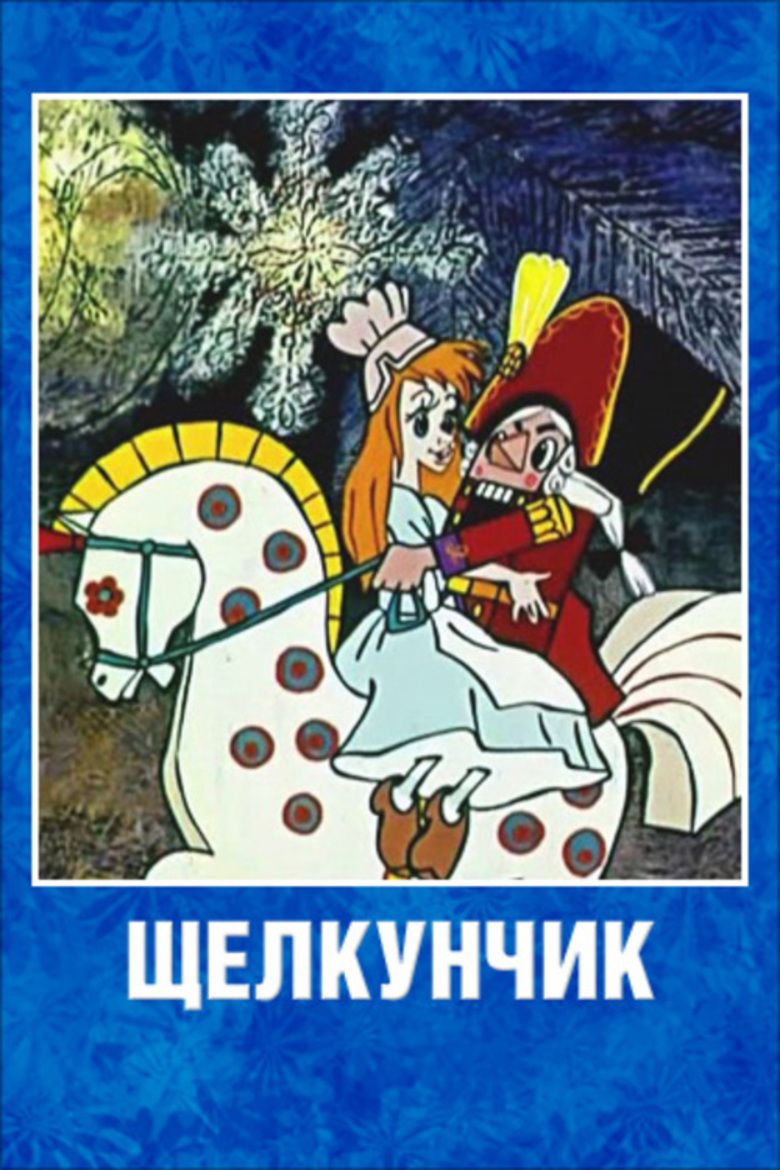
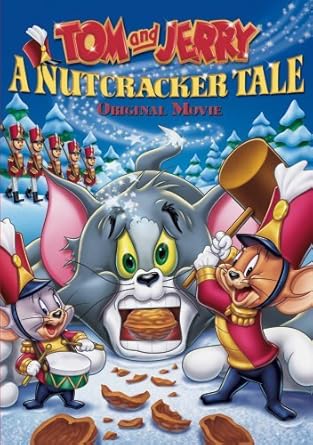
Mixed Nutcrackers - The Nutcracker (1973) and Tom and Jerry: A Nutcracker Tale (2007)

It's a twofer today!  Tom and Jerry's film didn't even total to an hour, and was guaranteed to not appeal to a one of us, so we went and looped in a short animated film from Russia to pad out the time and ensure I wouldn't spend this review in conniptions over the poor quality of a bargain bin children's animated film!  Tally ho, onwards with the discussion!

***
Boris Stepantsev's short The Nutcracker is handily the best adaptation we've seen as part of Mixed Nutcrackers, and seems likely to rise as the best adaptation period when all's said and done.  It's quite an economical piece of storytelling, incorporating practically all important beats and elements from the Hoffmann story in a quick 25 minutes without losing any charm, and showing off some delightful animation in the process.  No need to reconstitute the elements into something wholly of its own kind, nor belabor the point with loud humor, nor wander off in its own direction after the introductory action, just the story of a young girl finding a Nutcracker in the Christmas tree, learning of his story, defending him against the Mouse King, and falling in love.  There's a bit of compression for time and effect, like rendering Marie a nameless servant girl with no godfather or younger brother to interfere in her journey, making the Princess Pirlipat and the Nutcracker Prince one and the same, freezing the Nutcracker's whole kingdom, and stripping the Land of Sweets segment of pretty much everything save an elegant dance (set to Waltz of the Flowers rather than the final number, which is instead used to underscore the Nutcracker's despair at his appearance) in order to give the stuff with the mice more focus, but otherwise the whole thing's here, and dances through the plot elegantly.

It's probably also the prettiest looking of the animated adaptations we've seen, with some of my favorite designs for each of the major characters.  I'm all about Marie's awkward, lanky appearance with big clogs in the place of the usual slippers and those round, curious eyes, the Nutcracker's rectangular shape and flexible mouth that never stops baring some nice square teeth, the Mouse Queen's three heads sharing a single gigantic crown atop a hunched body clad in deep blues and light purples, and her son's rotund design, which bloats into an imposing ball when he inherits her crown and becomes Mouse King.  In fact, similar to the Culkin-starring adaptation, I really like how all the mice share a similar rounded design, and delight in their more prominent screentime so we can look at their silly scurryings longer.  The backgrounds, I'm not entirely certain how to describe them... it's like they used watercolors that crystalized into impressionistic sheets of ice, giving the characters wonderfully detailed backdrops to play against whether they're in the appropriately-sized, pink and yellow king's court in flashback, or the barren dark blues and greens of the parlor at shrunken scale.  Environments varied as a Christmas tree full of ornaments or a blank stretch of wall are equally pleasing and rewarding to look at and follow details through in this manner.  Such detailed backgrounds also helps the characters' cleaner models stand out, and while this occassionally produces an effect whereby they float above the scenery rather than moving through, it also helps Marie and the Prince's final, transformitive dance wherein they shift between themselves and flower-petals as they glide through a reflective night sky of flashing light and color feel all the more magical.

This thing's good, spellbinding and embodying the childlike innocent wonder I found in the novella better than most.  It doesn't have my absolute favorite Nutcracker design, or Mouse King design, or battle between toys and mice (look to The Motion Picture, the Culkin film, and Fantasy for those respectively), but it gets the overall feel right and gratifies the viewer in a spritely timelimit.  Very nice to find something I can wholeheartedly appreciate without a sliver of irony or major critique in this marathon - a good last-minute Christmas present to the lot of us!

4/5

***
God, but do Tom and Jerry deserve better caretakers.  Y'all saw the Charlie and the Chocolate Factory memes last year, right?  The ones with all the awkward faces you think are smear frames but actually remain in unmoving focus for several seconds, the bizarre attempts to shoehorn Tom and Jerry into a pointless retelling of the 1971 movie, the endless reposting of that one Wonka smirk towards the end?  Bizarre and bad as it's said to be, I'd easily take such an approach to shoving the cat and mouse pair into The Nutcracker than whatever the hell is going down in A Nutcracker Tale.  Hoffmann's story is legit perfect for a seven-minute short in the style of those from the 40s and 50s - Tom and Jerry doing their usual antics, the whole part with the mouse army showing up and doing battle with the toy army happens, Jerry gets caught up in the press, Tom gets exploited as a prop weapon by the toys, we do a little runaround, we chomp the Nutcracker's teeth down on someone's tail, we play a few lines of Tchaikovsky, we go home.  If the ballet had its revival just a few years earlier, when Fred Quimby was still pumping out cartoons under the original Hanna-Barbera team and vying for Best Animated Short Oscars, I could see all the classic gags slotting handily into such a set-up.

Show of hands, who amongst you would ever guess a Tom and Jerry Nutcracker thing would involve Jerry idly wishing he could dance, being granted not only ballet talent by the voice of God who is also the narrator and also Santa and also emblamized by the Star of Bethlehem (called out as such by a character in the film, no less), but an entire magical kingdom of living toys to rule as Mouse King, which is ruined the second Tom and his alleycat friends wander in, and are granted automatic control of the kingdom by the same magic power, necessitating a quest to find the Toymaker across various thematically-incompatible dimensional planes?  And also Tuffy is there.

"Bizarre" is the word for this thing.  Beyond dressing everyone in old-fashioned army uniforms, keeping a Tara Strong-voiced tiny ballerina hostage for occasional asides, and quoting Tchaikovsky's music at the most inappropriate times, there's practically nothing here to theme this as a Nutcracker-based work, yet it has no identity of its own besides.  The creative team seemingly indulged every idea they had in the process of screenwriting and drawing layouts, clumping in random bits of overwrought drama they resolve inside seconds, trips inside a lair of snakedragons and through a Coney Island-style amusement park, an appearance by a Frankenstein-esque mad doctor cat, and many, many more little bits of incohesive weirdness.  It's hardly Nutcracker-themed, calling it Christmas-themed would do it injustice, it rarely does anything with the magical kingdom being confined to a theater, and multiple segments break away from something so simple as generic winter-based setting, so what is this meant to be?  I can't even claim it's to sell a soundtrack or take advantage of some tunes in the Warner Music Archive, because The Nutcracker's music is public domain.

One might claim it's meant to be all over the place and jumbled-up nonsense because anarchy was such an integral part of the theatrical cartoon landscape which birthed Tom and Jerry, but I'd argue it's nothing of the kind.  For one, it lacks any degree of self-awareness necessary to follow in the steps of something like Duck Amuck, and indeed asks the viewer take the various perils Jerry and company face in their journey completely seriously right before jarring fifty feet right into slapstick again.  Speaking of the slapstick for a far more important another, if throwing up our hands and going, "Screw it, we'll just do whatever we like!" is meant to be an OK thing to do because it gives rise to some good gags, it fails at such.  The outsourced cheapo Korean animation on display is slow, lifeless, and lacking in anything one might recognize as the wild, weighty energy of a classic Tom and Jerry short.  Gags dependent on physical humor are either too afraid to indulge in the old ways of a soddering iron to the noggin or a bowling ball down the gullet and so opt for weak variations on "character go flying and get hurt off-screen haha," or else go so terribly outlandish with a baffling lack of both build-up and suddenness that it doesn't work.  They all just sorta... happen, with no speed or purpose, and get easily overwhelmed by bad stand-up routines from talking characters, or the far too thick sentimentality, or an out of nowhere baseball joke.

I could handily rag on the film for ages, having a go at it's odd attempts to set lyrics to Tchaikovsky's music in the early going before dropping the atonal conceit; or make a try at delivering weak praise, saying the ornament character who's constantly coming unraveled might've had an interesting gimmick going if they animated his final disheveled state as anything other than a barely wiggling mass of string.  Considering, however, how the film ends on a limp series of gags as Jerry drives the cats from his about-to-vanish-forever kingdom with such a mediocre lack of creativity or fun, I don't think carrying on past this point necessary.  This is a flat corporate product - one which draws heavy, groaning sighs on the regular and is probably pretty bad to show your kids if you don't want them taking to YouTube comments sections and droning about how such a grey, inert film is an underrated classic ten years hence, but a flat corporate product all the same, and so deserving of an equally limp, lifeless end to this review.

I paid four bucks for this.  When the time comes for the anti-capitalist uprising and we're collectively dismantling all the major entertainment conglomorates, I'm gonna walk into the Warner Bros treasurer's office and ask for those back.

2/5

Sunday, December 15, 2019

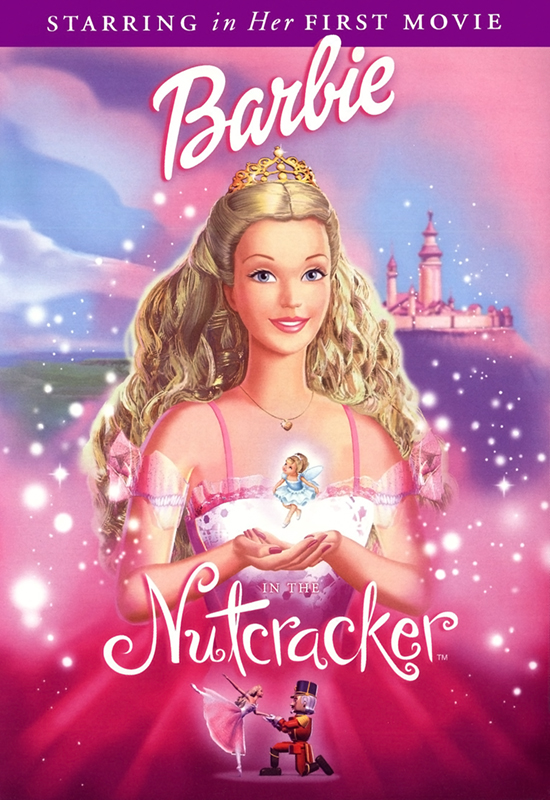
Mixed Nutcrackers - Barbie in The Nutcracker (2001)


Fun fact: this marathon was originally conceived as an All-Barbie December, on the simple basis that Christmastime is a time for tormenting friends, and nothing could possibly equal the torment of promising a Nutcracker marathon, only to dovetail into a long collection of samey Barbie films with no warning.  Only trouble is, if we DID run an All-Barbie December, I'd have to watch all of those same Barbie films myself - and, even worse, WRITE about them.  Such a joke could not possibly sustain itself across a whole month and still produce good writing, so the series was quickly converted to a Nutcracker-a-thon, and here we are today.  You can still count Barbie as the centerpiece of the series, the crown jewel from whence all other films featured sprang forth, and a perfect embodiment of why we're doing Nutcracker stuff instead of Barbie stuff.  Because let me tell y'all right here right now, I do NOT have a lot to say about this one.

Not like I didn't have a lot to say about The Motion Picture, gosh no.  Go back and read the review, I had plenty to say, just no clue how to format it into a coherent, paragraph-based piece.  Barbie in the Nutcracker challenges because it is plainly aimed at the youngest audience yet, roundabouts the four-to-six demographic, and much as the joke reviews on Letterboxd insisting this has an ending to rival Mulholland Drive in complexity and confusion, something ready-made to stop holding appeal once you enter second grade does not offer many avenues for critique.  The simplicity leaves fewer dimensions to pick at, the purity of purpose makes slagging too hard bad sport, and the lack of nostalgia in my case in particular means I cannot articulate what makes it tick for someone who saw it at just the right age in the way someone born round the same time as myself but with a Barbie obsession in their past.  So, seeing as I do still have a few concrete points to walk across, we won't rely on bullet pointing, but we will theme by paragraph, and take some time to poke Barbie in the Nutcracker's merits as an adaptation of The Nutcracker/TheNutcracker and the Mouse King, its merits as a piece of animation, its merits as a piece of children's entertainment, and how it is effected by its status as part of the Barbie brand.  Should work out just fine; let's go.

As I've noted when discussing the various ballet-oriented adaptations, The Nutcracker has an inborn problem of dropping any semblance of narrative in the back-half in favor of pure dance, and even ETA Hoffmann's original story loses its slack once Marie and the Nutcracker Prince enter the Land of Sweets.  This requires any story-focused works to find some means of tinkering the material to suit its own needs, and we've seen a few differing approaches - Nutcracker Fantasy was more inspired by ideas from the story and crafted its own narrative from near-whole cloth, The Nutcracker Prince added more supporting characters and a bit of extra drama during the final movements, and the various ballets have the benefit of about half-a-dozen scripted dances for fodder.  Barbie, for her part, sticks to the basic rhythms of a young woman receiving presents on Christmas eve, becoming delighted by a nutcracker, and having a strange dream of a war between mice and toys, with a few minor alterations.  Her Aunt Elizabeth functionally replaces now-Grandfather Drosselmeyer as gifter and One Atop The Clock, there's no party or other toy soldiers because character models are expensive, and she doesn't wake from her dream once she drives away the Mouse King with her slipper.  This last marks the film's major departure, for once it's done with the literary source's first half inside fifteen minutes, it sets aside the rest of its remaining hour for a story of light high fantasy.

This basically works as a creative choice, because it decouples the movie from novella and ballet, and largely enables it to run its own little Christmas-themed thing.  Changing the Sugarplum Fairy to a Sugarplum Princess is a weird little bit of probably-necessary marketing tampering, but making her a McGuffin that Barbie, the Nutcracker, and a few hangers-on must seek out to free a fantasy kingdom from the Mouse King's iron clutch gives a fine excuse to keep introducing new concepts, constantly move forward without flagging in one spot for too long, and introduce a few little bits and bobs of its own.  I certainly didn't expect the Barbie Nutcracker movie to feature a massive rock golem chase or a talking bat sidekick, yet they're here all the same and functioning quite nicely.  Considering the way it all looks, Mattel could've easily taken the same assets and put out a token PC game with the same story.  That courtyard in the climax seems purpose-built as a boss arena, so why not?

With regards to looks... well, it's no great shake, but was there any chance otherwise?  Round 2001, only Pixar and Dreamworks had humanoid animation anywhere close to workable, and Pixar's whole "It's more believable and endearing because they're toys" idea with Toy Story also had a greater budget, more talented artists, far more detailed environments, a stronger lighting rig, and stylized characters who aren't confined by the semi-realistic proportions and sculpting of the Barbie line.  They tried, God bless 'em they tried, but there's a stiff lack of flair to the movements and the models are way too lacking in detail to read as anything except cheap.  Attempts at animating special effects like fairies dancing through the air as they fly look more like someone messing around with the drag-and-drop tool, and the little amount of dancing present seems heavily limited by what the models could do regardless of them using mo-cap.  The lighting effects are the biggest failure, as any attempt to do something creative gives the characters this weird fuzzy halo effect that ruins any illusion of them standing in their environment, while simpler set-ups make them look like the plastic they are.  All in all exactly what you'd expect from a direct-to-video 3D animation project of this time, but I still have to give props for the effort.  The animators at Mainframe and Mattel Entertainment could've easily lit the whole thing uniformly and made no swings at more complex animations they didn't have the budget or experience to handle.  Their failures speak more to willingness to experiment than lack of ability (though don't get me wrong, the execution lacks something fierce at times - that cloudy beachside scene is just the pits).

(Plus, they recognized their inability to fully model every outdoor environment, so several of them utilize digital mattes on the skyboxes and render a few more complex panoramic scenes as fully 2D paintings, which actually caught me off-guard at one point.  I was just about ready to mock the film for not knowing what the heck a Perspective is when they arrive at a magical castle, only for it to fall down because it's a cardboard fake planted by the bad guys, which just so happens to look identical to the style used on the flat backgrounds.  They got me good there!)

I think the whole thing holds together as a cartoon for really young kids pretty well.  Fun little out-and-back adventure type narrative with just enough daring-do to keep the boys engaged while remaining soft enough for the girls, if we are to think in terms of a Mattel-executive circa turn of the millennium.  As regular readers know, I'm perpetually gung-ho for a little bit've scary imagery bound to frighten small ones a little in any product, and the Mouse King's predilection for casually turning his minions and subjects to statuary checks that box quite nicely.  We had quite a lot of fun joking about how the dialogue-driven portions of the climax are effectively Mattel discoursing on the need for consent from the governed for an effective system of government, which satisfies the whole "Gotta have something for the parents!" aspect in a manner beyond the usual crude humor.  And really, while I'm baffled by the large percentage of reviews from supposedly full-grown adults that seem to genuinely have a hard time understanding the ending (Dream real; nothing more, nothing less), the whole thing with Barbie turning out to be the Sugarplum Princess and Prince Eric being real outside the dream probably does work as a series of effective twists for anyone of the right age.  Thumbs up from me on this metric.

If there is a real weakness I can dig at here without feeling bad for going after something made for very small children with the same vigor I do more mature films or animators in circumstances unfriendly to more polished work, I think the film's position as part of the Barbie brand harms it most.  The whole thing is framed as Barbie telling a story to her... I think sister, as a means of helping her gain confidence during her ballet lessons, and the fact that main character Clara is more Barbie as Clara than a person herself leaves the film unable to pursue its ideas to the fullest.  Other characters claim Clara is a strong, brave, confident person whose presence keeps the party together and gives the Nutcracker the strength to outmatch the Mouse King, but Barbie can't do anything we might interpret as off-brand, so these qualities only come through because the characters say so.  Otherwise she's just moving from place to place and setting up more important conversations, which limits its ability to impart any positive message to its audience.  The whole thing with "Barbie was a beautiful princess all along and lives happily ever after!" comes through on a "I'm four and don't know what stories or dialogue are" level far clearer than "Barbie becomes a beautiful princess because she's a capable person who uses her inner strength to earn her happy ending" aspect.  Not to mention, ending on a scene of Barbie and her sister dancing a variation on the Sugarplum Fairy piece with step-to-step perfection kinda undercuts Barbie as a positive big sister rolemodel by having her teach it perfectly the first time with no need for anything beyond telling a story.  At least the sister struggling a little but doing better than she did at the start would've made it stronger.

Yeah, I know I'm giving way, way more credence and critique to a Barbie film than it probably merits, but one has to at least try and treat all films equally if we want everyone across all ages and outlooks to have good movies made for them.  Far, far easier to do so for a children's film than something made for members of another racial identity or sexual orientation, given we've all got some variation on that childhood experience, and I think Barbie in the Nutcracker deserves a little effort anyhow.  One can tell the crew put forth their level best for the circumstances, and while it's not great or even to my personal standards of wholly good (that lighting really kills it for me), it does what it wants to do well, and also allows Tim Curry a chance to go whole ham on the digital scenery.  Nobel goals fulfilled adequately.  Bout all one can ask for and be happy with when dealing with Barbie, I'd say, least till they had the idea for Life in the Dreamhouse and got meta with it.

(Here's some fun trivia for you - the Nutcracker's VA, Kirby Morrow, served as Goku in Ocean Group's dub of Dragon Ball Z from episode 160 onwards, while Ian James Corlett (Captain Candy) served as Goku in Saban's initial dub of the anime, and Peter Kelamis (Primm the Bat) replaced him in the Saban dub before serving in the same capacity in the Westwood dub.  Got three Gokus up in here.  Neat!)

3/5

Monday, December 9, 2019

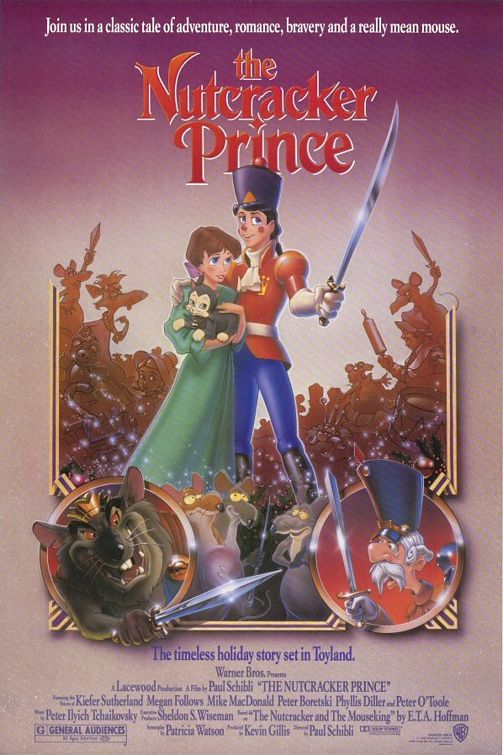
Mixed Nutcrackers - The Nutcracker Prince (1990)


Here's somethin' interesting for you - whilst watching the credits to The Nutcracker Prince last night, I noticed how a substantial portion round the middle was dedicated to "opaquers."  The term's alien to me and doesn't make its description obvious on first look, so I spent a little while Googling it, trying to find some reference to the profession of opaquing as it pertains to the film or animation industry.  My efforts were for naught, and the only reference I found to opaquing beyond dictionary definitions for "making something opaque" came from the imdb credits page for this very film.  It seems really strange for a film to have 168 artists credited for a single job I can't find any reference to online, especially when every other credit pertaining to people who designed, laid out, animated, photographed, and cut the film totaled to 176 persons, a mere eight more for every other part of making the drawings move than whatever an opaquer does.  What's going down here?  What secrets do you hide, O The Nutcracker Prince?

I've a working theory on this, and I'd love to hear any information proving it wrong, because it speaks to some unfortunate business practices if it's right.  Of those 168 opaquers, 37 are credited in a special section for Opeongo High School, Ontario-located home to graduate Kevin Gills.  Gills served as The Nutcracker Prince's screenwriter and sole credited producer, and quite a large portion of the non-celebrity voice cast were drawn from acting contributors to his cartoon The Raccoons.  It's also worth noting how, despite the film's listings noting production by Lacewood Productions, the animation credits here name Hinton Animation Studios, a studio which fell to crippling debts mid-production and was reconstituted into Lacewood prior to release.  All this, in combination with the "opaquers" coming just after the the xerographers and matching department people, leads me to believe "opaquer" is a deliberately twisted term for "colorist," one not covered under union protections, and so an easy way for a producer operating on a tight budget to cut a few costs on his film.  Why pay a few professional colorists at scale when you can farm the operation out to a whole bunch've people for very little money, and still not pay as much as if you'd hired any union-backed folks?  You can even get a little work from the high school and not pay a dime!

Now, as I mention, this is largely speculation.  I confess I don't know too much about how many workers it typically takes to get the colors done on an animated film compared to the other departments, and it's possible the use of high schoolers could come down to Gills paying his dues and offering his old school a program for teens to get a little experience in the professional filmmaking world for school credit.  There's easily a non-sinister interpretation of events if you look for it.  However, I'm not too inclined to believe it sight unseen over thinking the practice unethical, as there are still oddities in the credits like assigning a single artist to produce the backgrounds for a solid fifteen minute chunk of film where the other background artists would only need paint roughly five-and-a-half minutes assuming roughly even distribution, or the downright odd aversion to the word "colorist" when character designers are followed immediately by "character colour design."  Something don't quite add up here to my eye, and I'd love to hear from anyone more in the know about these things than me, because I'm really quite baffled.  Is "opaquer" a common job title up in Canadian production houses, or have I really found a weird cost-cutting measure?

As one might guess from the three paragraphs focused on accreditation more than anything in the film, The Nutcracker Prince gives one reason to think it made on the cheap.  It's not particularly egregious about any of these, and looks quite nice in places for what they had, but you can TELL they weren't exactly throwing around money to spare during production.  A few of the more impressive, fluid pieces of animation get reused in the same context wholesale, faster movements trend towards choppiness and lower detail compared to the norm, and numerous actions that seem best suited to smooth execution across a single shot are broken into their individual components across multiple edits and focused on as complete actions in their own right, completely killing any illusion of naturalness.  What's more, the aforementioned fifteen-minute chunk of the film with its own background artist is so thanks to a shift in the artstyle towards something far simpler and cartoonier, which effectively means the more complex, Disney-inspired animation only requires 50 minutes finished work rather than 65.  Fine as it appears in places, including some rather impressive on-screen transformations and big gestures given the clear crunch, the crunch is still clear, and marks the film as one produced under tight conditions.

Much as I'm inclined to note its low-budget, I don't much hold this against the film.  As I keep stressing, the designs work for what they are with one or two little stand-outs (primarily the Mouse King, who looks nicely frazzled and burly), the backgrounds have a good gentle quality about them, and some of the animations had me impressed at what they could pull off on not a lot've money.  The big art style shift actually works to the film's favor in my mind, as the character designs shared across both styles read better with the thinner lines, lighter colors, and slightly lesser detailing.  Its embrace of a zanier, late 50s sketchy-mod-look-embracing Looney Tunes aesthetic also helps the film's louder, slapstickier elements feel more natural, and leaves a satisfying sensation in the mind once it's all over and done with.  I very much enjoy the dedication to showcasing sequences sure to frighten small children in the audience, as when the Mouse King is stalking Clara with a fatal wound in his chest while all the animate dolls revert back to wood and plush.  We might not have artistic triumphs here, but the artistic moderate accomplishments get the idea across on their own level all the same.

Heck, with regards to the plot and story, I appreciate how much The Nutcracker Prince draws from ETA Hoffmann.  It's pretty much the same plot points in largely the same order, with details like Clara bargaining with the Mouse King after his supposed initial defeat and the passage through the Land of Sweets left intact.  We're even free from a creepy Drosselmeyer again, which I think will only be possible through these animated adaptations - the instinct to move FAR away from "what if an eight-year old's sexual awakening by way of her godfather's tricky machinations" is absolutely the right instinct.  Where the film REALLY falls down comes with its confidence in the material.  Paul Schibli and Kevin Gillis have, if not a time-tested classic, at least a well-worn, simple template on their hands, and no good reason to tack on additional details or rearrange the structure, but they do all the same.  For example, just as Nutcracker Fantasy's Tchaikovsky quotations were rather sparse and token, here the snippets from the ballet's score come far too frequently, and are overly front-loaded.  Recognizable melody follows Christmastime staple with little time for the score to cool its heels, and before we're past fifteen minutes we've used practically everything the general public might know, thus leaving the rest little to pull out for something fresh, beyond an admitedly clever use of the final waltz across multiple emotional tones.  There's too much eagerness to prove we're doing The Nutcracker, which leaves the film a bit sonically lacking as it goes on.

When considering their lack of confidence in the novella's story and structure, the problems multiply.  The battle against the Mouse King's forces and the journey into the Land of Sweets now requires the presence of multiple new doll characters to provide further slapstick comedy and exposition about the nature of the fantasy world and its kingdom, which mark a transparent grab for inattentive children's eyes.  They're not particularly enjoyable or dignified parts, especially not Peter O'Toole's elderly, bumbling toy general, who I feel earnestly sorry he ever had to voice for any reason.  Parts must've not been very good at the time.

Our biggest issue, though, comes with the exact placement of The Hard Nut flashback segment, the prior discussed 15-minute artstyle shift.  Rather than coming between the two battles between Nutcracker and Mouse King, it is positioned at the fifteen-minute mark during the opening Christmas party, and concludes at the half-hour mark, leaving the following forty-five minutes to work through the book's first and third acts back to back.  This speaks to a distinct lack of trust in the young audience to go along with the magic of toys and mice fighting without a full explanation for why there are magic toys and talking mice that don't get along beforehand, and sets bad precedent for the film to come.  Positioning such wild silliness gives the rest of the film justification to play its comedy broad and loud even when it doesn't match the more Disney-esque artwork, and leaves us with the odd problem of characters showing up to establish their gimmick and subsequently reappearing to bring it to conclusion in the space of five minutes.  Placing the flashback where it naturally sits in Hoffmann's work, as effectively the middle act, would not only break up the action and hopefully dissuade the surrounding film from going as broad as it does, but maintain the sense of wonder and magic around that first battle, perhaps hooking an unattentive audience better than "here's some exposition but it's really silly" does.

This constitutes a LOT more words than I anticipated spilling over a minor forgotten piece of 90s children's animation based on The Nutcracker, so I feel a little bad gritting my teeth and giving it the lower rating between the two I teased in my head for most of the day.  After all, despite some shrillness in the comedy and sloppiness in the animation shouldn't entirely overwhelm a solid if unremarkable overall production.  Poor construction and lack of faith are poor construction and lack of faith, however, and I've my suspicions that the same team working under the same circumstances would've produced a stronger film if they'd stuck to what they had and didn't feel the need to, for want of a better phrase, dumb it down by tweaking the order of events and adding more trendy elements for their day.  The gentler aspects of the original story are what spoke to me most, and something trying for an early prototype version of 90s eye-rolling and purposeful tone breaking just can't get all the way over the pass line in my house.  Plus, y'know, much as one shouldn't let behind-the-scenes stuff effect their viewing unless it's concrete and doing active harm to someone, I really can't shake the notion that they weren't paying their colorists a living wage during production, and that's just shitty if it's the case.  Please, please tell me I'm off-base on this.

(It's really all down to the Mouse King - a crooked tail and a hair-trigger temper do NOT compensate for one lousy head.)

2.5/5

Tuesday, December 3, 2019

Mixed Nutcrackers - Nutcracker Fantasy (1979)


Much as I'd like to preemptively declare Sanrio's Nutcracker Fantasy the weirdest film we'll watch for this marathon, I shan't do so.  It's far too early for any statement so definitive, particularly when I've watched the trailer to Nutcracker and the Four Realms multiple times over the past week in a vain attempt to understand how and why it happened.  This said, today's film does make a fairly convincing case for the title, being a stop-motion animated work that rejiggers pieces of the ETA Hoffman story into a wholly new form inspired by The Wizard of Oz and Alice's Adventures in Wonderland, with animation courtesy of several Rankin/Bass overseas animators.  Per imdb's cast and crew page, those who worked on this film weren't CREDITED for much on their American televised work - director and editor Takeo Nakamura only has Santa Claus Is Comin' To Town listed as an animator, while puppet producer Sadao Miyamoto worked on Frosty the Snowman as an uncredited animator, Tadahito Mochinaga served as puppet technician and cinematographer on Mad Monster Party and animation supervisor on Rudolph the Red-Nosed Reindeer, and puppet designer Ichirô Komuro went on to serve as production supervisor on several of the company's 80s productions.  Only four major names I can find amongst the credited crew in total, but considering how lax most visual presentations were about giving due credit to everyone who worked on a project beyond department heads (especially where foreign workers were concerned), and considering it shot at Mochinaga's own MOM Production studio same as the Rankin/Bass specials, I have to imagine there was more behind-the-camera experience with the form and style than one can ascertain from the on-screen accreditation.

Without the budgetary and time limitations of producing for an American televised holiday market, and with the eye and money of a booming Sanrio (backed by five years of Hello Kitty sales) on their side, Nakamura and crew show what this style of stop-motion can really do with Nutcracker Fantasy.  Sets are substantially larger and more detailed than in the familiar Christmas specials, with the lovingly dressed, two-story foyer of Clara's home and the Mouse Queen's sprawling lair standing out as particularly impressive examples.  Large crowds of characters are not only possible at a greater frequency than in Rankin/Bass' productions, they also boast a wide assortment of unique character designs, rarely resorting to mothballed old props or copycat clones.  When sets of characters with the same appearance do show up, it's justified by the presence of armies of mice and wind-up soldiers, spiced up by the addition of odd-looking generals, and more than compensated for by staging a lively, multi-plane battle with several layers of action across the horizontal and vertical plane both.  The camera's also far more lively than one typically sees with this style, crawling through the dolls and transitioning across interesting composite editing effects.  Special effects too benefit from the loftier breathing room, with far more intricate and lively integration of sparkling lights and specialized sets for trick camera moves, well beyond the overlaid gauze and animated snowflakes of Rankin/Bass' work.  I have to wonder how much Sanrio's aesthetic needs and demand for quality, or else the animators' decade-long experience with the style influenced the production, for Mad Monster Party was also produced for a theatrical release, and still suffers from the same limitations as its televised counterparts.

As an adaptation of The Nutcracker, Nutcracker Fantasy is actually a pretty fascinating reworking.  In as succinct a manner as I can manage: they've taken Godfather Drosselmeyer's story about how the Nutcracker came to be with the Mouse Queen and the cursed princess and the hard-to-crack nut, transplanted it into something inspired by the looks of the Land of Sweets without the candy themeing but with the large assortment of foreign dignitaries, expanded the conflict with an ongoing war reminiscent of the opening movement's mice/toys battle, and presented it all as a maybe dream/maybe reality situation, which nicely encapsulates every important element of Hoffmann's story.  It takes far more cues from medieval fantasy and lost girls stories, given how Clara's part for much of the story is to stand on the sidelines listening and worrying, but it's quite a clever way to rope in so much detail that's otherwise dropped from the ballet.  Some portions seem drawn from the ballet, as when the foreign wisemen are clamoring over one another to propose solutions in a manner reminiscent of their dances (just with far, FAR more nations and... ethnicities, shall we say, represented).  There's even a nod to the astronomer from Drosselmeyer's story, through the Queen of Time, whose mystical, heavenly figure of sagely advice is achieved through traditional ningyō jōruri rather than stop-motion.  S'all very neat to behold, and coupled with the aesthetics of the piece, it manages to give the film its own identity while paying clear homage to its progenitor, which mark good qualities for an adaptation.

When the film plays with its own material, it's not always quite so charming.  The beginning takes several minutes to establish a sinister Rag Man figure who seems like he'll play a major role, yet drops clean out've the narrative once the Nutcracker portions begin.  I'd suspect his loss has something to do with the English dub (the only one easily available, unfortunately) chopping out about ten minutes of footage, including two live-action dance segments, though I cannot find any substantial information on the differences.  More probably common to both versions is the court of foreign wisemen, which turns entirely on lazy stereotype humor, and mostly gets past my hackles for its clear demonstration of how varied the puppet design is in this film, as well as containing both a joke about Stalin's five year plan AND an offhand reference to Der Fuehrer's Face, both of which threw me for a loop.  The film's attempts to give Clara something to do in the climax mostly center on her wandering through a magic forest and meeting several symbolic original figures who lack much of what makes the Queen of Time interesting to watch and consider.  Most they have going being voiced by Christopher Lee, with one seeing him attempt a rather bad Irish accent.  It really must be said, while it's admirable to try and exercise Clara's emotional intelligence during this stretch, prior to the effort she has nothing to do but stand around waiting for the plot to move on, rendering her an undynamic protagonist in love with the soldier-turned-Nutcracker Franz because he looks handsome and heroic.  And, well...

I say the story's weaker when it's striking out into its own concepts, when I should really say it's at the weakest when it pulls in the one thing I'd never have imagined we'd pull from the Hoffmann story.  The reasoning behind the Mouse Queen's ire, I get snipping it out.  Clara not throwing her slipper to distract her an afford the Nutcracker a win, weird considering the ballet keeps this and makes it a more decisive action than in the story, but whatever, the sequence plays out fine on its own.  Making the secret to cracking the nut and breaking the Mouse Queen's power a pearl sword rather than someone's teeth, I guess I'm fine with it despite lessening the importance of Franz becoming a Nutcracker - these puppets don't exactly have articulate jaws.  But having Clara awake from her dream, meet her visitor Fritz, find him identical to Franz, and get married to him despite a doubtless decade-or-more age gap betwixt them?  Hoy.  Bad enough an implication when it's the 1810s and marital customs were far different than now.  Even accounting for this film's still-40 year age and differences in Japanese culture, it's still a bit of a Thing to take the story beyond a young girl's self-flattering dream world and into "They actually literally got married in real life and went to live in her fantasy kingdom, which is real, forever."  Gets one chewing one's cheek lining in discomfort, and makes some of the wholesomeness drain out've the story, not at all helped by how Clara's undying love as the only thing that can save the Nutcracker from his transformed state dropping into the story a few minutes prior with a "We've been trying to tell you this was the case all along!" line, despite this very much not being the case.  You were trying to tell her the kingdom of toys and ethnic stereotypes needed saving from a two-headed mutant mouse monster so your newfound beloved could marry someone else entirely.  Don't try to sell me a story you weren't telling in the final minutes, even if I'm in your target audience, and especially don't heavily imply a marriage between child and teenager at best, child and adult at worst.

There's other problems with Nutcracker Fantasy, mostly pertaining to the English dub - the voice acting is serviceable at best, the inclusion of Tchaikovsky snippets token, the American musical numbers not really to the standard of what their contemporaries were producing, which don't do much for me anyhow.  Taking it all into account and looking for the right ribbon with which to it it in a bow, though, I think an ultimately positive assessment is in order.  The spectacle of seeing Rankin/Bass' particular take on stop-motion design and animation given greater cinematic flair and polish than I've ever seen leaves a big impression, and the way it remixes The Nutcracker and the Mouse King into its own mini-fantasy war plot whilst homaging the source material leaves me with charm aplenty to overcome the less than stellar original material.  Just the simple fact of the Queen of Time's live puppetry amidst this collection of invisibly maneuvered figures is a memorable and impressive enough testament to the creativity on display here to get me over the "why are we implying child marriage?" hurdle.  A strong start to the holiday programming proper, and one I hope at least one non-Fantasia film can surpass before the month's out.

(Points for giving at least one mouse monarch multiple heads.  We'll see if anyone managed the full seven.)

3.5/5

Wednesday, October 30, 2019

Over the Garden Wall (2014) - If dreams can't come true, then why not pretend?


Full offense meant towards every other special we watched for this marathon, but Over the Garden Wall captures the spirit of Halloween far better than any of them.  There's a tendency to look on the holiday as merely its surface-level elements, with the candy and the dressing up and the pumpkins and the gentle attempts at spookery.  In fairness to them and many other Halloween specials, there's nothing inherently wrong with celebrating Halloween as a time of haunts and creeps at play and little else - it's wonderful we still reserve any amount of time for reveling in mischief and fear, and some truly great art has come from fully embracing the modern aesthetic, like The Nightmare Before Christmas.  Halloween isn't just the modern practices and signifiers, though.  There's a salient connection to an older way of life, an older system of beliefs, a link to times when it was believed certain nights blurred the line between this world and the other.  Viewed through a modern context, you've not only a blurring between reality and supernatural, but also modern customs and bygone means of celebration.  We've gone through quite a few iterations of how to observe Halloween and the sense of controlled fear in general, and this holiday marks a good time to revive them more than most.

Amongst its multitude of virtues, Over the Garden Wall's greatest strength as a piece of Halloween media rests on just how many autumnal and horror-adjacent ideas it evokes to pitched-perfection across a mere ten quarter-hour installments.  Episodes can vary in focus from exploring the confines of a seemingly infinite manor seeking out a ghost in the spirit of old dark house movies, gentle schoolhouse dramas mixed with Scooby-Doo and Benny Hill sensibilities, harvest festivals directly informed by the aesthetic of gay nineties fall-themed postcards, or 80s teen dramedies.  Quite a few episodes even make room for direct homages to Fleischer's creepier Betty Boop/Cab Calloway cartoons  There's dozens of artistic influences on display throughout the series, all unified by a gentle modernized take on the classic fairy tale set-up of children wandering the woods seeking a way home.  As all-encompassing revelry in imagery and tropes of Halloweens and harvests past as you could want, it ensures there's a special, particularly resonant moment for all audiences without sacrificing its own particular feel.  Chasing a predesignated, boxed-in style to slap over everything simply can't achieve the same warm, cozy effect of merging multiple sources to create a vibe all your own.

It's good the series' artistic style is so dedicated to forging its own path whilst wearing its influences on its sleeve, for doing so is ideally reflective of the show's overall storytelling goals.  I don't speak casually when I call this a modernized fairy tale; it's way more than just the sense of light whimsy meant by that evocation.  The Unknown as a setting is reflective of both Wirt's self-serious teenaged poetic mythologizing and Greg's younger freeform train of thought approach to the world, a dark, never-ending wood where practically anything can and will happen, and children must watch where they step at every turn lest they stumble into a strange inhabitant.  It's every bit the perfect stretch of land in which to abandon a Hansel and Gretel or Little Red Riding Hood, and leave them to learn a harsh lesson about never straying from the path, or always listening to their elders, or never trusting strangers.  Over the Garden Wall avoids such overt moralizing - while dangers do lurk betwixt the edelwoods and deceptive forces do crouch in the dark, the vast majority of residents and travelers are merely people living their lives, and trusting supposedly obvious warning signs based on initial appearances often leads to more trouble than being kind and adaptive would otherwise.  There's little need for Wirt and Greg to listen to a powerful authority figure or suffer greatly for their transgressions to learn their lessons.  What they bring into the woods is enough to see them through, if they know how to use it.

A firm rejection of regressive, conservative views on childrearing will always earn applause from me, but what makes this show so special is how beautifully structured it is towards the goal of communicating that idea.  How it will dedicate entire episodes to the old "you meet in an inn" set-up to explore the pros and cons of identifying oneself by a societal role, or sly repeat concepts from previous episodes in a new context to throw the viewer off-guard and foreshadow the characters' descent into despair when the same outcome produces vastly different results.  How dedicated it is to finding a minute or two for development and honest conversation amidst whatever ten-minute slice of fun we're currently engaged in, often with direct relation to the game's unfolding.  How gentle and consistent it is in revealing non-hostility of frightening entities in order to reinforce the sense of confidently conducting yourself and looking beyond first impressions for kindness rather than deception.  How when it does reveal the genuine, immediate danger in the forest, it takes the form of unilateral, unflexible thinking patterns, mixes that with the original conception of a fairy for a fresh take on Der Erlkönig, and then simultaneously freshens it further and ties it closer to healthier old sensibilities by making the secret to victory acceptance of a different, adaptable worldview.  On all levels I can conceive, Over the Garden Wall tries and succeeds at evoking the old to create and enliven the new, and it does all this with the added benefit of gorgeous art, charming characters, and alternately humorous and genuinely frightening moments.

This is what the children need.  Fairy tales for the new age.  Decidedly modern sensibilities used to explore and understand and grow beyond past attitudes.  Something crafted with the total spirit of Halloween in mind, something that can understand the original impulses behind its celebration and find ways of thematically educating them about its nature and assuaging their own self-doubts, and finding room for new forms of surface-level fun besides.  Over the Garden Wall is the kind of program which can play with a cat in a great big jack-o-lantern themed maypole raising the dead to new life in pumpkin costumes for a grand harvest dance amidst pastoral New English fields of wheat, and still make time for incorporating candy and costumes into its aesthetic.  It's the complete package for Halloween viewing, and a lovely watch with friends.  Odds are you've already seen it and don't need my glowing praise atop the thousands of other write-ups online, but I'm still thankful for the chance to watch it as the capper to this series.

Hey, thanks!  It works for the November holiday too!

5/5

Friday, October 25, 2019

Halloweentown (1998) - See you in the afterlife!


Depending on how you contextualize the matter, the Disney Channel film Halloweentown is either a standard tween drama about asserting your independence with a thin layer of watered-down spooky imagery slathered on top, or a standard kitchen sink fantasy family romp with a thin layer of watered-down tween drama sprinkled about.  Neither characterization does the production any favors, implying nothing particularly special about the base story while making the flavoring sound unappealing and insufficient.  Although you'd have to press me fairly hard to get me confessing I feel any different than this, I think it about as fair to have a go at Halloweentown for what it is as I do for all the films highlighted in this marathon - which is to say, not fair in the slightest.  Why take the movie to task for trying to give kids a safe, enjoyable entrypoint into spoopy material and SLIGHTLY more complicated family dynamics than they'd be otherwise used to when its legacy as a nostalgic classic indicates it landed just right with its target audience?  There's more than plenty failures inherent to the film's construction to use as fuel for a nice coal-raking beyond its conception, after all!

I more than understand the limitations imposed on a project of this nature.  Child labor laws dictate children can't work outside certain hours, so location shoots need to take place during the day and night scenes can't take advantage of natural dark.  Filming permits are expensive, as are props and costumes, and the challenges of set dressing grow exponentially when trying to transform a real location.  Interiors, though less logistically challenging, still constitute a real expense, and the overall company bottom line will come out healthier if old sets are recycled with minimal changes.  Costumes and special effects eat into a budget like nobody's business; cheaper alternatives to the cutting edge and a lack of make-up or prosthetics on the leads make an acceptable cost cutting measure.  And we mustn't forget how all of this is done on a TV budget, with a TV production cycle, and a particular target date to hit due to the holiday theming of the picture.  Movies are stupid hard to make, and the people behind them deserve no grief for the multiple reasonable compromises necessary to turn in a project on time and in budget.

From an end-viewer's experience, though, it's still hard to lose the feeling of Halloweentown as a disappointing setting.  A magical world full of all the monsters and creatures and beings you associate with All Hallow's Eve, realized as a tiny town square with minimal set dressing beyond the big stone jack-o-lantern prop.  The interiors we visit could readily double for homes and ice cream parlors and saunas (???) in any Disney Channel production save the inhabitants, who wander about in costuming ranging from passable to obviously inflexible latex.  Exterior shots not only rarely leave the tight confines of the town square, they rarely leave one side of the street.  Everything about this wondrous fantasy land wherein main character Marnie Cromwell's dreams of becoming a witch feels tiny, dingy, and uninspired, hardly what you want from a children's film trying to sell the magic of a town where it's Halloween every day.  I put no blame on the crew or schedule masters for doing their best under doubtlessly cramped, underfunded circumstances, but I do put blame on director Duwayne Dunham for not allocating screen resources better.  When compared against the potential of the setting to capture the eye through the whole runtime, I hardly think the puppetry needed to animate a skeleton taxi driver for a handful of scenes a worthwhile choice.

Mark you, for much Halloweentown, I can only tell what the town looks like by squinting at the frame's margins.  For reasons I cannot comprehend, practically every dialogue sequence is shot in extreme close-up, with characters' faces completely dominating the picture.  Not a medium or wide in sight any time people are talking, regardless of whether the location or action around them would benefit from a slightly pulled-back lens.  It's as if the whole movie was shot with the camera parked inches from the actors' faces, which makes for quite the miracle when considering how even the youngest child actor only occasionally acknowledges its presence.  Staying so needlessly, uncomfortably close makes the already fairly charmless town feel even more drab and uninviting, because the unexciting image of not-so-great child actors badly emoting as they half-scream through their lines lingers in the brain far more readily than that of a supposedly wondrous setting.  At the very least, it's preferable to be pressed up against the kid characters' faces, seeing as they're not half so creepy as Robing Thomas' damn-near pedophilic Kalabar getting up in our business.  He's thankfully not in this much, though his scenery chewing delivery towards the end is also afforded no flattery by the overly close camera.

With regards to those kids, I could certainly do with less of them.  Not regarding the snarky, self-satisfied dialogue, something endemic to practically all family friendly children's media in the 90s.  Not regarding Kimberly J Brown's Marnie, who's only bland and uninteresting in the mold of pretty much all protagonists of this nature.  Certainly not with regards to Emily Roeske's Sophie, an actually endearing presence in the film and one I wish had more to do than repeat the same three lines of dialogue over and over again when the scene's not totally focused on her, even if it's just doing some more unique cute things.  With regards to Joey Zimmerman as Dylan, the smug, brainy, "rational" brat brother of the bunch.  Him being eight years my senior and fully grown nowadays, I feel no qualms in stating I absolutely cannot stand the kid - not the way he's written, not the way he's dressed, not the way he delivers his lines, not the immaturity he inspires in anyone who responds to him, not the basic conception of his character as a skeptic who has to actively call out everything around him as fake before adopting a forced cheery "everything's obviously a dream so I'll roll with it, you freak dream people" attitude, none of it.  He's a prominent presence throughout the whole film, getting at least one grating line per scene, and the screenplay's idea of allowing him development is to grant him magic powers and then immediately slide back into the same viewpoint as always.  The whole "believe in yourself and love your family and you can do anything" message is fair and fine for a film of this nature, but it stands on shaky ground when the person two inches to the left of the main character going through all this self-improvement journey stuff is talking smack at it every step of the way and seemingly learns nothing by the time the last frame fades.  He's awful, and I actively wish he wasn't in the movie, particularly because he reminds me of myself at his age, and I don't think any child needs exposure to that blither.

Halloweentown probably ain't worth all this, as I mentioned up top, much as it's plainly a cheapie attempt to cash in on Tim Burton providing Disney a marketable name and concept in The Nightmare Before Christmas.  It's a Disney Channel movie from two decades ago, fer chrissake.  All the stuff I've mentioned is bad, but not "all those paragraphs what I wrote up there" bad, and on the whole it's an inoffensive runaround without anything special to its name.  Fact of the matter is, there's Homestuck nonsense going today, I get nice and riled up by the thought of Andre Hustle continuing to desecrate the corpse of something that WAS special and meaningful to me, I need a punching bag which doesn't come with painful memories of past fights and undue emotional turmoil, and Halloweentown makes the perfect target.  So take that, you nothing of a Disney Channel movie.  Bear the brunt of my negative energy, so I might feel better while watching and analyzing Van Gogh tonight.

There are multiple elements at play here to indicate the separate dimension Halloweentown exists within is actually hell, and I don't feel kind enough to the film to think of alternate interpretations for any of them.  Benny the skeleton cab driver is slowly roasting for the sins he committed in life, and he probably deserves it.

2.5/5

Sunday, October 20, 2019

The Worst Witch (1986) - HAS ANYBODY SEEN MY TAMBOURINE?


(Warning: I have never read any of The Worst Witch books.  Everything I claim about them comes from a two-hour dive across wikis, fan communities, and Goodreads reviews after watching last night.  Please excuse any inaccuracies.)

I shan't categorically claim a book so simple and episodic as The Worst Witch has natural difficulties making the jump from page to screen - to my understanding, both later TV series based on the series have found greater success, which indicates Jill Murphy's tale of Mildred Hubble struggling through her first term at Miss Cackle's Academy for Young Witches has greater potential for live-action translation.  It is probably more accurate to claim a mixture of hewing so closely to the structure of a book with perhaps half-a-dozen major incidents and bringing the same to life on a fairly low budget does nobody any favors.  1986's The Worst Witch has to fill a scant seventy minutes (less counting opening and closing credits) with an even scanter handful of notable events, and call it a day.  You can handily do this in the pages of a book with barely 100 pages, large-print, and multiple full-page illustrations aimed for the sensibilities of first or second graders.  Imagination and empathy for the main character takes over quickly to fill in any gaps, and a "and then this happened, and then this, and then this, and then that," structure fits either the child who only reads one chapter at a time or the child who tears through the whole book in a single sitting.  A low-stakes, high-fun spin through the life of a girl who can't do anything right in a fantastical setting is a great idea for a young reader's book.

For a film... well, you can see the director and crew straining for ways to make it all work.  Some choices meet their mark by inventing clever little new incidents to serve as glue between the major incidents, such as the game of Terror Tag or a brief bit of comedy with the Headmistress' (I assume) Chicago-dwelling niece.  Nice, kid-friendly expansions on what you'd expect from the setting and story, as are the moments of conversation between the children during lull-periods.  At other, more crucial turns, though, the film opts to take major incidents like Mildred accidentally turning her rival into a pig, and draws them out with guff-laden dialogue for quite a long while, longer than I could imagine myself standing at an age more appropriate for relating to this story.  Elsewhere, attempts to appeal to an older audience fall completely flat, whether they be the multiple segments showing the evil witches plotting their dastardly scheme to little more effect than their sudden appearance towards the book's end, or recasting the stuffy, elderly Chief Magician as a vamping Tim Curry, whom literally every other member of the cast is in love with for some reason.  Anything with these two threads is padding of the highest order - and speaking of their padding...

At least one of the songs is tolerable.  I think it's more a problem with delivery on Growing Up Isn't Easy and Agatha's Song, as the singers are pretty shrill and off-pitch, and I could see myself going with their bouncy rhythm if they featured a better performer.  They still irritate the ears a touch, unfortunately.  As to Tim Curry, his song features some awful non-sequitur lines even for something aiming at silly, very basic rhymes, an awkward halting rhythm backed by badly tuned synths, and Tim Curry wavering back and forth with no indication he knows what he's doing.  And it is probably the best part of the special thanks to how hard Tim Curry goes for it on the vocals, coupled with Craig Price's off-the-wall editing and effects.  If there were an award for Most Editing, Price deserves it for his work on Anything Can Happen On Halloween every year all years.  It's a neck and neck battle between Tim Curry and Charlotte Rae for whose musical number is the most transparent time waster, but much as I love Tim Curry's and have the entire thing imprinted on my brain after discovering it on YouTube years ago, I have to hand him the title.  His goes on way longer and completely warps the film's tone to cram itself in there.

Much as decisions to expand the story with wheel-spinning and weird underaged Tim Curry-crushes and long musical numbers harm The Worst Witch's potential, I think the biggest problem introduced in bringing it from page to screen involves the tone of how Mildred is treated.  Watching this without the implicit understanding that as a young reader invited to think of myself in Mildred's place thanks to the degree of non-specificity the written word affords, working through all the times when Mildred is called out, teased, put upon, straight-up bullied, and badgered by her fellow students and teachers alike for what look like terribly minor infractions just makes one feel bad.  The adults in her life engage in the exact same name-calling and positive punishment as the other children, to the point where the one adult in the school who's supposed to be on her side, the headmistress, out and out calls her the worst witch to her face multiple times.  It's a miserable thing to see, compounded by hints that this magical society otherwise operates on "Do things how you please just so long as you're witchy about it!" I GET Mildred being punished for messing up a potion, but let her ride her broom and carry her kitten however she damn well pleases, you monsters.  Carrying a cat in a satchel is just as witchy as having it sit on the tail.  With how pointed and direct these baseless attacks on her  person play, and how little the excessive lengthening and padding blunt the effect, the story still feels more joyless than I suspect it should, even for one about a little girl who feels like she can't do anything right.  I more want to hug Mildred and tell her it'll be OK than watch her continue on through this battery.

So, important thing to note again as we finish up: While I can't sit down and point to my own experiences with Murphy's books as a means of illustrating my points, I am somewhat inclined to treat the series with a softer hand.  This film reportedly disappointed Murphy on release, and while I could handily join thousands of others in digging through the Harry Potter similarities, I also understand how, with eyes clear from the nostalgia in my own, the first film in that franchise suffers from much the same issues as I identify here, just with a stronger throughline and a FAR higher budget.  If I can apply "this thing works far better on ink and paper, where a child reader can engage in self-protagonist-replacement easier" in a film I identify as a childhood favorite, I can say this weaker effort shouldn't cast any bad light on its source material.  Besides, in much the same way I adore Sorcerer's Stone in spite of the problems, I know there's plenty people who love this special for the same reason I love the first filmic entry in MY magical school series - they saw it as kids, have strong memories associated with its iconography, and no real reason to be bothered by the padding or strange means of depicting conflict as a result.  I wouldn't want them to besmirch my love for the film, so I won't besmirch anyone else's here.  There's issues issues aplenty, but I can understand why others like it, and don't think it much right to call this bad beyond its failure to engage me as an adult.

Besides.  Just... lookit this.  It's incredible.


3/5