Showing posts with label 3. Show all posts

Sunday, December 15, 2019

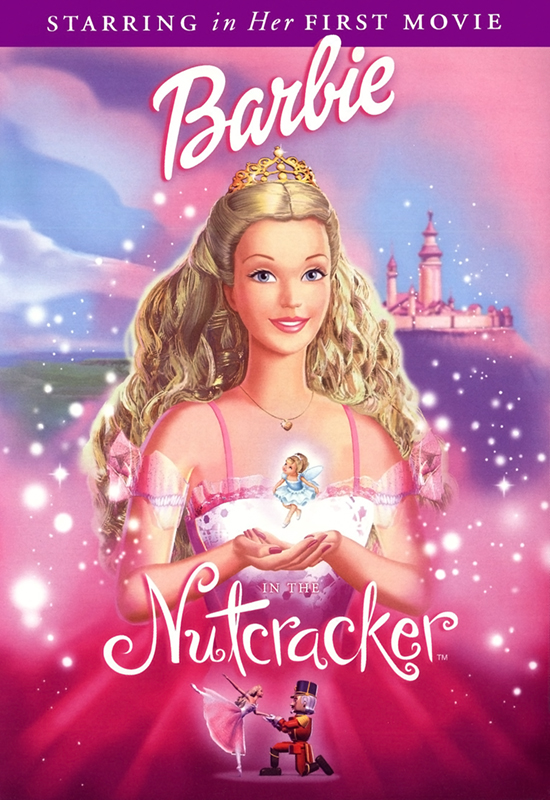
Mixed Nutcrackers - Barbie in The Nutcracker (2001)


Fun fact: this marathon was originally conceived as an All-Barbie December, on the simple basis that Christmastime is a time for tormenting friends, and nothing could possibly equal the torment of promising a Nutcracker marathon, only to dovetail into a long collection of samey Barbie films with no warning.  Only trouble is, if we DID run an All-Barbie December, I'd have to watch all of those same Barbie films myself - and, even worse, WRITE about them.  Such a joke could not possibly sustain itself across a whole month and still produce good writing, so the series was quickly converted to a Nutcracker-a-thon, and here we are today.  You can still count Barbie as the centerpiece of the series, the crown jewel from whence all other films featured sprang forth, and a perfect embodiment of why we're doing Nutcracker stuff instead of Barbie stuff.  Because let me tell y'all right here right now, I do NOT have a lot to say about this one.

Not like I didn't have a lot to say about The Motion Picture, gosh no.  Go back and read the review, I had plenty to say, just no clue how to format it into a coherent, paragraph-based piece.  Barbie in the Nutcracker challenges because it is plainly aimed at the youngest audience yet, roundabouts the four-to-six demographic, and much as the joke reviews on Letterboxd insisting this has an ending to rival Mulholland Drive in complexity and confusion, something ready-made to stop holding appeal once you enter second grade does not offer many avenues for critique.  The simplicity leaves fewer dimensions to pick at, the purity of purpose makes slagging too hard bad sport, and the lack of nostalgia in my case in particular means I cannot articulate what makes it tick for someone who saw it at just the right age in the way someone born round the same time as myself but with a Barbie obsession in their past.  So, seeing as I do still have a few concrete points to walk across, we won't rely on bullet pointing, but we will theme by paragraph, and take some time to poke Barbie in the Nutcracker's merits as an adaptation of The Nutcracker/TheNutcracker and the Mouse King, its merits as a piece of animation, its merits as a piece of children's entertainment, and how it is effected by its status as part of the Barbie brand.  Should work out just fine; let's go.

As I've noted when discussing the various ballet-oriented adaptations, The Nutcracker has an inborn problem of dropping any semblance of narrative in the back-half in favor of pure dance, and even ETA Hoffmann's original story loses its slack once Marie and the Nutcracker Prince enter the Land of Sweets.  This requires any story-focused works to find some means of tinkering the material to suit its own needs, and we've seen a few differing approaches - Nutcracker Fantasy was more inspired by ideas from the story and crafted its own narrative from near-whole cloth, The Nutcracker Prince added more supporting characters and a bit of extra drama during the final movements, and the various ballets have the benefit of about half-a-dozen scripted dances for fodder.  Barbie, for her part, sticks to the basic rhythms of a young woman receiving presents on Christmas eve, becoming delighted by a nutcracker, and having a strange dream of a war between mice and toys, with a few minor alterations.  Her Aunt Elizabeth functionally replaces now-Grandfather Drosselmeyer as gifter and One Atop The Clock, there's no party or other toy soldiers because character models are expensive, and she doesn't wake from her dream once she drives away the Mouse King with her slipper.  This last marks the film's major departure, for once it's done with the literary source's first half inside fifteen minutes, it sets aside the rest of its remaining hour for a story of light high fantasy.

This basically works as a creative choice, because it decouples the movie from novella and ballet, and largely enables it to run its own little Christmas-themed thing.  Changing the Sugarplum Fairy to a Sugarplum Princess is a weird little bit of probably-necessary marketing tampering, but making her a McGuffin that Barbie, the Nutcracker, and a few hangers-on must seek out to free a fantasy kingdom from the Mouse King's iron clutch gives a fine excuse to keep introducing new concepts, constantly move forward without flagging in one spot for too long, and introduce a few little bits and bobs of its own.  I certainly didn't expect the Barbie Nutcracker movie to feature a massive rock golem chase or a talking bat sidekick, yet they're here all the same and functioning quite nicely.  Considering the way it all looks, Mattel could've easily taken the same assets and put out a token PC game with the same story.  That courtyard in the climax seems purpose-built as a boss arena, so why not?

With regards to looks... well, it's no great shake, but was there any chance otherwise?  Round 2001, only Pixar and Dreamworks had humanoid animation anywhere close to workable, and Pixar's whole "It's more believable and endearing because they're toys" idea with Toy Story also had a greater budget, more talented artists, far more detailed environments, a stronger lighting rig, and stylized characters who aren't confined by the semi-realistic proportions and sculpting of the Barbie line.  They tried, God bless 'em they tried, but there's a stiff lack of flair to the movements and the models are way too lacking in detail to read as anything except cheap.  Attempts at animating special effects like fairies dancing through the air as they fly look more like someone messing around with the drag-and-drop tool, and the little amount of dancing present seems heavily limited by what the models could do regardless of them using mo-cap.  The lighting effects are the biggest failure, as any attempt to do something creative gives the characters this weird fuzzy halo effect that ruins any illusion of them standing in their environment, while simpler set-ups make them look like the plastic they are.  All in all exactly what you'd expect from a direct-to-video 3D animation project of this time, but I still have to give props for the effort.  The animators at Mainframe and Mattel Entertainment could've easily lit the whole thing uniformly and made no swings at more complex animations they didn't have the budget or experience to handle.  Their failures speak more to willingness to experiment than lack of ability (though don't get me wrong, the execution lacks something fierce at times - that cloudy beachside scene is just the pits).

(Plus, they recognized their inability to fully model every outdoor environment, so several of them utilize digital mattes on the skyboxes and render a few more complex panoramic scenes as fully 2D paintings, which actually caught me off-guard at one point.  I was just about ready to mock the film for not knowing what the heck a Perspective is when they arrive at a magical castle, only for it to fall down because it's a cardboard fake planted by the bad guys, which just so happens to look identical to the style used on the flat backgrounds.  They got me good there!)

I think the whole thing holds together as a cartoon for really young kids pretty well.  Fun little out-and-back adventure type narrative with just enough daring-do to keep the boys engaged while remaining soft enough for the girls, if we are to think in terms of a Mattel-executive circa turn of the millennium.  As regular readers know, I'm perpetually gung-ho for a little bit've scary imagery bound to frighten small ones a little in any product, and the Mouse King's predilection for casually turning his minions and subjects to statuary checks that box quite nicely.  We had quite a lot of fun joking about how the dialogue-driven portions of the climax are effectively Mattel discoursing on the need for consent from the governed for an effective system of government, which satisfies the whole "Gotta have something for the parents!" aspect in a manner beyond the usual crude humor.  And really, while I'm baffled by the large percentage of reviews from supposedly full-grown adults that seem to genuinely have a hard time understanding the ending (Dream real; nothing more, nothing less), the whole thing with Barbie turning out to be the Sugarplum Princess and Prince Eric being real outside the dream probably does work as a series of effective twists for anyone of the right age.  Thumbs up from me on this metric.

If there is a real weakness I can dig at here without feeling bad for going after something made for very small children with the same vigor I do more mature films or animators in circumstances unfriendly to more polished work, I think the film's position as part of the Barbie brand harms it most.  The whole thing is framed as Barbie telling a story to her... I think sister, as a means of helping her gain confidence during her ballet lessons, and the fact that main character Clara is more Barbie as Clara than a person herself leaves the film unable to pursue its ideas to the fullest.  Other characters claim Clara is a strong, brave, confident person whose presence keeps the party together and gives the Nutcracker the strength to outmatch the Mouse King, but Barbie can't do anything we might interpret as off-brand, so these qualities only come through because the characters say so.  Otherwise she's just moving from place to place and setting up more important conversations, which limits its ability to impart any positive message to its audience.  The whole thing with "Barbie was a beautiful princess all along and lives happily ever after!" comes through on a "I'm four and don't know what stories or dialogue are" level far clearer than "Barbie becomes a beautiful princess because she's a capable person who uses her inner strength to earn her happy ending" aspect.  Not to mention, ending on a scene of Barbie and her sister dancing a variation on the Sugarplum Fairy piece with step-to-step perfection kinda undercuts Barbie as a positive big sister rolemodel by having her teach it perfectly the first time with no need for anything beyond telling a story.  At least the sister struggling a little but doing better than she did at the start would've made it stronger.

Yeah, I know I'm giving way, way more credence and critique to a Barbie film than it probably merits, but one has to at least try and treat all films equally if we want everyone across all ages and outlooks to have good movies made for them.  Far, far easier to do so for a children's film than something made for members of another racial identity or sexual orientation, given we've all got some variation on that childhood experience, and I think Barbie in the Nutcracker deserves a little effort anyhow.  One can tell the crew put forth their level best for the circumstances, and while it's not great or even to my personal standards of wholly good (that lighting really kills it for me), it does what it wants to do well, and also allows Tim Curry a chance to go whole ham on the digital scenery.  Nobel goals fulfilled adequately.  Bout all one can ask for and be happy with when dealing with Barbie, I'd say, least till they had the idea for Life in the Dreamhouse and got meta with it.

(Here's some fun trivia for you - the Nutcracker's VA, Kirby Morrow, served as Goku in Ocean Group's dub of Dragon Ball Z from episode 160 onwards, while Ian James Corlett (Captain Candy) served as Goku in Saban's initial dub of the anime, and Peter Kelamis (Primm the Bat) replaced him in the Saban dub before serving in the same capacity in the Westwood dub.  Got three Gokus up in here.  Neat!)

3/5

Thursday, December 12, 2019

Mixed Nutcrackers - The Nutcracker (1993)


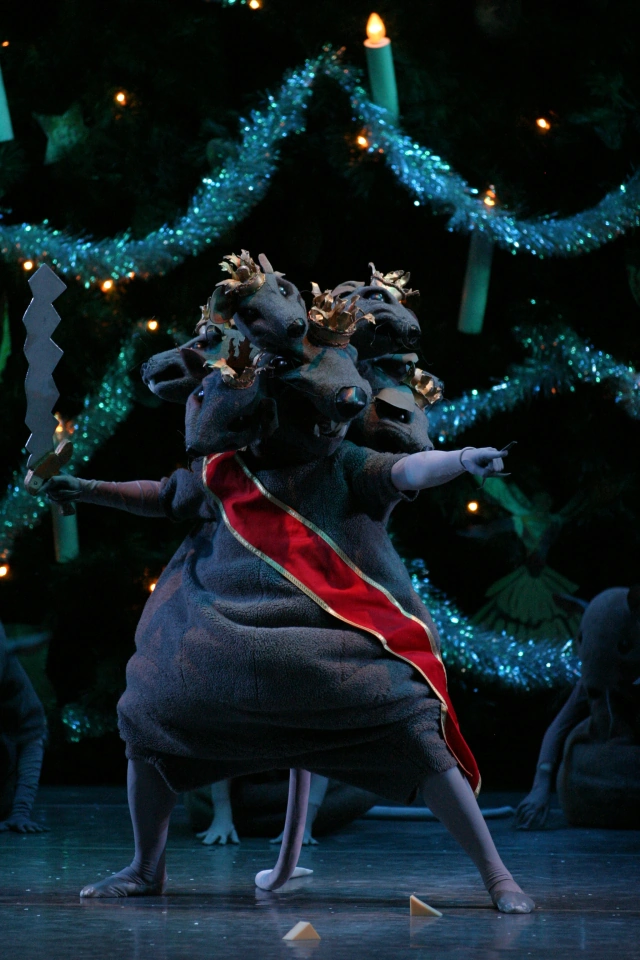
SEVEN HEADS ALERT!  SEVEN HEADS ALERT!  I REPEAT, THE MOUSE KING SHOWS UP IN 1993'S THE NUTCRACKER, AND HE HAS THE FULL, PROPER SEVEN HEADS.  THREE MOLDED COPIES OF THE CENTRAL HEADPIECE JUTTING OUT FROM BOTH SIDES, YOU COUNT 'EM UP, YOU'VE GOT ONE TWO THREE FOUR FIVE SIX SEVEN FULL HEADS!  HE AIN'T IN IT MUCH,  BUT HE MATCHES THE PROPER COUNT, AND HE'S GOT THE SAME DELIGHTFULLY ROUNDED, BAGGY BODY SUIT AS THE REST OF THE MOUSE SOLDIERS.  FIVE OUTTA FIVE.  TEN OUTTA TEN.  BEST MOVIE OF THE YEAR ALL YEARS.


Ahem.

So, this take on The Nutcracker is a bit of an odd beast.  Despite an alternate title naming it after George Balanchine's famous, life-giving and fame-bringing 1954 version of the ballet and despite drawing extensively from Peter Martin's then-present rendition, the film's overall construction gives one the impression it only exists because Kit Culkin couldn't negotiate satisfactory terms for payments on Home Alone 3, and rushed a film version of a Christmastime ballet into production so his son would have a starring role in a holiday film for the winter '93 season.  Macaulay Culkin is quite a bit more prominent than other Nutcrackers and their princely counterparts, entering the story alongside Drosselmeyer and getting teased as a potential romantic interest for Marie during the children's dancing scenes at the Christmas party.  He's got a substantial number of close-ups compared to the other major players, which reveal how Kit evidently instructed Macaulay to not move a single solitary facial muscle during the entire production, and consequently makes it seem weird the child actor so well known for his expressiveness in the Home Alone movies is playing it so dead-eyed.  Some of that might come from how Kit very obviously didn't drop a single cent on ballet lessons for Macaulay, who is asked to perform the Nutcracker Prince's dancing recap of his battle against the Mouse King (notably deleted from The Motion Picture), and does so by awkwardly shuffling in place, occasionally flourishing his arms a tiny bit, and overall looking like he does not want to be here.  Much as Tchaikovsky's ballet has the leads' absence throughout the second act baked into its traditional form, Culkin's presence makes the issue all the more head-scratching, for the constant focus on his person throughout the first act gives way to he and Clara simply sitting on the sidelines watching the cultural and candy dances with very few close-ups, and not even performing the play's final dance.  Y'all paid for The Kid What Did Home Alone In This Other Christmas Thing, now thrill as he embodies none of the traits you liked from that movie, and then gets benched so the real dancers can dance.

Course, the real dancers here aren't quite equal to those from the Bolshoi Company or the Pacific Northwest Ballet.  Lacking in technical knowhow about ballet and dance in general though I am, exposure to their filmed productions tells me there's something oddly simple about the performances here.  The group pieces are all fairly fine to my eye, big crowds in motion always having some positive effect on me regardless of technical execution, and their costumes are pretty and eye-catching all-round, so a large group in matching outfits of this type is going to work for me.  Problems arise with the solo or paired dancers, whose movements seem rather slow and restricted - the ballerina playing the Sugarplum Fairy seems especially simple and sluggish during her highlight numbers by comparison.  I have to wonder how much of these underwhelming dances are the result of my spoiling by viewing world-class performers and no one else immediately prior to this viewing, how much comes from a lack of vim and vigor during this particular production, and how much blame one can lay upon director Emile Ardolino.  I've not seen Dirty Dancing, but its reputation as one of the great dance movies led me to expect better staging and camerawork.  Where the Bolshoi production has the excuse of being a filmed live performance, and The Motion Picture works a few tricks to ease into its theatrical staging, Ardolino presents the film as 80% head-on filming of obvious stagebound sets, and renders his rare close-ups or alternate angles disappointing in effect thanks to a lack of acting from anyone onstage.  I singled out Culkin for his lifelessness due to his prominent treatment, but pretty much everyone here lacks an awareness that the camera might find them interesting at a distance any closer than fifty feet.  Such simple performances might work when viewed as live theater (not ever Nutcracker staging needs to bring the house down and strain the performers past their limits) or even filmed theater, but with the bare-minimum effort at treating this film like a movie in hand, the unimpressive footwork and static camera should make it a bit of a slog to watch.

Connie thought so, and I see where she's coming from... yet I found myself far more engaged by this production than the Bolshoi version or The Motion Picture.  I cannot call this film better than either, as despite some pretty backdrops and outfits (and those INCREDIBLE mice, ho boy!), its production design doesn't quite match the former's creativity or the latter's richness, and both contain what seem to me far better dancing.  Kevin Kline's perfunctory narration should seem insulting, and does little to help once one realizes how well the same information is communicated without words even here, and there's just simply not much here I might call exemplary.  Charming to an extent, visually pleasant, containing a mouse king with the proper seven heads as God intended, yes, but not great.  And again, here I am with a film I think lesser compared to The Motion Picture that kept me alive and awake far better.  I'm inclined to say some of it comes down to growing familiarity with both the general form and this particular show, and having multiple different points of comparison against which to actively go, "It's interesting how they're handling the cultural dances this time, and the different placement on the Sugarplum Fairy's dance has an odd effect on the flow, and what are the limited cinematic flourishes doing for the film compared to the others when they'll sometimes take the form of a slow flashback to events we saw five minutes ago, and and and?"  It's probably not so much this film having anything particularly special to stimulate my brain, as it is me having poisoned my brain with so much Nutcracker content in the past few weeks as to find the act of comparing and contrasting different versions more rewarding than I did when watching The Motion Picture a week back.  Call it engagement by way of being a fucking nerd.

Harshness aside, this staging of The Nutcracker probably simply made an ill-fit for the cinematic form.  Drawing on Connie's after-film musings again, I'd agree many of the flaws I've highlighted wouldn't stand out so prominently on the stage, considering the lack of a camera to underline the lack of emotive acting and its own inability to dance in time would remove the pressure to live up as a piece filmmaking, and the longer-standing tradition of live ballet productions compared to versioned film as film would remove the impulse to compare it to productions more specifically geared to take advantage of the medium.  In this particular mode, however?  S'fine.  Fun to poke fun at how wooden Culkin's dad made the thing by shoe-horning his famous son in, enjoyable to watch when the bodies are in motion, and happily free from the pedophilic subtext present in the ballet - or, for that matter, the textual text present in The Motion Picture.  This last really helps me find a positive spin on the film at the end of the day.  Drosselmeyer may become a bit of a dead-end character if he's not constantly present throughout the dream sequences, but if the alternative is a consciously creepy rendition orchestrating the dances in the Land of Sweets as a means of stealing young Clara's hand away from her ideal fantasy boyfriend, then LET'S play schmaltzy, cutesy child romance with no godfather in sight.  Please.

3/5

10/5 for the Mouse King

Sunday, October 20, 2019

The Worst Witch (1986) - HAS ANYBODY SEEN MY TAMBOURINE?


(Warning: I have never read any of The Worst Witch books.  Everything I claim about them comes from a two-hour dive across wikis, fan communities, and Goodreads reviews after watching last night.  Please excuse any inaccuracies.)

I shan't categorically claim a book so simple and episodic as The Worst Witch has natural difficulties making the jump from page to screen - to my understanding, both later TV series based on the series have found greater success, which indicates Jill Murphy's tale of Mildred Hubble struggling through her first term at Miss Cackle's Academy for Young Witches has greater potential for live-action translation.  It is probably more accurate to claim a mixture of hewing so closely to the structure of a book with perhaps half-a-dozen major incidents and bringing the same to life on a fairly low budget does nobody any favors.  1986's The Worst Witch has to fill a scant seventy minutes (less counting opening and closing credits) with an even scanter handful of notable events, and call it a day.  You can handily do this in the pages of a book with barely 100 pages, large-print, and multiple full-page illustrations aimed for the sensibilities of first or second graders.  Imagination and empathy for the main character takes over quickly to fill in any gaps, and a "and then this happened, and then this, and then this, and then that," structure fits either the child who only reads one chapter at a time or the child who tears through the whole book in a single sitting.  A low-stakes, high-fun spin through the life of a girl who can't do anything right in a fantastical setting is a great idea for a young reader's book.

For a film... well, you can see the director and crew straining for ways to make it all work.  Some choices meet their mark by inventing clever little new incidents to serve as glue between the major incidents, such as the game of Terror Tag or a brief bit of comedy with the Headmistress' (I assume) Chicago-dwelling niece.  Nice, kid-friendly expansions on what you'd expect from the setting and story, as are the moments of conversation between the children during lull-periods.  At other, more crucial turns, though, the film opts to take major incidents like Mildred accidentally turning her rival into a pig, and draws them out with guff-laden dialogue for quite a long while, longer than I could imagine myself standing at an age more appropriate for relating to this story.  Elsewhere, attempts to appeal to an older audience fall completely flat, whether they be the multiple segments showing the evil witches plotting their dastardly scheme to little more effect than their sudden appearance towards the book's end, or recasting the stuffy, elderly Chief Magician as a vamping Tim Curry, whom literally every other member of the cast is in love with for some reason.  Anything with these two threads is padding of the highest order - and speaking of their padding...

At least one of the songs is tolerable.  I think it's more a problem with delivery on Growing Up Isn't Easy and Agatha's Song, as the singers are pretty shrill and off-pitch, and I could see myself going with their bouncy rhythm if they featured a better performer.  They still irritate the ears a touch, unfortunately.  As to Tim Curry, his song features some awful non-sequitur lines even for something aiming at silly, very basic rhymes, an awkward halting rhythm backed by badly tuned synths, and Tim Curry wavering back and forth with no indication he knows what he's doing.  And it is probably the best part of the special thanks to how hard Tim Curry goes for it on the vocals, coupled with Craig Price's off-the-wall editing and effects.  If there were an award for Most Editing, Price deserves it for his work on Anything Can Happen On Halloween every year all years.  It's a neck and neck battle between Tim Curry and Charlotte Rae for whose musical number is the most transparent time waster, but much as I love Tim Curry's and have the entire thing imprinted on my brain after discovering it on YouTube years ago, I have to hand him the title.  His goes on way longer and completely warps the film's tone to cram itself in there.

Much as decisions to expand the story with wheel-spinning and weird underaged Tim Curry-crushes and long musical numbers harm The Worst Witch's potential, I think the biggest problem introduced in bringing it from page to screen involves the tone of how Mildred is treated.  Watching this without the implicit understanding that as a young reader invited to think of myself in Mildred's place thanks to the degree of non-specificity the written word affords, working through all the times when Mildred is called out, teased, put upon, straight-up bullied, and badgered by her fellow students and teachers alike for what look like terribly minor infractions just makes one feel bad.  The adults in her life engage in the exact same name-calling and positive punishment as the other children, to the point where the one adult in the school who's supposed to be on her side, the headmistress, out and out calls her the worst witch to her face multiple times.  It's a miserable thing to see, compounded by hints that this magical society otherwise operates on "Do things how you please just so long as you're witchy about it!" I GET Mildred being punished for messing up a potion, but let her ride her broom and carry her kitten however she damn well pleases, you monsters.  Carrying a cat in a satchel is just as witchy as having it sit on the tail.  With how pointed and direct these baseless attacks on her  person play, and how little the excessive lengthening and padding blunt the effect, the story still feels more joyless than I suspect it should, even for one about a little girl who feels like she can't do anything right.  I more want to hug Mildred and tell her it'll be OK than watch her continue on through this battery.

So, important thing to note again as we finish up: While I can't sit down and point to my own experiences with Murphy's books as a means of illustrating my points, I am somewhat inclined to treat the series with a softer hand.  This film reportedly disappointed Murphy on release, and while I could handily join thousands of others in digging through the Harry Potter similarities, I also understand how, with eyes clear from the nostalgia in my own, the first film in that franchise suffers from much the same issues as I identify here, just with a stronger throughline and a FAR higher budget.  If I can apply "this thing works far better on ink and paper, where a child reader can engage in self-protagonist-replacement easier" in a film I identify as a childhood favorite, I can say this weaker effort shouldn't cast any bad light on its source material.  Besides, in much the same way I adore Sorcerer's Stone in spite of the problems, I know there's plenty people who love this special for the same reason I love the first filmic entry in MY magical school series - they saw it as kids, have strong memories associated with its iconography, and no real reason to be bothered by the padding or strange means of depicting conflict as a result.  I wouldn't want them to besmirch my love for the film, so I won't besmirch anyone else's here.  There's issues issues aplenty, but I can understand why others like it, and don't think it much right to call this bad beyond its failure to engage me as an adult.

Besides.  Just... lookit this.  It's incredible.


3/5

Friday, October 4, 2019

Jabberwocky (1977) - Twas brillig and the slithy toves...

                                                         Jabberwocky (1977)

Letterboxd Season Challenge 2019-2020! Theme two, part one - a swords and sorcery film!

(Chosen by me!)

Surgically remove the filthy medieval backdrop from Monty Python and the Holy Grail, intensify it so even the king has grime and dust and shit all over him, and make the socioeconomic outlook of Dennis the Peasant's scene way bleaker, and you've what I imagine Terry Gilliam shot for while making Jabberwocky. Anyone familiar with his later work can see the elements common to his later films in clear evidence here - a parade of gonk-faced masses whose disgusting habits pale in comparison to the depravity of the people in charge, a protagonist too inexperienced, addled, or both to do much beyond get shunted from one scenario to the next, a love of extreme close-ups and dark places filled with gunk and refuse. There's all the hallmarks here, and the story of Dennis Cooperson's journey through the bowels of the local city during a monster attack proves an ideal backdrop for Gilliam to exercise his aesthetic and philosophical impulses in a solo setting for the first time. He's as compelling an image-maker here as he'd become with Brazil or Fear and Loathing years later, and I can wholly commend him for crafting so completely ugly and cruel a world.

Structurally and thematically, though, we're on far shakier ground. Gilliam films usually have some sense of hidden purpose behind their wanderings through menageries of societal scum, or at least a firm enough commitment to displaying a few particular stripes for some skewering point. With Jabberwocky, one feels Gilliam's aesthetic workout alone is the point, a tour through twisted faces and horrible actions for its own sake. The world shifts on the basis of whether or not Dennis has suffered enough in the last five minutes, which often leads to a resounding "no" and a new kick in the balls, as Dennis is just a little too gormless and oblivious to his own suffering for anything much to stick. As a result, the film's moments of greatest cruelty of repulsiveness seem to happen because we're getting bored of not seeing something horrible happen, rather than because the man in charge has a carefully mapped plan of emotional highs and lows. It's amusing when Dennis' flailings as he chases after a meaningless rotting potato memento are scored to a crowd cheering its bloodlust over an unrelated jousting tournament, or when Dennis falls to the mercy of a princess whose imagined visions of a noble prince make her quite unable to see the real idiot before her; moments like a cuckolding squire getting squashed to death by the man he cuckolded during a lovemaking session or Dennis stepping in an utterly massive pile of jabberwock shit are more uncomfortable and mean because they can be. There's a lot more of the latter cudgel to the skull cruelty than the former finely-tuned ironic torment, and when paired with a lack of anything substantial to say, the trend towards guffawing at how senseless everything is makes the film a bit miserable towards the end.

I've praised miserable films plenty in the past, absolutely adored works designed to make you feel as terrible as possible and then keep pushing. The question one has to ask, though, is thus: am I miserable because the work is built in such a way as to guide me towards this emotional state for some rhyme and reason (even if only to do so with skill and finesse), or am I miserable because the film has lost me in one of its many tangents down a filthy alleyway and I've nothing to grab hold of to get back in? Jabberwocky feels like the latter, and I'm disappointed because it could've easily been the former with a greater focus on its socioeconomic humor. That stuff is built into Dennis' central joke of being a bumbling fool who's great at administrative theory and horrible at communicating his ideas. A little tweaking, and the film's commentary on how chaotic and ill-led the medieval world's people and leaders were in a reflection of our similarly depraved modern times could rival Brazil's similarly freeform tour through a city gone mad with callous bureaucracy. Unfortunately, the parts where this line of humor does come into play are where Gilliam's early lack of confidence is most evident, as he drops the crueler tone in favor of Monty Python-style absurdist humor. It's all good material, the sort've scenes you could easily slot into Holy Grail as supposed deleted scenes and fool a lot've people along the way, but they tend to be composed flatter than the rest of the film, acted with a more self-aware tone, and generally don't mesh with the dirtier atmosphere at play here. They generally feel more like Gilliam dipping back into his comfort zone when confronted with a difficult task rather than natural counterweights to the misery, and so fail in their purpose even as they work on their own terms.

I'm disappointed in Jabberwocky, and with good reason, I should think. There's an abundance of positive elements to pick through, from the doubling-down on Holy Grail's rain-soaked muddy exteriors and dust-choked candle-lit interiors to beautiful effect, to the variety of satirical scenarios Gilliam plays out within them; from the contrasting vibe of empty spaces suddenly filling with roaring crowds, to the purposefully drawn-out, painful nature of many jokes that get laughs from how pathetically they end; from the rotting design of the suitmation monster at the climax to the sociopathic cruelty in twisting an unambiguously happy ending into the worst possible fate for the main character. It is a well-made movie on most technical respects, and could even match some of Gilliam's later works for aesthetic quality. However, without a central point to revolve around, some idea to work towards, any sense that we're doing this for reasons beyond the enjoyment of cinematic cruelty, it becomes a well-made movie that I don't much enjoy watching for long stretches, and leaves one without a coherent framework for discussing its ideologies at the close. A miserable tour through a pitiable world with a guide whose greatest ambition is to repeatedly say, "Lookit that! Revoltin', innit?" is not the most effective use of anyone's time, and even if all the sights are pleasing in their own repulsive way, I'm not about to thank the guide if I get the feeling he was somehow holding back.

At least later Gilliam took this template and refined it into the basis for many a career highpoint. I'm disappointed in Jabberwocky, but it's got too much going for it and too much readable DNA of its descendants for me to fully say the lack of a thematic centrifugal force breaks the entire experience. Knowing both where Gilliam came from and where he'd go after this weakens the experience by making the whys of its shortcomings stand out, but while I doubt I'd rate this too much higher if I came in totally ignorant to the man's existence and other work, I'd say acknowledging this at least tempers my opinion from "verging on bad" to "good but heavily, heavily flawed." At the very least, it's only here you get to see David Prowse Knight make bloody mincemeat of Other David Prowse Knight.

3/5