Monday, December 23, 2019

Heaven is For Real (2014) - An Exploitation of Innocence


(The following content is reran from the 2018 Christmas marathon on Letterboxd, as originally seen here.)

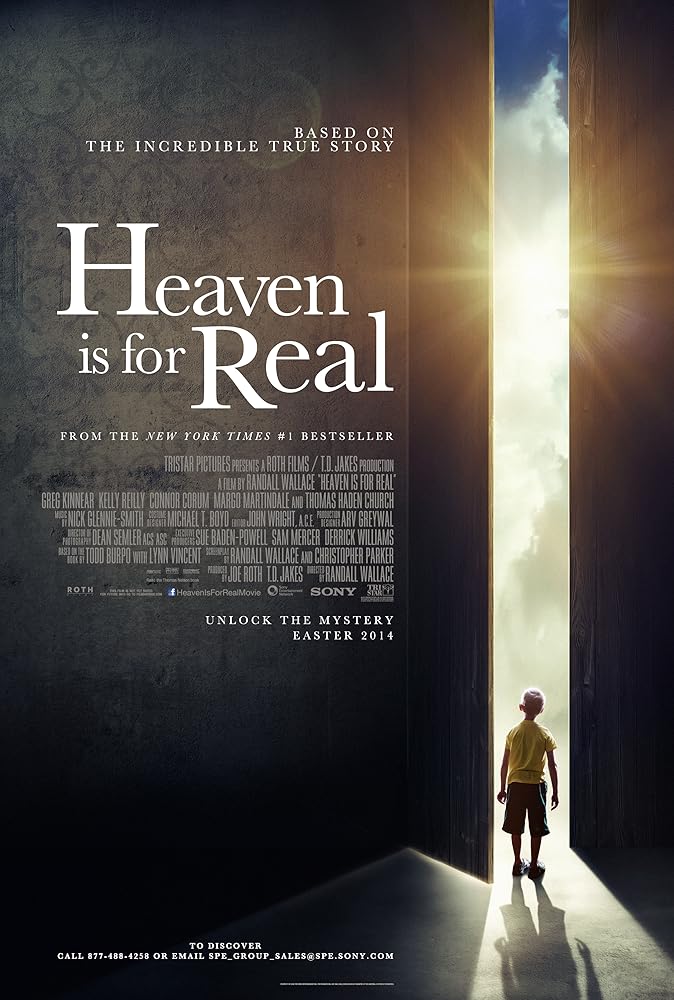
Why were there so many Christian films in 2014? In part, we can thank Todd Burpo, for deciding his lucratively successful Heaven Is For Real ministry venture simply couldn't make do with a successful tell-all book, press tours, and speaking appearances by his underaged son Colton, all recounting the boy's trip to heaven during an appendicitis surgery when he was three. In addition to all his other flush sources of income, Todd decided he needed to give his son his very own movie, directed by a real director, starring real actors, and distributed by a production company whose reality is questionable at best but leans towards interaction with this plane on good days. I won't bother with the question of whether the movie deserved to exist - while I'm normally inclined to say all artistic expression deserves a chance, Todd Burpo's entire career over these last fifteen years has rested upon the exploitation of a child who only just recently became a legal adult. He has no right to treat his son like a rarefied prop with which to entertain and inspire the masses, and he certainly should not predicate a kid's upbringing on being The Single Most Important Person On The Planet. It's terrible parenting to use your offspring for financial gain, and if there's an ounce of truth to anything he spews about heaven by manipulating Colton's story, I can't imagine any criteria through which he gains entry.

Shouldn't come as any great surprise, then, that Heaven Is For Real's biggest issues spring from the need to satisfy Todd's narrative. Carved away from the terrible real life circumstances leading to its creation, there's merit to the inciting incident and subsequent fallout as a story in its own right. A man of faith who wears many hats in his close-knit community suffers a series of medical and financial woes, culminating in the near-death of his toddler-aged son on the operating table. He soldiers on through the pain despite shaken beliefs, until his son claims to have left his body and seen the Lord God and Jesus. This spins into two interlinking issues, as the father is desperate for any reason to strengthen his beliefs again and begins treating his son like an authority figure instead of raising him, and the larger community bristles at the notion of their pastor moving from preaching useful metaphor to Biblical literalism. There's something interesting in the notion of laying a man so low and asking him to continue displaying the same level of strength and confidence he embodied before in the face of doubts and personal weakness. You could wrangle a decent ending out of such a story.

In fact, while watching, a superior version of this tale cropped up in my head. Basically, Todd realizes he's let his need to believe beyond a shadow of a doubt overwhelm his duty as parent and preacher, and potentially run the risk of damaging his son's development. The solution isn't to find irrefutable proof in Colton's statements and make the whole community come about to a new way of thinking, but rather to synthesize his two duties. He was neglectful towards Colton towards the start of the picture, after all, and the weakening of his passion for preaching correlates strongly to his increasing need for evidence. As a man of faith, he knows his scripture, and as a father, he knows his son. The two roles need not come into conflict with one another - the confidence and displays of strength he needs as a father can revitalize his sermons, and the depths of his faith can enable him to believe Colton's stories through his own lens of understanding without deferring the power in a father-son relationship to a child in hopes of greater understanding. Leave the actual truth of Colton's trip to heaven ambiguous, call for unity through common love of Jesus and the Bible's teachings, and there you have it. Got a fairly decent Christian film with a nice little "love your kids, don't obsess over details, be a pillar for the community" message in it.

Course, with the Burpo family so closely involved in this film's financing and production, such an alternate take is all but impossible. A story very loosely inspired by real events might fly with such a different interpretation, but with Todd Burpo and his ministry getting a say in the story, no dice. Because the film needs to end with Colton proving heaven exists and Todd resolving all his woes with said proof, the promising material becomes total naff. The movie only acknowledges Todd's immediate, eager transfer of control to Colton as weird insofar as his failing to find the RIGHT way to give Colton control to bring about the appropriate revelation. Those viewing his behavior as distressing or inappropriate are cast as simply doubting without reason or angry at God for not granting them special treatment. The question of literal scripture against metaphorical readings drops out of sight the moment Colton goes from describing general childlike interpretations of what he's heard in church to truth bombs beyond his understanding. Every conflict and character has to eventually run aground of the undeniable "truth" and come around to a singular point of view, and so the movie loses any impact its high-minded questions might've offered.

Any religious movie preaching a fundamentalist viewpoint is bound to be bad, but this isn't to say the final product is devoid of merit. The camerawork goes a fair ways towards keeping the film in the "bad but I can respect some elements" two star category, rather than the lower realms of actual hate the source and story deserve. Visually, Heaven Is For Real acquits itself well, thanks to Randal Wallace's direction of alternately storied/hacky cinematographer Dean Semler. The Nebraskan vistas and awe-inspiring glances to the sky have more of a gentler 80s Mad Max or contemporary Dances With Wolves feel than the same man's work on something like Peep Beep Meme Creep 2, and there are some interesting camera pushes here and there which feel like they belong in a better movie. There's a general folksy sense about this community and its people, one I rather like in spite of its total lack of authenticity when compared against the millionaire who minted his fortune by using his son. I can even find some merit in the way Greg Kinnear plays Todd's wide-eyed obsession opposite Connor Corum's innocent proclamations.

If you want a good idea of how Heaven Is For Real feels in a neatly-wrapped package, I think it's worth considering an early scene where Todd visits a psychologist concerning Colton's strange behavior. She dispenses some highly sensible avenues for diagnosis and treatment, only for Todd to effectively go "What if hlurgly blurgy bloo," which prompts her to suggest ESP as a more reasonable alternative. Todd then dismisses her profession, and refuses to consider his son as anything except a perfect source of knowledge who's causing HIM problems for the rest of the runtime. The movie as a whole also dovetails from something with the potential for constructive conversation into, "Well I can't understand it, so I'll just say something crazy and dig in my heels." Give more consideration to Colton's needs and experiences, acknowledge Todd's maladaptive reactions, do anything except fall back on an unexamined revitalization of faith. Anything's better than allowing a man who quite plainly views his son as a cashflow more than a person any measure of vindication.

Next time - Kirk Cameron's flamed out, so we're doing apocalypse fan-fiction with Nic Cage instead.

2/5

Mixed Nutcrackers: The Nutcracker and the Four Realms (2018)


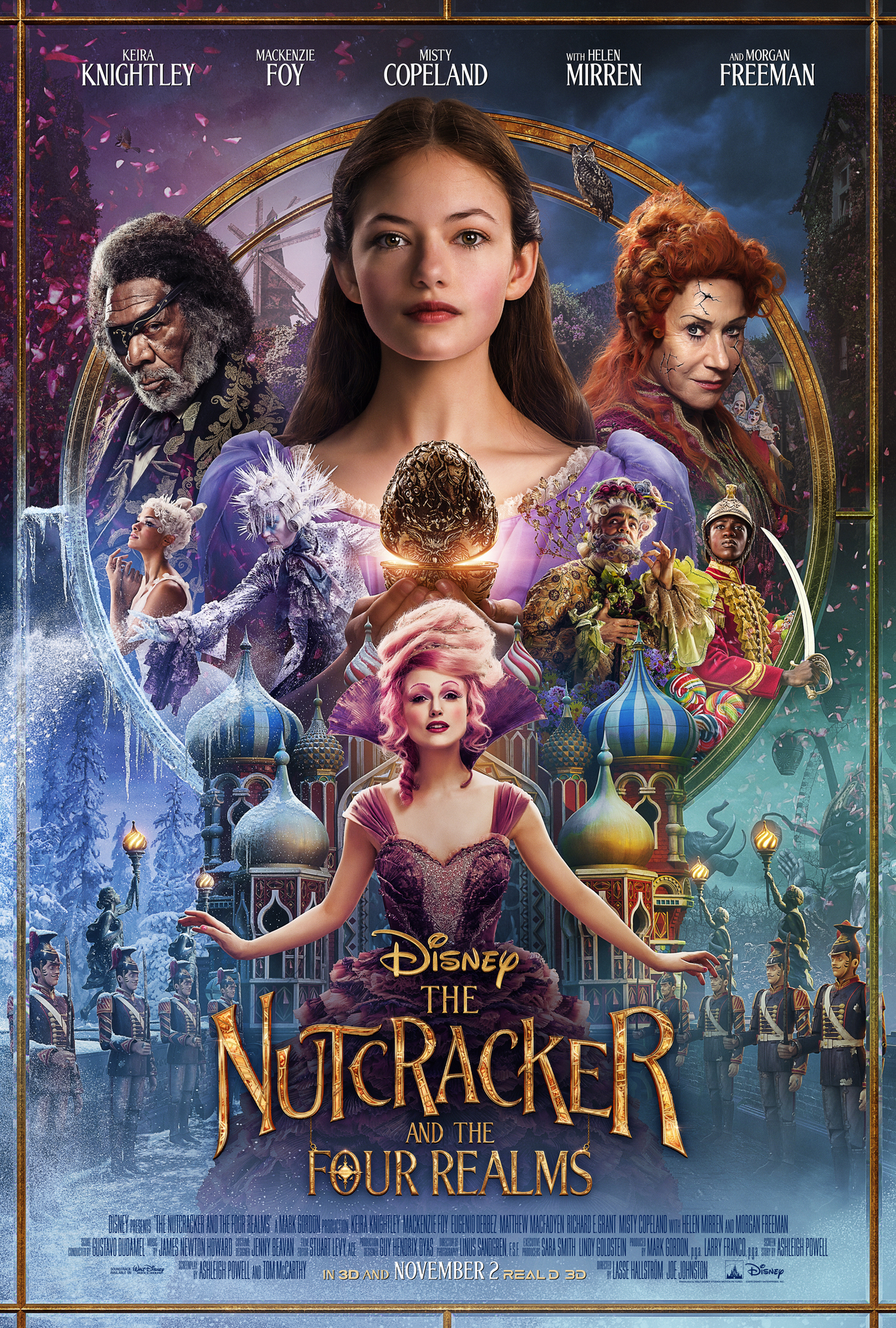
Over the last month, I've spent quite considerable hunks of time puzzling over why The Nutcracker and the Four Realms exists.  The reasons are quiet obvious and take little time to figure, of course - Disney intersected with Tchaikovsky's work very briefly when they adapted his Nutcracker Suite for a segment in Fantasia, Disney's been on a streak of remaking various classics of theirs both major and minor alike, and 2018's Star Wars offering targeted the traditional May release window rather than their new Christmas block, so turning out a big-budget Nutcracker film like they've been proprietors and overseers of the beloved property all this time works for a holiday market thing.  They don't even have to buy a whole studio to get the rights like they'll have to if they ever want to make coin off The Wizard of Oz, they've just gotta pretend that their all-encompassing dominance over childhood nostalgic properties has a transference effect across anything and everything in the public domain with the tiniest connection to Disney, and voila!  It even makes sense why it is the way it is, for Tim Burton's vile take on Alice in Wonderland made over one billion dollars worldwide, Kenneth Branagh's better Cinderella did respectable business for its budget, and overconfidence in the Disney offices keeps bad ideas afloat even after, say, Alice Through the Looking Glass turned out a financial disappointment.  You've a license to print money with recognizable properties done up in action-fantasy regalia, so away we go, 130 million dollar budget, gonna be a grand ol' time, woo!

My questions were more philosophical in nature.  Why are we here, at this point on the board?  Must it continue on like this?  Is there any conceivable creative spark behind the greenlighting and production of this film, or is it truly just an idea whose final form doesn't matter so long as someone can check off a little box on a list of Good Ideas What Will Make A Billion Dollars?  The answer to all of these questions is yes, without fail, but I wonder all the same.  The trailer and related marketing materials, though over-designed to such a degree as to embody a wonkily admirable aesthetic all their own, simply looked so boilerplate and uninspired in what they implied, it seemed the only reason any of the Nutcracker stuff showed its face was for the purpose of having a little more reason to use the Sugar Plum Fairy dance and Waltz of the Flowers on the soundtrack than normal in a Christmas movie.  And is that really what anyone wants to make a movie about?

Not asking whether the audience wants to SEE it or not, no, I'm curious about the folks who've gotta write and act in and design and direct this stupid thing.  Is this how you wish to spend your twilight years, Morgan Freeman?  Is this how you foresaw your first big mainstream exposure coalescing, Jayden Fowora-Knight?  How exactly did you get here, Lasse Hallström?  Were the ABBA music videos and What's Eating Gilbert Grape and all those dog movies not enough?  Must you architect something with no soul?

Whatever the reasons (for I'll never know), The Nutcracker and the Four Realms exists, and it's about exactly what its trailers make it out as.  New take on Clara Stahlbaum going through a magical adventure in her Godfather Drosselmeyer's house, except instead of a small skirmish between toys and mice with a semi-sweet kinda romance as the main pull, it's this big to do about a locked mechanical egg without a key gifted by her dead mother and a fantasy kingdom the elder Stahlbaum created from crude inert matter with multiple realms based on a few dances from the Tchaikovsky ballet, and wouldn't you just know it the whole thing's gone to hell in a handbasket with a mysterious arch villainand frightening circus imagery and need for a strong warrior queen to march forth and save us all as prophecy foretold and aaaaaaaaaaagh.  Pretty lookin' but vapid to the extreme, and lacking in any real identity of its own - in addition to all the bog-standard "Classic fairytale kingdom from your childhood is a little more Game of Thrones now" trappings, they've pinched bits and bobs from Alice, Oz, Narnia, and Disney's newer animated canon entries with shameless liberty.  The whole concept's a glass-molded, sugar-coated diorama piece, endlessly reflective of its counterparts an tasting of nothing in particular, a bad bedrock for any story to rest upon.

Somehow, with such an easy formula as, "Exposit, adventure, twist, conclude" to follow as inherited from all the other fantasy imitators its imitating, The Nutcracker and the Four Realms manages to back itself into a corner with some impressively bad character writing.  Clara, as played by Mackenzie Foy (who shall remain largely blameless, for not doing anything with the following is probably nobler than making a futile effort), has an alright if simple set of traits at the movie's start: she's clever and into tinkering with machines, she's upset about her mom's death, doesn't want to socialize in the way expected of her societal station, and clashes with her father over how to deal with the grief, retreating into her mechanics as he does his stuffiness.  With the whole thing regarding her mysterious locked egg that no amount of tinkering can open without the key, there's the basis for a bit of self-discovery and growth via the medium of an adventure in bootleg Middle-Earth cum Narnia.  Too bad for us, though, soon as she follows a string into the Four Realms, she becomes little more than an audience surrogate.  All sense of individual personality gets wiped away so she's free to marvel at the pretty sights and wonder at the new characters and feel sad when we're supposed to feel sad and get invested when we're supposed to get invested.  Lacking much identity of her own for a goddamned half-hour effectively distances one from her, and primes you less to fall under this world's magical spell, and more notices how it's so concerned with crunching exposition that it only spares about ten seconds total to show you three of the four realms from the title.

(Seriously, they're probably the best designed locations in the film, and we get a single shot of each.  Rest of the movie's in a comparatively empty - and probably easier to render - golden palace and various sparse dead woods.)

So, follow me on this one, please, I'm about to do a Thing.  Clara has learnt all about the ins and outs of the Four Realms, the supposed dangers posed by Mother Ginger in the disgraced Fourth Realm, and how her mother used a giant machine called The Engine to bring the whole fantasy kingdom to life, effectively making her heir to God's throne in this land.  The three good regents need The Engine to build an army to stand against Mother Ginger or else face extermination, but woe of woes! it's broken!  Now Clara, showing signs of life and personality for the first time in ages, perks up and suggests she might be able to tinker with the machine and solve the problem, because she's really good with machines and finally has someplace where her talents will be appreciated!  But no, we don't actually need her skills or anything unique about her - we need her mother's key, the same key that opens her mechanical egg.  Off a-marching we a-go, having a grand old time running about the Fourth Realm, getting attacked by mice, creeped out by clowns, just sorta doing whatever action-y thing comes to mind to tick off time because this little key hunt is all we have for a second act... long story short, Clara gets the key, opens the egg, and nothing.  She's devastated, because her mother left a note saying everything she needed was right inside the egg, and there's nothing, so clearly there's nothing important or special about her.

Gee gosh willikers, wouldn't you know it, we get back to the palace, turn on the Engine, and the Sugar Plum Fairy's really the villain for reasons that don't matter and I don't really care about.  Point being, she throws Clara in the tower dungeon and plans to destroy the whole Four Realms or something, and Clara?  Clara starts getting ideas in her head.  Clara starts thinking she has to reach deep down inside, find an inner strength she never knew she had, trust in her knowledge of the laws of mechanics, use them to escape and figure out a way to save the day.  She enacts a great escape with lots of verve and daring-do!  She spirits her way back into the throne room, where her mother's Engine is spurting out unstoppable tin soldiers!  And in a grand act of self-actualization, she sneaks up to the machine, and... uses her tinkering skills to shut it down and stop the Sugar Plum Fairy.  Turns out what she needed to do was exactly what she thought she needed to do at the start of the second act, just with an arbitrary march to kill her self-confidence and a little alone time to figure out something about herself she already knew.

That's not a character arc.  That's a character ten-yard penalty.  "Achieved self-actualization too soon, ten yards back, first down."

I don't know.  What else'd'y'want from me here?  The Nutcracker's a complete non-entity with no personality and even less reason for being singled out as important in the movie's shaky lore, the backstory and whole dramatic situation relies on implications from Morgan Freeman and flashbacks to Clara's mother which communicate a wholly different backstory than the one Sugar Plum's heel-turn is predicated on through monologue, and its ten steps backwards ten steps forwards story has nothing to say at the end of the day beyond "Keep visiting your childhood imaginary kingdom, or it'll all burn to ash because you weren't good enough to not grow up!"  I liked the Mouse King's reimagining as a mouse golem comprised of thousands of mice, though far more as a concept than for how he looks or anything he does, some portions of the expository ballet are rather pretty in both physical movement and the practical effects around the dancers, and the soulless tin soldiers are fairly, appropriately creepy.  I'm rather upset at how they only play a few snatches of the final dance piece on a tinny little music box before swapping over to the more "dramatic" sounding Waltz of the Flowers for the real final dance and - does it matter?

Do my further critiques and weak, minor praises have any purpose?  It's not fundamentally broken like the Tom and Jerry outing, and it doesn't fall as far into eye-popping, misguided arrogance as 3D, but unlike those works, I cannot think of how to improve this.  If I intuited some better means of handling Clara's arc (read: making it an arc in the first place), devised a better use of our first act time than uselessly oggling empty spectacles whilst hiding away the ACTUAL production design achievements behind weird editing choices, strained and labored and sweated to scrub out the uncomfortable "child God fantasies must last forever!" implications, it wouldn't be for anything.  The base idea of "The Nutcracker but we're Lord of the Rings and Narnia now" is bad and nonfunctional of itself, and my absolute best suggestion, being "Use a different concept," requires eradicating the movie entire down to its bones to keep suggesting anything better.  Uniquely-shaped failure to write a coherent story for its heroine marks the most remarkable thing about The Nutcracker and the Four Realms, and I'm half-inclined to say we shouldn't imagine a better movie in its place, because a muck-up like this is too rare and special to deny.  Why continue spilling digital ink on a work I've declared poorly conceived from start to finish, and cannot accept the obvious answers over the whys of its existence for how much they shake my faith in an inherently good universe?

Movie's bad.  Don't go watching it.  Check out Nutcracker Fantasy and the 1973 Nutcracker short instead.  They're far more charming, creative, better designed, and free on YouTube as of this writing to boot.  Hell, watch the Barbie movie, it at least does more with its golem character and out-and-back narrative structure.

2/5

Sunday, December 22, 2019

Noah (2014) - A Blockbuster From the Arthouse

(The following content is reran from the 2018 Christmas marathon on Letterboxd, as originally seen here.)

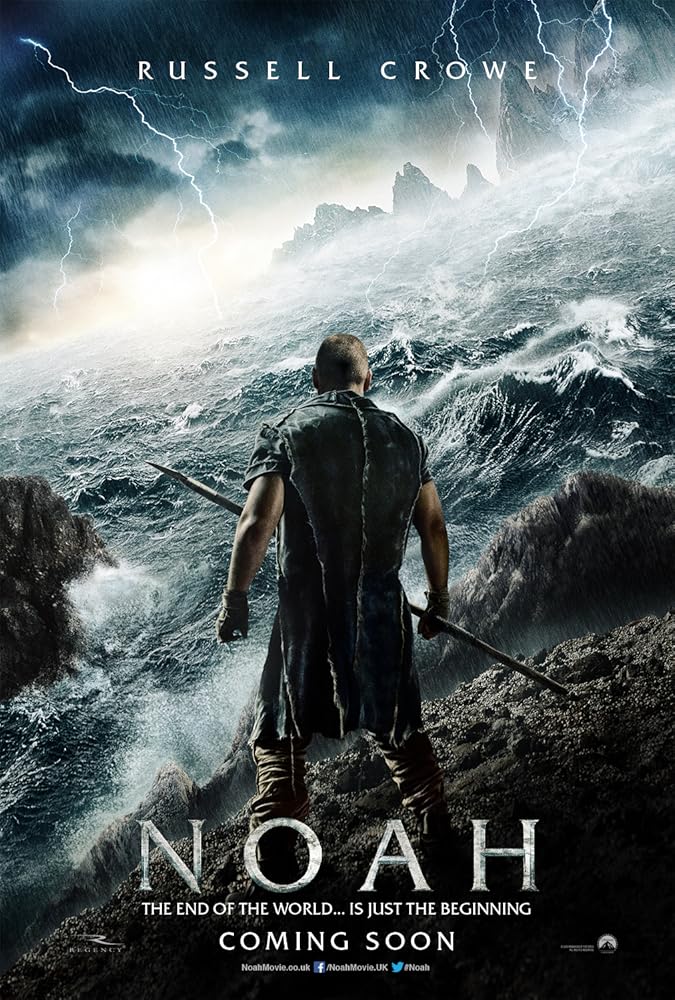
Why were there so many Christian films in 2014? In part, because Darren Aronofsky's fifteen year struggle to bring his vision of the Biblical Flood to the big screen finally bore fruit. A director whose work frequently involves characters pushing themselves to radical extremes, Aronofsky makes an interesting helm for the story of Noah, the patriarch who left all mankind to die beneath God's raging seas to preserve the sanctity of Creation. It's both a reversal and embrace of his usual ideas about the self and the masses, and it all comes packaged with a massive budget and expectations for big returns, courtesy of his success with The Wrestler and Black Swan. As the film proved a success critically and financially, and comes from the mind of a director with actual artistic ambitions, the only "did this movie need to exist" joke I can think to make involves slinging mud at mother! for trying a move into entirely symbolic territory and losing some of the power.

Aronofsky finds a far more even balance between metaphor and narrative this time around. Several passages of Noah creep into pure visual storytelling, and not just those involving the voice of God penetrating Noah's thoughts as a rapid series of powerful images. The reinterpretation of Watchers as victims of God's wrath and eventual precursors to the New Testament style of forgiveness-based salvation also lends way to interesting creature design and bits of worldbuilding to create a unique yet still Biblically-grounded setting. Noah's retelling of Genesis' opening passages through a flashing look at the Big Bang, planetary formation, and evolution that gives way to the key images of the Eden story helps underscore his character of a highly principled man trying to interpret his Creator's will through preset personal beliefs - a man who holds all he sees as dear, intruded upon by the sin of simply living, commanded to oversee its destruction. And then you have the contrast between a manmade apocalypse of fire, Enoch's vision in a time when the descendants of Cain ruled the land, and Noah's prophecy of devastation by water. Both presented as horrifying, especially when we see the survivors attempting to drown out the screams of thousands left to suffer and die on the mountaintops, but only one carries the divine promise of something after.

Compared to mother!, the metaphors at play here have a far clearer purpose, and relate more directly to characters who register as actual people. I've seen much critique of the decision to cast Noah as a figure who would murder his own grandchildren to ensure humanity's extinction, but I think it works very well within the film's parameters and Biblical cnaon. All the really hard parts leading up to the flood - interpreting his visions, constructing the ark, gathering the animals, defending it against invaders - are presented as grand undertakings, yet comparatively nothing compared to squatting in the dark for months on end with the knowledge of his supposed duty. In a twist on the usual Judeo-Christian narrative of prophets and chosen men passing God's tests by proving themselves willing to enact his will no matter the cost, Noah comes through this period in which nobody can dissuade him from the ultimate evil by looking into the face of a newborn child, and showing mercy. For once, the Creator wants to see his progeny spare a life, set aside the grim determination necessary to watch the whole world die, and mark the beginning of a new era with compassion rather than the murderous rage of Cain. Taking this route gives us Noah as a miracle worker and a mere man, prone to false beliefs and internal conflict as much as any other - a far stronger character than Jennifer Lawrence's being totally subsumed into her role as God's power of creation and destruction.

Other characters make for somewhat compelling cases, though unfortunately most suffer the opposite problem as mother!'s cast, and become mere pieces in the narrative. Ham's secretive relationship with Tubalcain aboard the ark has some interesting aspects of temptation and the sin of arrogance, which makes for a good extension of the earlier corruption of a "we make our own destiny" mindset. I'm also rather a fan of Og and the other Watchers, and their brief journey from distrustful, bitter souls to sacrificing warriors. Looking at the rest of Noah's family, though, they seem a little empty, and don't make much of an impact on the story. For all of Aronofsky's subtextual challenging of Noah's inherent righteousness as a patriarch, he doesn't really afford wife Naamah or adoptive daughter Ila a chance to interrogate his beliefs before the flood, or play a part in his turn to peace afterwards. They scream and cry to no avail with all the passion of archetypes and none of the unique embodying aspects of individual characters, and ultimately weaken the notion of the necessity of a balance between total fealty to the Creator and blazing one's own trail. Consequently, Tubalcain's temptations seem more unexamined and obviously evil, rendering him a conventional arrogant bad guy in the middle of a narrative calling for something more nuanced.

There's other things I could complain about, like how unnaturally well-groomed Shem and Ila look compared to the grimy naturalist aesthetic of their family, or the grand scope of the special effects straining against even a liberal $125 million budget and making some of the more "epic" scenes look awkward, but I think I've gotten the bulk of my analysis and valid critiques on paper. Aronofsky definitely does better work when he has something concrete and human to come back to rather than the excess of a pure passion project. While Noah is very much a personal story for him, the demands of a film designed as a blockbuster keep him focused on attaching his keen eye for visual symbolism and intense editing to a story about actual people. He didn't produce a masterstroke thanks to the neglect of other characters and the unfortunate shortstop of ideas right before pushing them to something truly complex and layered, but he did make possibly the best Bible movie of the lot for this project. I'm beyond glad we have a creator who wants to consider the Bible as sacred text AND inspiration for their own thumbprint. A whole seven films of blind lionization in a single month might drive me mad, so I'll gladly take intriguing and beautiful yet somewhat stilted.

Anyways, next time we're exploiting a child's close shave with death. That'll be fun.

3.5/5

Saturday, December 21, 2019

Mixed Nutcrackers - The Nutcracker in 3D (2010)


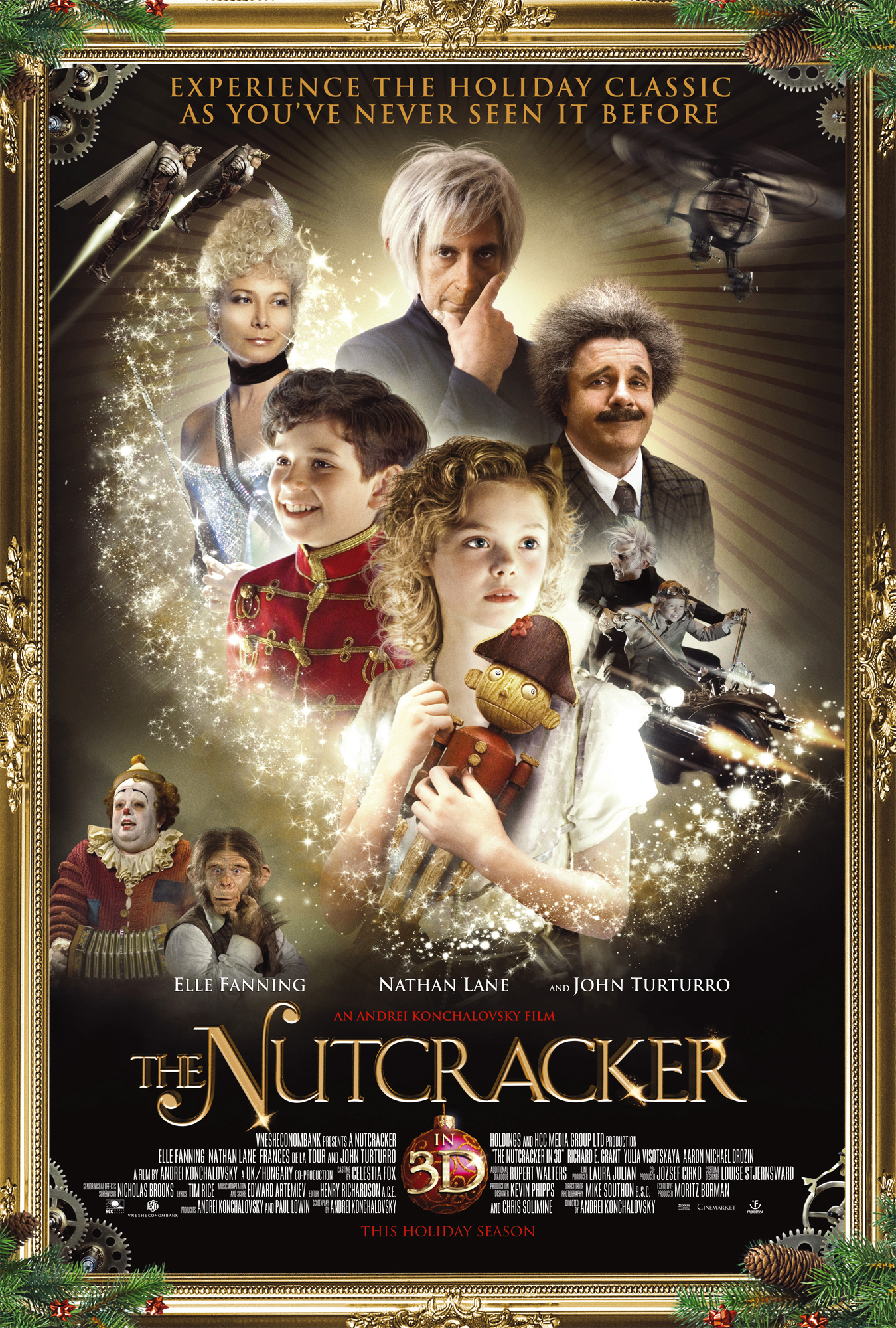
Goodness, but ambition sure can go wrong, can't it?  Andrei Konchalovsky reportedly sat on and tinkered with the idea for what ultimately became The Nutcracker in 3D (alternately The Nutcracker: The Untold Story) for a solid twenty years, long after he became a frequent film fest circuit contender, and in which time he continued to direct, write, and produce a wide variety of films across multiple genres.  This here was his passion project, a grand fantasy epic built upon little by little whenever he had time, finally realized after two decades' gestation with a budget of $90 million, well in excess of anything he'd directed since Tango and Cash.  Grand ideas given grand stage and a (relatively) lavish pocketbook, enough to justify playing with musical elements, massive soundstages, scores of extras, a wholly CG character or two, and the best 3D effects money could buy.  One might, perhaps, observe how "the best 3D effects money could buy" in the year prior to its ultimate 2010 release came from a film costing this project's budget three times over, and that the base material was shelved since 2007, and start to understand what went wrong.

Hubris is our watchword for today.  Hubris in thinking a production so plainly bloated by B-name theater actors' salaries and enormous soundstages could afford a little skimpiness on the effects budget, and so crafting a final product where flying effects and CG characters render as vaguely floating a few feet above the film rather than anywhere inside it.  Hubris in Tim Rice deciding his lyrical compositions for the musical numbers would not use Tchaikovsky's ballet pieces as a base and follow their lead with a complimentary rhythm, but rather be designed for singing along to every not, regardless of whether or not the resultant cadence sounds anywhere close to a natural register.  Hubris in believing many side characters so plainly charming on the face of it that we needn't see them between their too-brief introduction and an end-of-second-act crisis wherein they display none of their personality quirks again in favor of generic fantasy action platitudes.  Hubris in thinking spending the entire second act wholly detatched from the fantasy world and spinning our wheels on some domestic drama the film clearly doesn't care for is at all an acceptable way to stay within our budget when it really kills the pacing dead and causes many following beats to feel redundant.

Hubris with regards to the rats, oh my GOD, the rats.  I can only assume Konchalovsky and his contributors thought as far as, "Well other films use a little Third Reich imagery as shorthand for the bad guys, we can as well," and then trotted out said justification every time they wanted to add a little more.  The rats march around in full-blown SS uniforms, round up innocent people from the street, throw them into concentration camps, operate massive ovens designed to burn those they scapegoat as ruining the world, and talk up the eventual birth of a glorious rat masterrace and a Rat Empire which will last for one thousand years.  All right there, on the surface, no necessary distancing whatsoever, plain and simple Nazi stuff.  Let's not also forget, they still have rodent faces, rodent faces which look very much like Nazi propaganda caricatures of Jewish people besides, and most talk with heavy Italian/Brooklyn accents.  And listen, listen - while I am the world's foremost advocate for scaring kids through children's movies, the effects on John Turturro's face when his Rat King gets upset and he morph-roars into a monstrous rat face are all too much, all too distressing, and deployed all too frequently for how much I don't like looking at it.  Also, their arrival into the movie evokes 9/11 imagery, and Turturro electrocutes a pet shark at one point, for no reason other than making this whole thing more off-kilter and distressing.

Looking at The Nutcracker in 3D with a proper critical eye, though, trying to see beyond all the odd, excessive, easily-identifiable bad creative decisions, and figure out what really went wrong, I think the briefly mentioned structural problems drag the movie more than any of the Nazi rat stuff.  Don't get me wrong, unless we perform corrective surgery on the film, wholly remove all the Nazi motifs, and find literally any other thematic costuming as a replacement, it will always have that millstone round its neck, but figuring out the structural problems could help a lot.  You can get away with quite a bit if a story plays as familiar or resonant in the broad strokes, making your idiosyncrasies read as "Alright, go off but I'm with you" instead of "What in God's good name are you DOING?"  Bad as the Nazi rats, the child acting, and the effects compositing are, The Nutcracker in 3D's greatest weakness lies in how it flaunts conventional story structure in favor of a protracted second act in the real world, with all hints of the fantastical banished to the margins.  To illustrate my point, allow me to propose as potential alternative layout for the film, in which we only change the order and focus of events with minor eliminations to improve flow.

The first act, with Mary meeting the Nutcracker, exploring the expanded living room, and learning about the curse the Rat Queen placed upon him can play exactly as they do in the movie, except we move the introduction of the Nutcracker's three living doll friends over to the start of act 2, and place more focus on the developing relationship between the two.  Rather than spending the second act in the real world, Mary, the cured real boy Nutcracker Prince, and the doll companions spend their time trying to infiltrate the Rat Kingdom and overthrow the Rat King for good, only for the Rat King to discover them, kidnap the retransformed Nutcracker, and banish Mary and the dolls back to the real world.  THEN we can play out a shorter, tighter focused version of act 2's runaround as a start-of-act-3 crisis,and proceed with the movie's third act as is, only with better defined supporting characters and a stronger relationship between Mary and the Nutcracker. Compare this to how little screentime the two share in the film as-is, and how much of the back half of the second act is dedicated to rerunning the first act's set-up with new stakes while assuming we've any reason to invest, and the problem should be plain.  Spending so much time insisting Mary stay separated from the Nutcracker and the Rat Kingdom only serves to kill the film's capacity to engage an audience; a structure more in-line with traditional children's fantasy epics would help the piece flow, get us deeper into the weirder elements, and at least acclimatize us to the stranger elements in addition to strengthening the character work.

Or, as an alternate proposal, how about we keep the film's structure as is, weirdly lengthy return to reality and all, except we shift around our thematic focus instead?  Exact same movie up to the thirty-minute mark, except Mary's attempt to lift the Rat Queen's curse doesn't work, because for all the enchanting, fantastical sights around her, she doesn't really believe in what she's seeing just yet.  The sudden return to mundane reality thusly hits her harder, and her father's attempts to shake those silly dreams for her head has a tangible impact on her.  That whole meandering musical number where Uncle Albert sings about a magic pebble her father had as a boy connects more directly to Mary's story, and when the Nutcracker returns to bring Mary and her brother Max back for another try at liberation, she only goes reluctantly, and only invests fully for the third act because the Rat King kidnaps Max.  You can then run the third act as a simultaneous "Rescue my brother" narrative and a "I have to actually care and believe in all those childlike things like imagination and dreams" story, to boost up the effect when Mary finally lifts the curse and claims she never wants to leave this new home.  Just one change to one plot point and a shift in the main character's attitude, and you can make this odd structure work a little better.

I'm personally more into the first proposal than the second, for the first allows the film to indulge in its weird attempts at spectacle more openly than the second, which probably requires turning down the bombast to sell the audience on Mary's refusal to truly believe until the climax.  Either way, they both show how The Nutcracker in 3D didn't necessarily have to break so badly as it does.  There's so much "This is MY passion project, and we're doing it the way I like!" running through every aspect of the production, I've a hard time believing you could wrangle a wholly good or appealing story from the wreck, especially if we're really honestly truly married to doing Rat Nazis and not spending a proportionate amount of money on our effects.  With a different structure though, regardless of if it's more traditional or more suited to supporting a thematic idea, we might've seen a respectable if heavily flawed, too indulgent work that communicates something and delivers a mildly enjoyable experience.  It is broken and misconceived, but the foundations could've supported SOMETHING, rather than the haphazard mess we got.  Which, all told, is better than the total, doomed-from-the-start failure of the Tom and Jerry Nutcracker film.

(Let me tell you, it was REALLY distracting hearing Moaning Myrtle's voice coming from the Nutcracker's mouth the entire film.)

2/5

God's Not Dead (2014) - A Copypasta For The Fanatical


(The following content is reran from the 2018 Christmas marathon on Letterboxd, as originally seen here.)

Why were there so many Christian movies in 2014? In part, because Pure Flix Entertainment finally got around to releasing a picture filmed in 2012 to wide audiences to promote the work of the Alliance Defending Freedom, take advantage of the Easter season, and paper over the then-recent controversy regarding Phil Robertson's religious beliefs. Whether or not the film needed to exist is up for debate, as despite the numerous court cases cited during the credits, the film bears little resemblance to a body of legal battles regarding homophobic counselors and misapplied free speech zone rules, and instead draws most of its inspiration from a tired anti-liberal-education copypasta. Its original content scarcely relates to the central story, pushing an odious ideology about how nobody can do right in this world unless they act in God's name, with those who fail to comply suffering grievous punishment until they see the light. There's scant little to recommend here to anyone of any religious, agnostic, or atheistic persuasion, but I gave Son of God a fair shake, so this one gets the proper treatment too.

Keeping our eye on the fringes for a start, God's Not Dead has an incredible mean streak mile wide. Without any rhyme or reason behind the inclusion of many characters and their subplots beyond tangential blood connections to other characters lacking in purpose, I believe the best way to impress the film's failings in this arena is to simply rattle off the worst examples rapid fire. A fair warning: These are all The Worst.

A blogger whose only presented crimes are not believing in Jesus and disliking Duck Dynasty is diagnosed with cancer shortly after confronting Willie Robertson. Every time we see her, she's grown more miserable and destitute as her boyfriend dumps her because she's going to die and the reality of her own mortality hangs over her head with every passing hour. When she decides to confront the movie's headline act, the Newsboys, at the end of the film, they convince her that all will be well if she simply loves Jesus, which she does. Her ex-boyfriend is the brother of someone sorta related to the main story, and his whole thing is being the worst person in the world despite also being a man who played Superman. He visits his elderly mother, brags about how he escaped the devil, and gets a few Jesus truth bombs dropped on his head by the dementia-riddled woman before committing manslaughter. Elsewhere, a girl from a Muslim home tries to hide her conversion to Christianity, only for her little brother to walk in on her listening to sermons on her iPod in a scene framed as if she's pleasuring herself. Her father finds out, beats her, and throws her out of the house, leading the girl to a set of pastors who convert her to Christianity proper even though she already did so. Said pastors are constantly dealing with God breaking the sparkplug in their car, supposedly so they can help the townspeople through various crises of faith. For a while, they're at least somewhat likable in how goofy and endearing they act, right up until they choose to convert a man who's dying on the sidewalk instead of calling for an ambulance. They then say this preventable tragedy is a cause for celebration, and laugh.

It's a horrendously repetitive narrative structure. Whenever we need to spice up the slight main story, we cut to one of these other figures, who do their thing for a few minutes before jumping back to the copypasta. Set-up, suffering, Jesus is the answer/swordbearer, repeat. That everyone serves only as ciphers isn't much of a surprise, nor the emotional simplicity or vacuousness with which the film treats their problems, nor the lack of care for framing and shot composition in favor of getting points across as bluntly as possible. The film comes from an evangelical perspective, and evangelical Christianity is not well-known for its tendency to empathize with outside perspectives or deal with dissent in a forgiving manner. "You disobey Jesus and the wrath of God will fall on thine head" is the extent of their shtick when it comes to sinners and nonbelievers, so you get what's advertised on the marque pretty quick.

I was looking for a way to lead the above paragraph into something along the lines of, "What IS surprising, though, is the total lack of care shown towards the actual meat of the film," with some ramblings about lost opportunities or potential for a better film, but then I realized there's nothing surprising about a copypasta meant to rile up the excessively religious coming out awful when stuck on the big screen. Our nominally main story about a freshman philosophy student having to debate his overly contentious atheist professor on the existence of God indulges freely in all the tropes of the online tale: a teacher who disbelieves so hard he actively hates God, the prevailing notion of the lone Christian standing against a sea of nonbelievers, arguments for belief requiring edited scripture or turnabout logic to function, a remarkably quick turnaround from initial proposition to total conversion from everyone in the class, and a self-satisfied air about a supposedly watertight argument that wouldn't pass inspection at Noah's dock. One can have quite a lot of fun mocking the main character's phenomenal photoshop powers in the face of his lackluster debate skills, or Kevin Sorbo debasing himself by throwing tantrums to cut down the university-system's validity, or even the focus on a Chinese student who's instantly enamored with this Jesus person he's never heard of as a means of getting some model minority work in here. All bad, all wrongheaded, all laughable, but not surprising in the slightest.

If anything surprises whatsoever, it's just how deep the aforementioned mean streak runs. So much time is spent on the philosophy class debates, with the occasional cut to something good happening to an unrelated Christian or something bad happening to an unrelated atheist. There's perfect groundwork for the film to at least possess a coherent argumentative structure, a la "Here is why I am right, and here is a portion of a side story that further proves my righteousness." Win the debate, show how it applies to the "real world," spit on the stinky professor and watch a concert. Except the professor is the man who's hit by a car and forced to convert in his agonizing final moments. It's not enough to simply win the argument and provide a logical, scientific basis for believing in God; we must completely destroy the primary atheistic force in the narrative and render his contributions bunk. The nonbelievers are both wrong AND deserving of death, and the further addition of celebration at his passing through both dialogue and a massive concert playing around the hit-and-run tanks an already bad product to the depths of a half-star rating.

I do honestly intend to play fair with Christianity and religiosity wherever applicable with this holiday project. Sitting down for a Christmastime marathon and using it as an excuse to savage those whose beliefs don't match mine isn't much in the holiday spirit, and I'm genuinely curious to see what the unexpectedly numerous mainstream Christian cinematic offerings from 2014 look like when considered as a whole. In the case of God's Not Dead, though, the film's text and proud display of support from an officially-recognized hate group means I can only fight clean for so long. It wants to advance a mindset under which exactly one way of life is ever acceptable, and those who refuse to cooperate must face a holy purge, and it does so with a sprawling, unconnected mess of a plot without any concern for writing good characters or convincing dialogue. Anything that one might call decent here, like the occasional camerawork or the tiny chill I get toward the end of the title song (because any musical piece doing the whole "we're whispering the first part of the chorus but then we burst back into full bombastic swing" thing can elicit such a reaction regardless of poor or repetitive quality), simply compounds the issue by making something grounded in regressive, scornful attitudes seem attractive. To an extent, it's not even worth getting upset over, so ridiculous is its perfect embodiment of every negative evangelical stereotype...

...until the main character claims you can prove Darwin's "nature does not jump" claim wrong by compressing billions of years into a single day, pretending you didn't do so, and claiming most of the modern biosphere assumed its current form in a relatively brief period of time. Then I have to pause the movie and yell about why it is wrong for several minutes.

Least the next film here has someone competent in the director's chair! I'm looking forward to this adaptation of the part of mother! where Jennifer Lawrence tries to deal with a burst pipe.

0.5/5

Thursday, December 19, 2019

Son of God (2013) - A Biography For Believers

(The following content is reran from the 2018 Christmas marathon on Letterboxd, as originally seen here.)

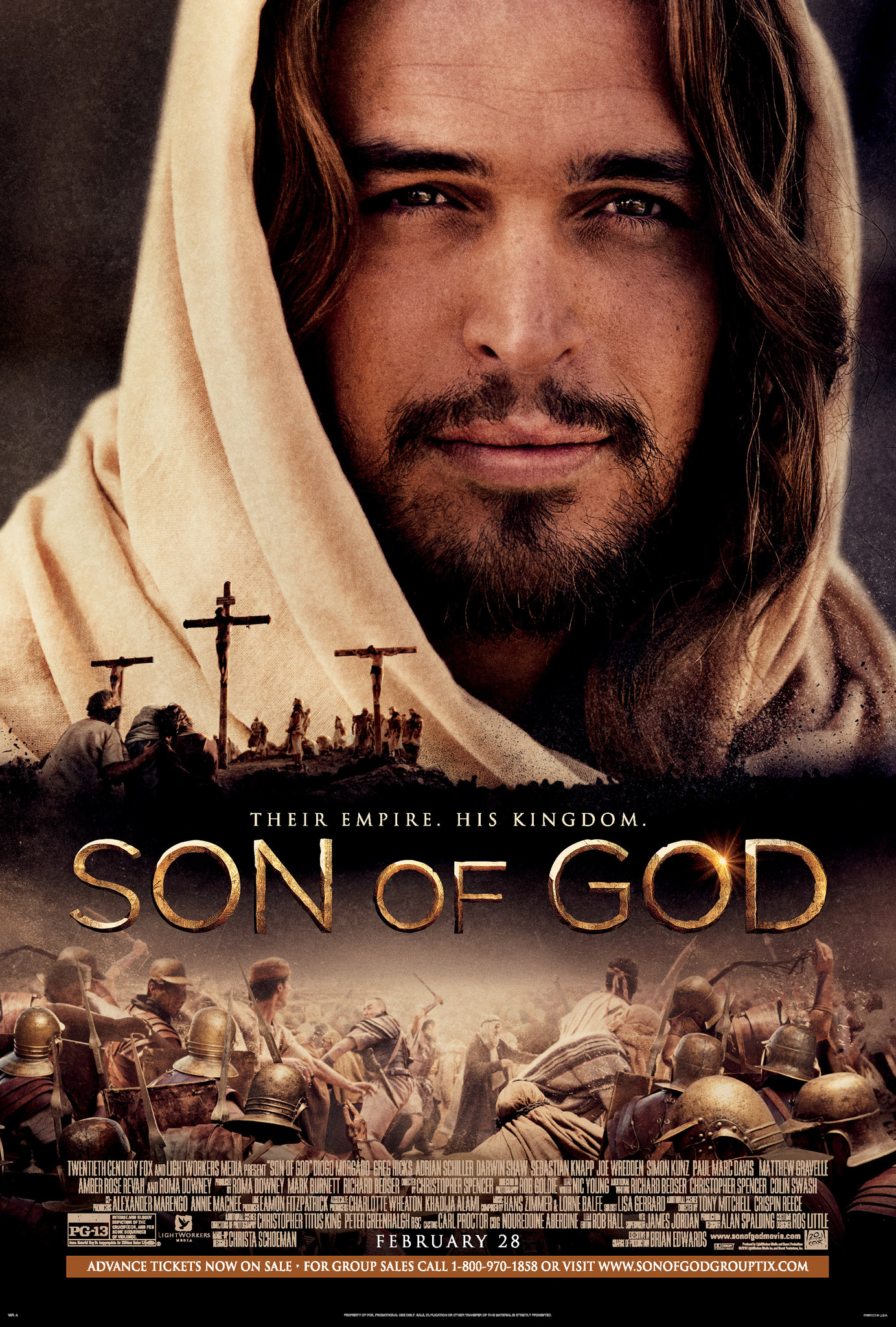
Why were there so many Christian movies in 2014? In part, we can thank Roma Downey and Mark Burnett of Lightworkers Media for deciding they needed to net some extra revenue from their 2013 History Channel miniseries The Bible, and releasing a cut down version of the four episodes concerning Jesus' life and deeds to theaters in late February. Whether or not the world needed this particular film to kick off the slate of seven to pierce the mainstream radar that year is a worthwhile question - the film leaves out many notable scenes from the Gospels and foregoes the series' narration, leaving behind a story already told free from character moments and unique stances on the Biblical narrative without proper transitions or context for what we're seeing. To the right eye, Son of God is pretty much useless as anything but an extension of the series' DVD sales (and, bizarrely, two redundant literary adaptations). We sat through all two hours and twenty minutes last night, though, so I feel obliged to treat it as a standalone work of adaptation, even bearing in mind the material was not designed to play this way.

On its own merits, Son of God isn't the worst thing in the world. I rather liked some of the little moments scattered about here and there, like introducing Jesus by half-submerging him in water as a means invoking his baptism and foreshadowing the later walking on water, or how Jesus' prayers in Gethsemane are cut against the pharisees and his disciples making their own calls to God. A few of the miracles have the basis of interesting techniques around them, such as Jesus feeding the 5000 by simply encouraging them to lift their baskets to the sky and bringing them down full of bread and fish, or the intense closeups marking Lazarus' resurrection. The guy playing Jesus mostly bases his performance on strong declarative readings of the famous sayings, which at least works well if you're only asking for a cliffnotes version of (most of) his famous deeds. It's not much, I'll confess. Having something nice to say about the film is still a welcome surprise, though.

Looking at the total scope, there's practically nothing here. While I mentioned the lack of important sequences like turning water to wine or the trial before Herod, I doubt this works well as compelling docudrama or fiction on its own merits. Son of God starts at the belief in Jesus' divinity and the importance of his ideals, and so resolves to spend its runtime presenting the necessary beats one after another without much flair. Jesus performs miracles and claims himself God's chosen son, confounds the local authorities with wise sayings beyond their comprehension, and astonishes his disciples most by claiming faith without sight is a grander thing than faith based on proof, in complete and total lockstep with what the Good Book says he did. His rage at the moneylenders in the Temple, his agony in the garden, his pain on the cross, they all come through without the slightest hint of the passion inherent to the story's very name. Jesus does what he does and is miraculous because Jesus does what he does and is miraculous in the Bible, and the movie thinks the tome so holy and worthy of reverence that it only deviates by omission, and never interprets or enhances.

I understand the reticence to do so. I'm no Biblical scholar or Christian - I came up in an agnostic household, my first exposure to the whole religion was a daycare teacher telling me I'd go to hell for not knowing what the Bible is, and that sort of soured me on the whole experiment for a while - but the tenants of the faith are familiar to me. If Jesus' story and the power inherent to him work best when you accept them unquestioningly, then to point to the Holy of Holies and claim something's wrong, that you can do it better, is akin to saying the new covenant between man and God has no power. Personal reinterpretation may be fine, depending on your sect, but in general one should strive to accept and internalize what's on the page, and never put out something defying the Word. If you're going to put the Bible on-screen, the best thing to do is to put it there as literally as possible, and stay out of its way.

Leaving aside the issue of trying to stage such a historical telling while casting actors whose ties to the Israeli homeland are almost nil, I don't think placing the holiness of the text above the personal connection does anyone any favors. Nothing is liable to supersede the original text, and a passionate reinterpretation designed for its time can have profound impact. After years of discounting the Bible and Christianity as institutions with good morals but not much modern value, watching Jesus Christ Superstar and seeing the story of Jesus in such a raw, emotional, humanizing manner on all levels got me interested in the continuing impact and validity of the story and its related tales for the very first time. That movie might scream 70s fashion and deliberately place itself both within and apart from the original setting by filming in on-location ruins, yet it is as alive and vibrant a tale as any I've seen. Judas and Caiaphas and Pilate all serve as barbing questions against the assumption of Jesus' divinity and good nature, and Jesus himself expresses open doubts as to the necessity of his project, only to be met with an abstract, inscrutable answer from God. The entire final half-hour demands an answer for why from Jesus again and again, and is only met with silence, and ultimately the confusion and anguish of the crucifixion.

And still, for all the silence, all the doubt, all the legitimate reasons to think Jesus only brought himself and those around him needless pain, the film ends on a shot of the cross silhouetted against the setting sun, a shepherd tending to his flock in the fields below, captured on film entirely by accident. If you want to distill the idea of believing without seeing, and so finding the Lord wherever you look into a single image, that's how you do it.

Son of God just has Jesus say as much before vanishing in a beam of light, because that's how the book did it, and so that's how we'll do it. It is so afraid to cast Jesus as anything except a man made of quotes and deeds, it robs him of whatever power a more heartfelt, artistic depiction might bring, and so fails as a recruitment tool.

It's a safe, easy, for-the-faithful only film, one which completely fails to understand the faithful need challenging and testing more than the non-believers. I cannot condemn it, for it does nothing condemnable save duplicate without skill or understanding. There exist far better depictions of this tale, far better stories inspired by it, far better shared connections from the heart of a moved believer to your own. Unfortunately, because we're looking at films designed to provoke, proselytize, and exploit those who have faith, we're not looking at many of those this Christmas season. I've got a surprise scheduled at the end to make sure this series is more than endless complaints about those who believe differently than I do expressing their religion wrong, but with what's coming up next on the docket...

Well, at least Son of God intends to preach the Word as it exists on the page.

2.5/5

Mixed Nutcrackers - The Nutcracker (1973) and Tom and Jerry: A Nutcracker Tale (2007)

It's a twofer today!  Tom and Jerry's film didn't even total to an hour, and was guaranteed to not appeal to a one of us, so we went and looped in a short animated film from Russia to pad out the time and ensure I wouldn't spend this review in conniptions over the poor quality of a bargain bin children's animated film!  Tally ho, onwards with the discussion!

***
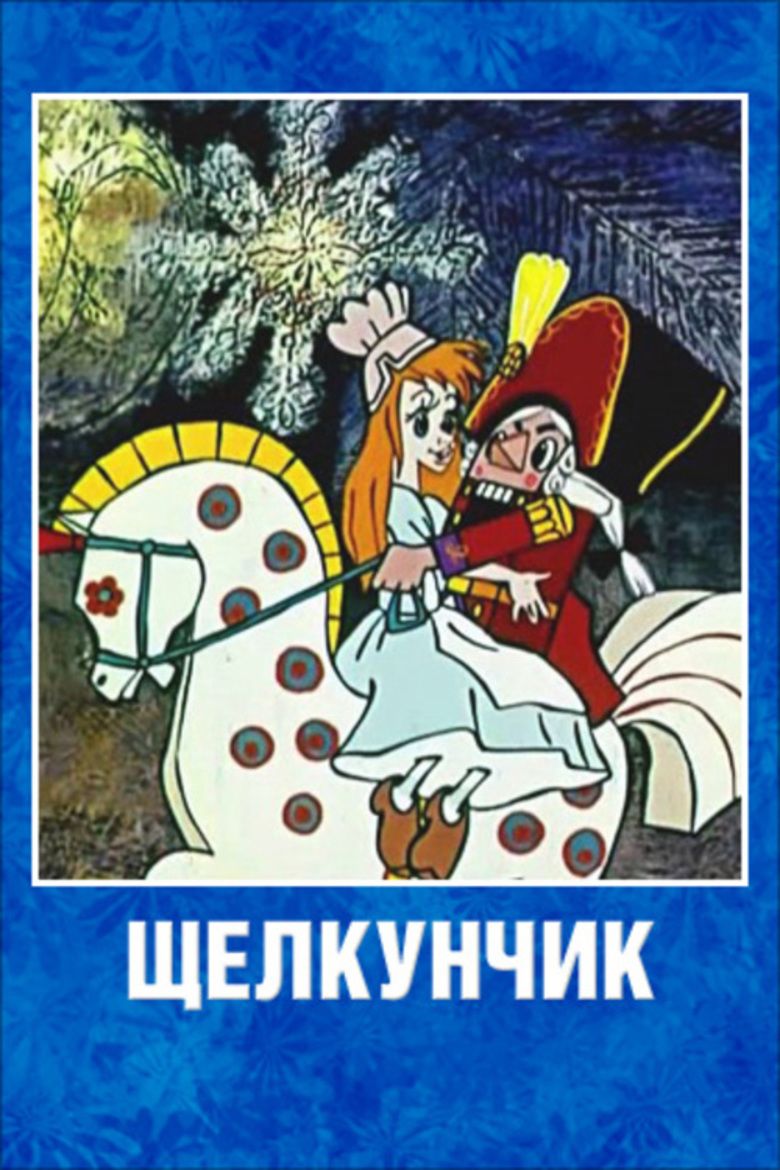
Boris Stepantsev's short The Nutcracker is handily the best adaptation we've seen as part of Mixed Nutcrackers, and seems likely to rise as the best adaptation period when all's said and done.  It's quite an economical piece of storytelling, incorporating practically all important beats and elements from the Hoffmann story in a quick 25 minutes without losing any charm, and showing off some delightful animation in the process.  No need to reconstitute the elements into something wholly of its own kind, nor belabor the point with loud humor, nor wander off in its own direction after the introductory action, just the story of a young girl finding a Nutcracker in the Christmas tree, learning of his story, defending him against the Mouse King, and falling in love.  There's a bit of compression for time and effect, like rendering Marie a nameless servant girl with no godfather or younger brother to interfere in her journey, making the Princess Pirlipat and the Nutcracker Prince one and the same, freezing the Nutcracker's whole kingdom, and stripping the Land of Sweets segment of pretty much everything save an elegant dance (set to Waltz of the Flowers rather than the final number, which is instead used to underscore the Nutcracker's despair at his appearance) in order to give the stuff with the mice more focus, but otherwise the whole thing's here, and dances through the plot elegantly.

It's probably also the prettiest looking of the animated adaptations we've seen, with some of my favorite designs for each of the major characters.  I'm all about Marie's awkward, lanky appearance with big clogs in the place of the usual slippers and those round, curious eyes, the Nutcracker's rectangular shape and flexible mouth that never stops baring some nice square teeth, the Mouse Queen's three heads sharing a single gigantic crown atop a hunched body clad in deep blues and light purples, and her son's rotund design, which bloats into an imposing ball when he inherits her crown and becomes Mouse King.  In fact, similar to the Culkin-starring adaptation, I really like how all the mice share a similar rounded design, and delight in their more prominent screentime so we can look at their silly scurryings longer.  The backgrounds, I'm not entirely certain how to describe them... it's like they used watercolors that crystalized into impressionistic sheets of ice, giving the characters wonderfully detailed backdrops to play against whether they're in the appropriately-sized, pink and yellow king's court in flashback, or the barren dark blues and greens of the parlor at shrunken scale.  Environments varied as a Christmas tree full of ornaments or a blank stretch of wall are equally pleasing and rewarding to look at and follow details through in this manner.  Such detailed backgrounds also helps the characters' cleaner models stand out, and while this occassionally produces an effect whereby they float above the scenery rather than moving through, it also helps Marie and the Prince's final, transformitive dance wherein they shift between themselves and flower-petals as they glide through a reflective night sky of flashing light and color feel all the more magical.

This thing's good, spellbinding and embodying the childlike innocent wonder I found in the novella better than most.  It doesn't have my absolute favorite Nutcracker design, or Mouse King design, or battle between toys and mice (look to The Motion Picture, the Culkin film, and Fantasy for those respectively), but it gets the overall feel right and gratifies the viewer in a spritely timelimit.  Very nice to find something I can wholeheartedly appreciate without a sliver of irony or major critique in this marathon - a good last-minute Christmas present to the lot of us!

4/5

***
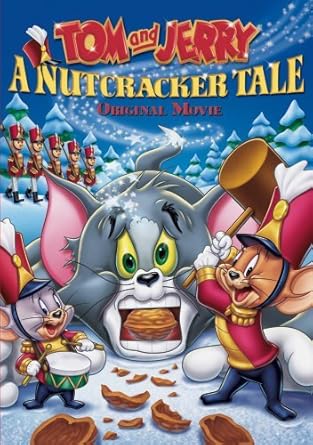
God, but do Tom and Jerry deserve better caretakers.  Y'all saw the Charlie and the Chocolate Factory memes last year, right?  The ones with all the awkward faces you think are smear frames but actually remain in unmoving focus for several seconds, the bizarre attempts to shoehorn Tom and Jerry into a pointless retelling of the 1971 movie, the endless reposting of that one Wonka smirk towards the end?  Bizarre and bad as it's said to be, I'd easily take such an approach to shoving the cat and mouse pair into The Nutcracker than whatever the hell is going down in A Nutcracker Tale.  Hoffmann's story is legit perfect for a seven-minute short in the style of those from the 40s and 50s - Tom and Jerry doing their usual antics, the whole part with the mouse army showing up and doing battle with the toy army happens, Jerry gets caught up in the press, Tom gets exploited as a prop weapon by the toys, we do a little runaround, we chomp the Nutcracker's teeth down on someone's tail, we play a few lines of Tchaikovsky, we go home.  If the ballet had its revival just a few years earlier, when Fred Quimby was still pumping out cartoons under the original Hanna-Barbera team and vying for Best Animated Short Oscars, I could see all the classic gags slotting handily into such a set-up.

Show of hands, who amongst you would ever guess a Tom and Jerry Nutcracker thing would involve Jerry idly wishing he could dance, being granted not only ballet talent by the voice of God who is also the narrator and also Santa and also emblamized by the Star of Bethlehem (called out as such by a character in the film, no less), but an entire magical kingdom of living toys to rule as Mouse King, which is ruined the second Tom and his alleycat friends wander in, and are granted automatic control of the kingdom by the same magic power, necessitating a quest to find the Toymaker across various thematically-incompatible dimensional planes?  And also Tuffy is there.

"Bizarre" is the word for this thing.  Beyond dressing everyone in old-fashioned army uniforms, keeping a Tara Strong-voiced tiny ballerina hostage for occasional asides, and quoting Tchaikovsky's music at the most inappropriate times, there's practically nothing here to theme this as a Nutcracker-based work, yet it has no identity of its own besides.  The creative team seemingly indulged every idea they had in the process of screenwriting and drawing layouts, clumping in random bits of overwrought drama they resolve inside seconds, trips inside a lair of snakedragons and through a Coney Island-style amusement park, an appearance by a Frankenstein-esque mad doctor cat, and many, many more little bits of incohesive weirdness.  It's hardly Nutcracker-themed, calling it Christmas-themed would do it injustice, it rarely does anything with the magical kingdom being confined to a theater, and multiple segments break away from something so simple as generic winter-based setting, so what is this meant to be?  I can't even claim it's to sell a soundtrack or take advantage of some tunes in the Warner Music Archive, because The Nutcracker's music is public domain.

One might claim it's meant to be all over the place and jumbled-up nonsense because anarchy was such an integral part of the theatrical cartoon landscape which birthed Tom and Jerry, but I'd argue it's nothing of the kind.  For one, it lacks any degree of self-awareness necessary to follow in the steps of something like Duck Amuck, and indeed asks the viewer take the various perils Jerry and company face in their journey completely seriously right before jarring fifty feet right into slapstick again.  Speaking of the slapstick for a far more important another, if throwing up our hands and going, "Screw it, we'll just do whatever we like!" is meant to be an OK thing to do because it gives rise to some good gags, it fails at such.  The outsourced cheapo Korean animation on display is slow, lifeless, and lacking in anything one might recognize as the wild, weighty energy of a classic Tom and Jerry short.  Gags dependent on physical humor are either too afraid to indulge in the old ways of a soddering iron to the noggin or a bowling ball down the gullet and so opt for weak variations on "character go flying and get hurt off-screen haha," or else go so terribly outlandish with a baffling lack of both build-up and suddenness that it doesn't work.  They all just sorta... happen, with no speed or purpose, and get easily overwhelmed by bad stand-up routines from talking characters, or the far too thick sentimentality, or an out of nowhere baseball joke.

I could handily rag on the film for ages, having a go at it's odd attempts to set lyrics to Tchaikovsky's music in the early going before dropping the atonal conceit; or make a try at delivering weak praise, saying the ornament character who's constantly coming unraveled might've had an interesting gimmick going if they animated his final disheveled state as anything other than a barely wiggling mass of string.  Considering, however, how the film ends on a limp series of gags as Jerry drives the cats from his about-to-vanish-forever kingdom with such a mediocre lack of creativity or fun, I don't think carrying on past this point necessary.  This is a flat corporate product - one which draws heavy, groaning sighs on the regular and is probably pretty bad to show your kids if you don't want them taking to YouTube comments sections and droning about how such a grey, inert film is an underrated classic ten years hence, but a flat corporate product all the same, and so deserving of an equally limp, lifeless end to this review.

I paid four bucks for this.  When the time comes for the anti-capitalist uprising and we're collectively dismantling all the major entertainment conglomorates, I'm gonna walk into the Warner Bros treasurer's office and ask for those back.

2/5